Can you wash your curtains at home? For most unlined Singapore curtains, yes: cold water, gentle cycle, mesh bag, no dryer. For lined blackouts, silk, velvet, or anything embroidered, the washing machine is how curtains end up shorter and rippled. This guide sorts every common curtain type into wash, dry clean, or steam-in-place, and walks through the safe at-home procedure when washing is allowed. For the cleaning schedule by curtain type and what steaming costs, see our companion guide to how often to clean curtains; this one is about choosing the method. Both are part of the complete upholstery guide.
Before anything: find the care label
The label is usually sewn into the side seam or behind the header tape. Four symbols decide everything: a wash tub (machine washable, the number is the max temperature), a hand in water (hand wash only), a circle (dry clean only), and a crossed-out tub (no washing at all, which on curtains usually means coated blackout). If the label is missing, treat the curtain as the most delicate thing it could plausibly be. A wrong guess is irreversible; patience isn't.
Wash, dry clean, or steam? Pick your curtain type
Select what's hanging in your home and the grid shows what's safe:
Machine-washing curtains at home: the safe procedure
When the label allows machine washing, the failures mostly come from heat, agitation, and drying. The procedure that keeps all three low:
- Take them down in the morningYou want the full day for drying. Unhook the rings or runners and count them into a container; re-hooking goes much faster when nothing is missing.
- Shake and vacuum outdoors or by an open windowA minute of dry dust removal keeps the wash water from turning into a mud bath, and the machine filter will thank you.
- Mesh bag, cold water, gentle cycle, mild detergentHalf-fill the drum at most. Skip bleach and fabric softener; softener coats the weave and dulls sheers.
- No dryer, lowest spinKeep heat out of it, so no tumble dryer. Spin only enough that they're damp, not dripping.
- Re-hang while slightly dampThe curtain's own weight pulls out most wrinkles as it dries on the rod. Fan on, windows open: in our humidity you want that moisture gone within the day, not lingering overnight.
The HDB reality check: a full-height blackout curtain holds a surprising amount of water. Wet, it's heavy enough to make wrestling it back onto a rod from a ladder genuinely risky, and it won't fit a service-yard drying rack. If your curtains are full-length and lined, the at-home route costs more hassle than the professional one saves.
When dry cleaning is the only safe answer
Curtain dry cleaning in Singapore is a take-down service: the curtains come off the rod, get cleaned off-site with solvent instead of water, and come back pressed. It's the right call for silk, velvet, embroidered panels, and anything with a "dry clean only" label, because dry cleaning in solvent involves very little moisture, so it avoids the shrinkage a wash can cause, though it can still take a little off the size. We don't offer it: it's a job for a curtain laundry or dry cleaner that does take-down and re-hanging. Ask for one quote that covers all of it, and expect that cost, plus a few days without curtains. Renting? Some tenancy agreements ask for curtains to be dry cleaned before you move out, which our end of tenancy cleaning guide explains.
One caution that surprises people: coated blackouts (the ones with a rubbery light-blocking layer) are not automatically dry-cleanable. Solvent can attack the coating just as a hot wash can. For those, the label decides, and when the label is silent, steam cleaning in place is the lower-risk option.
The third option: cleaned where they hang
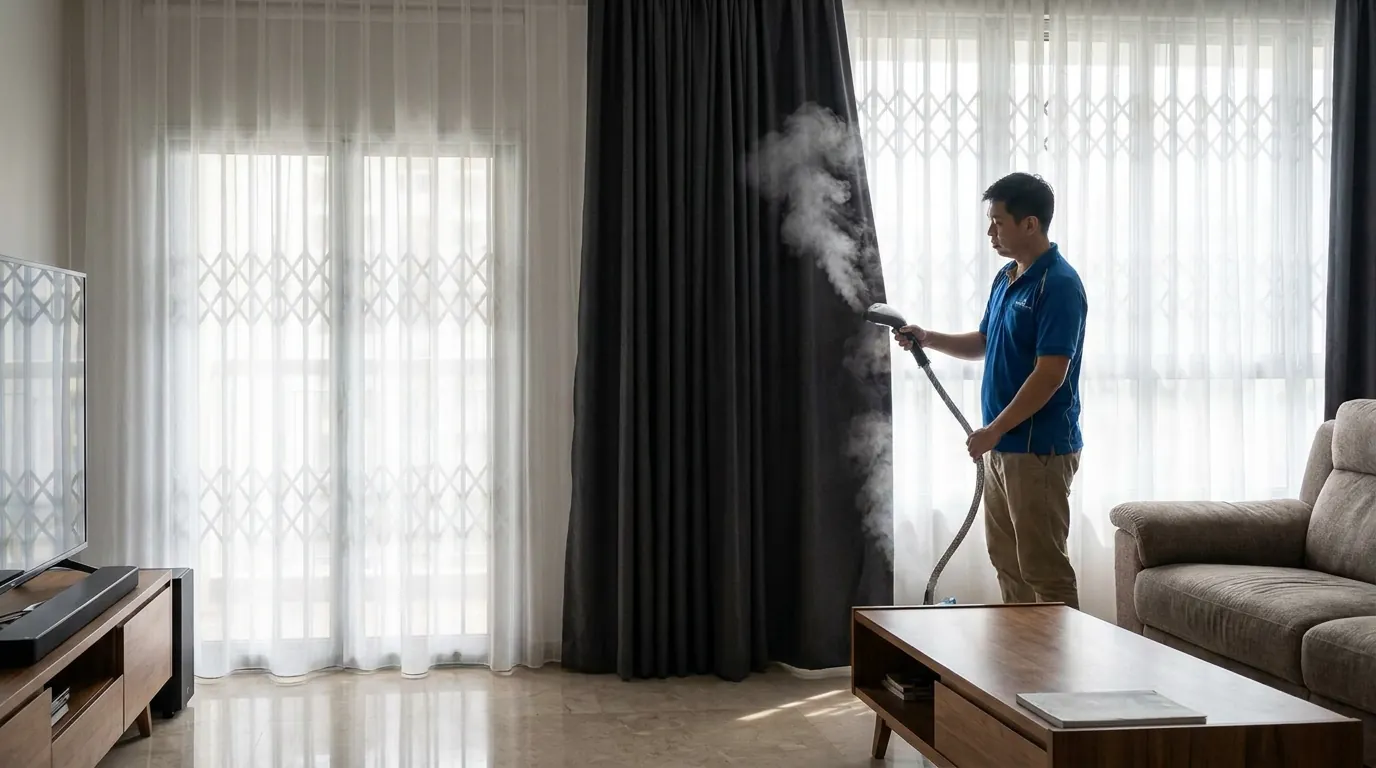
Many curtains don't need to come down for routine cleaning. Steam cleaning works on the curtain in place: a pass that lifts dust and everyday odours, with the curtain usually dry again in 2–4 hours under a fan. No ladder, no missing hooks, no re-pressing. The fabric is never soaked, and it skips the wash, which a dry cleaning trade journal says generally produces the greatest shrinkage. We cannot promise a steamed curtain will never shrink, and steaming is not a dust mite treatment. It also will not take out set-in stains, heavy smoke smell or mould spots: those curtains need a take-down wash or dry clean by a laundry.
With us, curtain steaming is S$18 per piece, with a S$50 minimum job. Adding it to a sofa or mattress visit is usually the practical way to do it: the technician is already in your home, and each piece takes about 12 minutes more. Details are on our on-site curtain cleaning page, and our steam cleaning explainer covers why steam is the right tool for hanging fabric but not for sofas.