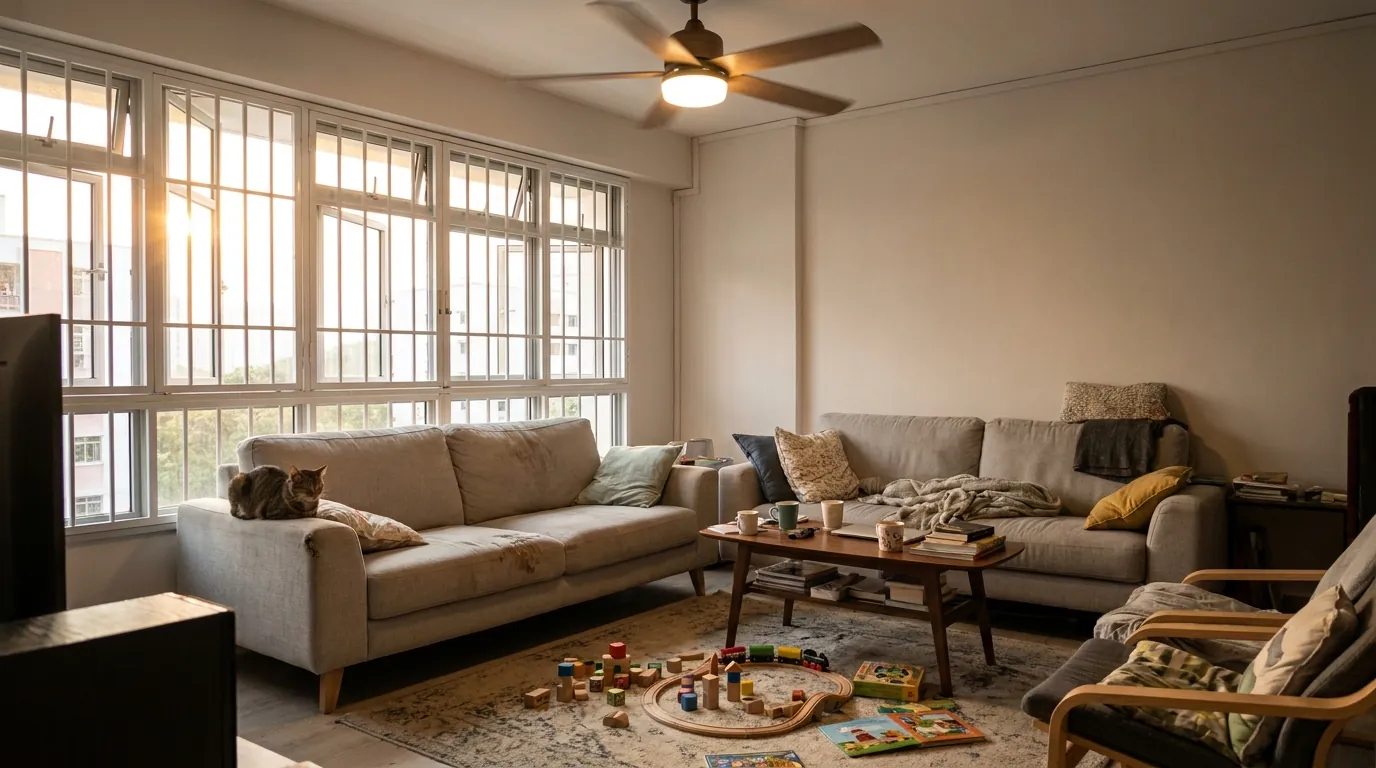
Clean your sofa professionally every 12 months in Singapore, or every 6 months if your home has kids, pets, or anyone with allergies, asthma, or eczema. Vacuum it weekly in between, and give it a careful home refresh every 2–3 months. That's the whole answer for most households; the quiz below tunes it to yours, and the rest of the article explains why the interval here is shorter than the once-every-few-years habit most of us inherited.
Where the 12-and-6 rule comes from
The interval isn't about visible dirt. It's about what accumulates invisibly: skin flakes (the food source for dust mites), the mites themselves, humidity the fabric drinks in daily, and the fine film of cooking oil that drifts over from an open kitchen. A sofa in this climate carries a measurably higher biological load after a year than the same sofa would in a dry country after two. Twelve months is the point where extraction still resets things fully; six is the right cycle when the sofa works harder or someone's airways react to what's in it.
Get your household's exact interval
Three questions, no contact details, instant answer:
Why Singapore shortens the cycle
Three local conditions do the damage. Humidity keeps fabric slightly damp year-round, which is exactly what dust mites need; there's no dry season or winter to knock the population back. Open kitchens send oil aerosols into the living room every time a wok gets hot, and that film glues dust into the weave. And because most of us keep windows closed for the aircon, what gets into the fabric stays there. Our dust mite guide covers what this does to allergies; the short version is that the sofa and mattress are where most Singapore homes carry their allergen load.
Five signs your sofa is overdue (whatever the calendar says)
- The warm-day smell test fails. Press your face into a cushion on a humid afternoon. A sour or musty note means the fabric is holding biology, not just dust.
- Armrests and seat fronts have gone grey or shiny. That's oil and skin residue, and it doesn't vacuum off.
- Someone sneezes or itches after movie night. Dust mite allergen concentrates exactly where heads and arms rest.
- A spill from months ago still shows as a watermark. If water marks the fabric, the fabric is loaded with residue.
- You can't remember the last deep clean. Then it wasn't within the interval, and the first one resets the clock.
If two or more of these sound familiar, it is time to book. Our guide to choosing a sofa cleaning service covers what to check before you pick one.
What "cleaning" means at each level
The schedule only works if each level does its actual job. They stack; none replaces the others.
| Cadence | What to do | What it handles |
|---|---|---|
| Weekly | Vacuum with the upholstery brush: cushions up, seams, under cushions | Loose dust, crumbs, pet hair, mite food supply |
| Every 2–3 months | Home refresh: spot-clean marks, follow the fabric sofa method, check the care tag first and pick a sofa cleaner that suits it | Surface grime and fresh stains |
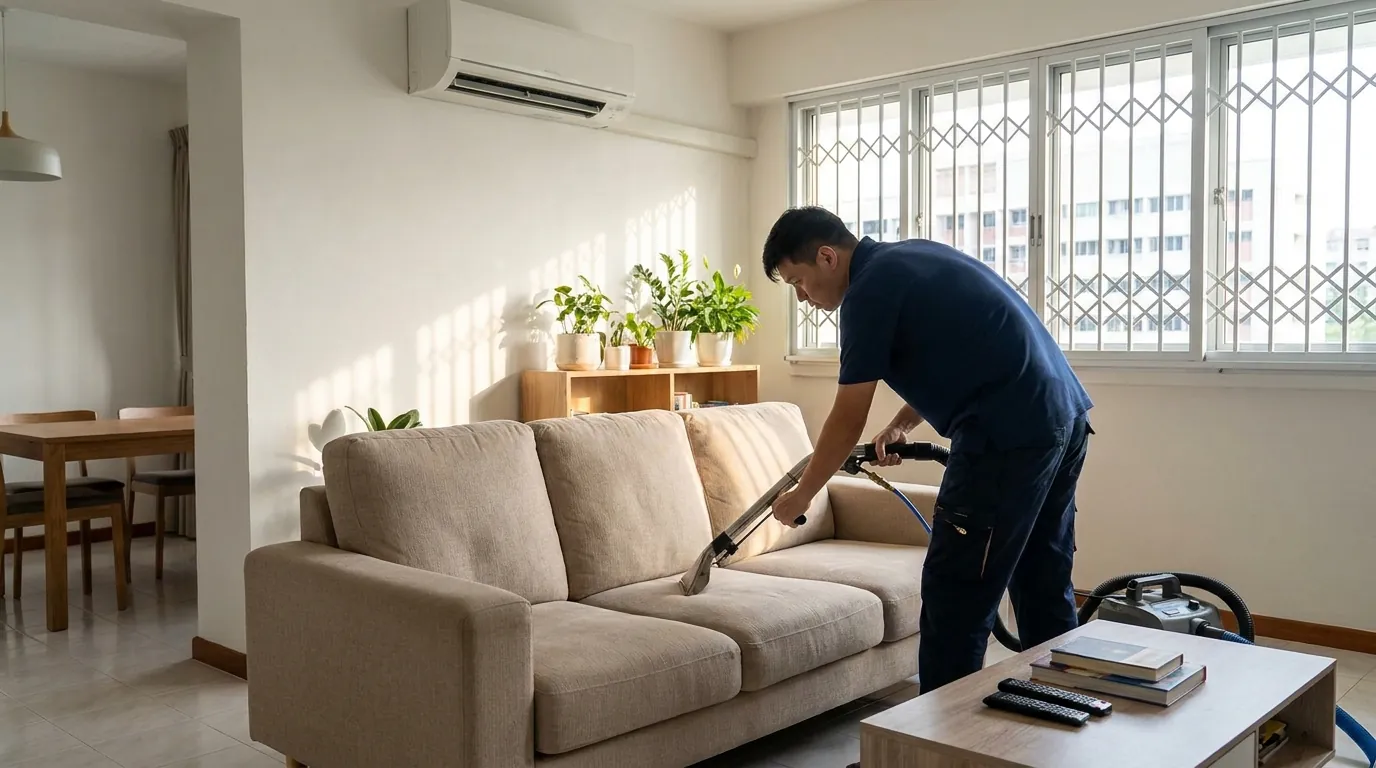
| Every 6–12 months | Professional deep extraction with a clean-water rinse pass, finished with a protective sanitising pass | Embedded dirt, dust mites and their allergen, odours, oil film |
Vacuuming doesn't replace extraction. A home vacuum pulls from the surface centimetre. The allergen load lives deeper in the cushion fill, where only machine extraction reaches. That's why a weekly-vacuumed sofa can still fail the smell test at month ten. What the deep clean costs is covered in our sofa cleaning price guide, and the full method-by-material picture is in the complete upholstery guide.
Wondering whether a protector spray could stretch the gap between deep cleans? Our fabric protection guide weighs up what a coating does and how long it lasts.