Most fabric sofa damage in Singapore homes doesn't come from stains – it comes from people trying to clean stains the wrong way. Soap residue attracts dust, over-wetting breeds mould in our humidity, and rubbing instead of blotting works the stain deeper into the fibres. Done correctly, a home clean can keep your sofa looking fresh between deeper professional cleans. This guide walks through the right way to do it.
Step zero: read your sofa's cleaning code
Almost every fabric sofa sold in Singapore has a cleaning-code tag, usually tucked under a cushion or along the seam at the back. Find it before you do anything else – the wrong cleaning agent can permanently mark or shrink the fabric.
Water-safe
Use water-based cleaner. Most fabric sofas in Singapore are W or WS.
Solvent only
No water. Use a dry-cleaning solvent or call a professional.
Either works
Both water-based and solvent are fine. Most flexible to clean.
Vacuum only
Do not apply any liquid. These fabrics are typically delicate or unbacked. Call a professional for stains.
If the tag is missing or unreadable, test any cleaner on a small hidden area first (back of the sofa, under a cushion seam). Wait 10 minutes. If the colour doesn't bleed and the fabric doesn't stiffen, you're safe.
What you'll need
- Vacuum cleaner with an upholstery brush attachment
- Two clean white microfibre cloths (white so dye doesn't transfer)
- A spray bottle of warm water mixed with a few drops of mild dish soap (W or WS only)
- A small bowl of plain warm water for the rinse step
- An electric fan or access to aircon on dry mode
Skip the steam mop and the carpet shampoo, and skip the supermarket "stain remover" sprays for routine cleaning. A cleaner labelled for upholstery is fine on a single new mark on W or WS fabric, provided you wipe the patch afterwards with a cloth dampened in plain water. Without that wipe, almost all of these sprays leave residue that goes sticky in Singapore's humidity and ends up attracting more dirt within a few days. If you do want a shop-bought product, our guide to choosing a sofa cleaner matches each type to your sofa's care code.
The 5-step home cleaning process
Vacuum every surface
Use the upholstery brush attachment. Lift cushions and vacuum underneath, into seams, and along the back. This is the most important step – any loose dust left behind will turn to mud streaks once you add water.
Spot-test your cleaning solution
Spray a small hidden area, blot with a microfibre cloth after a minute, and check for colour transfer. If the cloth comes back coloured, stop – your sofa needs a professional.
Mist, don't soak
Lightly mist the soiled area with your cleaner. The fabric should look damp, not wet. In Singapore, less water is always better – it dries faster and won't penetrate to the foam where mould grows. For even less water, whisk the mix and dab on only the foam with a white cloth. Mayer Fabrics' care guide says to spot clean W-coded fabric with the foam only.
Blot, don't rub
Press a clean microfibre cloth onto the area and lift straight up. Repeat with a fresh part of the cloth until no more dirt transfers. Rubbing pushes dirt deeper and damages the fabric weave.
Rinse and dry with airflow
Mist with plain warm water, blot dry, then sit a fan on the area for 2–3 hours. Aircon on dry mode works even better. Don't sit on the sofa or replace cushions until completely dry – pressing trapped moisture into foam is how mould starts.
Stain-specific tactics
Different stains need different approaches. Here are the most common ones we see in Singapore homes:
| Stain | What to use | Notes |
|---|---|---|
| Coffee or tea | Cold water + dish soap | Blot fresh stains immediately. Cold water – hot water sets coffee stains. |
| Food / oil | Dish soap solution | Sprinkle baking soda on the oil first, leave 15 min to absorb, vacuum, then blot. |
| Ink / pen | Plain rubbing alcohol | Apply to a microfibre cloth, not directly. Blot from the outside in to stop spreading. |
| Pet urine | Bio-enzymatic cleaner | Soap won't remove the smell. Enzymatic cleaners digest the uric acid. If it has soaked into foam, professional extraction is the only fix. |
| Vomit | Cold water + bicarbonate | Remove solids first. Sprinkle bicarb to absorb, vacuum, then blot with cold water. |
| Blood | Cold water only | Never warm water – it cooks the protein into the fibre. Old blood stains usually need professional treatment. |
Drying without mould (Singapore-specific)
Sofa fabric in Singapore can develop mould within 24 hours if it stays damp. Our 75–95% humidity means natural air drying isn't enough. Always dry actively with a fan, aircon dry mode, or dehumidifier – not just open windows.
Direct sunlight does dry fabric quickly, but it bleaches dyes. If you have to use sun, cover the cleaned patch with a thin white cloth to diffuse UV. Better: aircon on dry mode for 4–6 hours, or a fan blowing across the surface for the same time.
Don't replace cushions until both sides are bone dry. A common mistake is flipping a damp cushion back into place – moisture trapped between cushion and frame is exactly where mould starts.
When to stop and call a professional
Home cleaning works for surface dirt and fresh stains. It does not work for:
- Stains that have soaked through to the foam. No surface cleaning reaches that depth.
- Pet urine that has been there more than a few hours. The smell will return every time the sofa warms up. Only deep extraction fully removes it.
- Old set-in stains (coffee, blood, ink older than a few days). These usually need solvents and extraction.
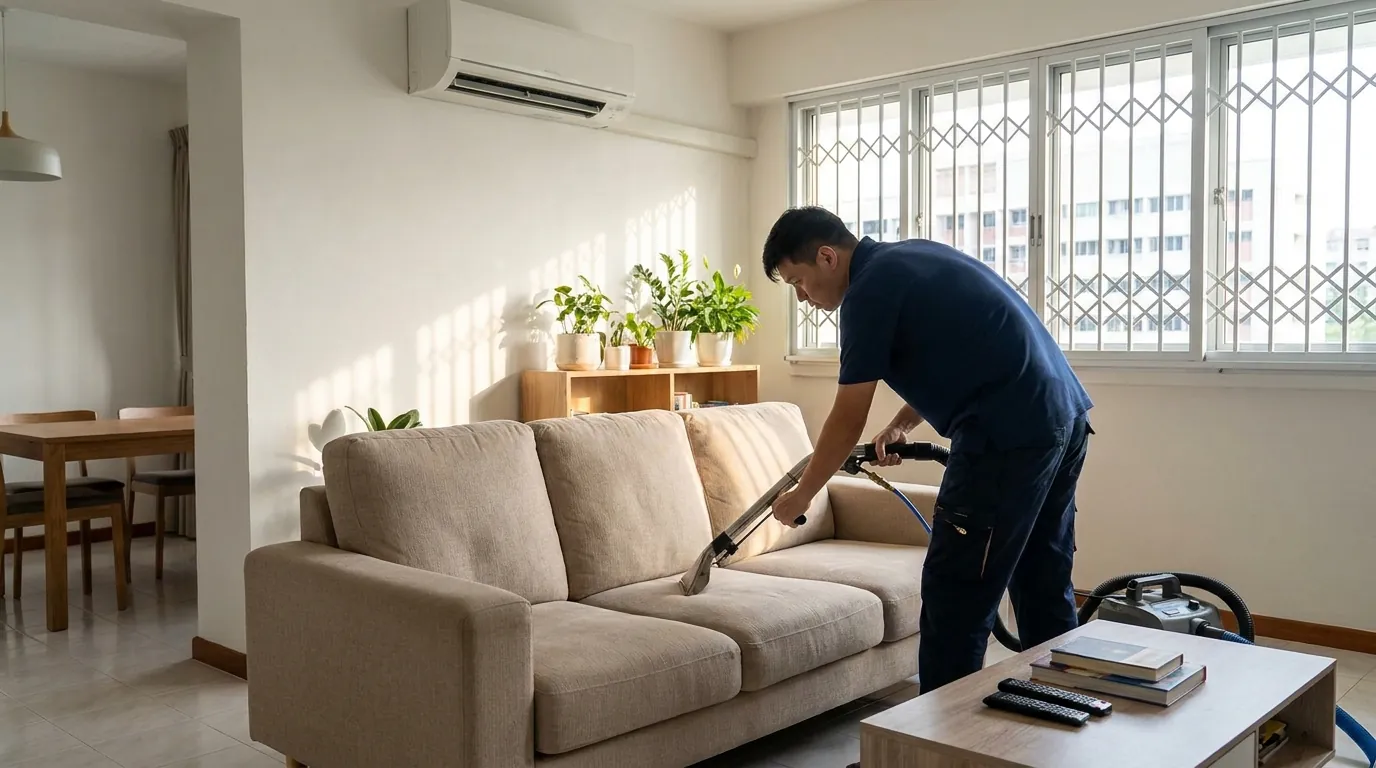
- Whole-sofa dullness or smell. If the entire sofa needs refreshing, surface cleaning won't help. You need water extraction through the full fabric depth.
- Sofas with X-coded fabric. Don't apply liquid at all. Call a professional who knows dry-cleaning techniques.
For everything above, our professional sofa cleaning service uses water extraction with a zero-residue rinse pass – safe for babies, pets, and sensitive skin. 3-seater sofas start at S$105 and most jobs take 45–60 minutes. Comparing services first? Our sofa cleaning buyer's guide covers what to ask before you book anyone.