Your sofa smells because Singapore's humidity keeps it damp inside. Sitting at around 80% relative humidity most of the year, the foam and fabric never fully dry out, so trapped moisture mixes with the body oils, sweat, food crumbs, and pet dander that soak in every day. Bacteria and mould feed on that mix, and the musty, sour smell you notice is the by-product they give off. The short version: the odour is not on the surface, it is living in the padding. This guide covers what is happening, what you can do at home tonight, and the point where DIY stops working and a proper clean takes over.
Why your sofa smells in the first place
A sofa is a warm, absorbent, rarely-dried cushion that you sit on for hours a day. In Singapore that is close to a perfect breeding ground. Every time you sit down, a little sweat and skin oil transfers into the fabric. Snacks drop crumbs. Pets shed dander and the odd accident. On its own that would air out, but the humidity here does not let it.
At roughly 80% relative humidity, the foam core holds onto moisture instead of releasing it. That trapped water is what turns ordinary residue into a smell. Bacteria and mould need warmth, food, and moisture, and a Singapore sofa hands them all three. As they break down the oils and food deep in the padding, they release the gases we read as musty, damp, or sour. That is why spraying the surface does so little: the source is a few centimetres down, where air fresheners never reach.
It also explains the pattern most people notice. The smell is worse after a rainy spell, worse on a sofa pushed against an outside wall, and worse on older cushions that have absorbed years of use. None of that is dirt you can see. It is moisture and residue you cannot.
First, work out what you are smelling
Different smells point to different causes, and the fix is not the same for each. Pick the smell closest to yours below. You will get the likely cause, a quick thing to try at home, and an honest read on whether it usually needs a professional clean to fully clear.
If the diagnoser points you toward professional help, that is not a sales line. It is the difference between covering a smell and removing what causes it, which we get into below.
The DIY routine that actually helps
Before you spend anything, run this sequence in order. It will not rescue a sofa with urine soaked into the foam, but for everyday mustiness and mild smells it makes a real difference, and it costs almost nothing.
- Vacuum thoroughly, including the seamsUse the upholstery and crevice tools to lift out crumbs, skin flakes, and dander from the surface and down the sides of the cushions. Much of a mild smell is loose debris. Getting it out first stops everything else you do turning it into a paste.
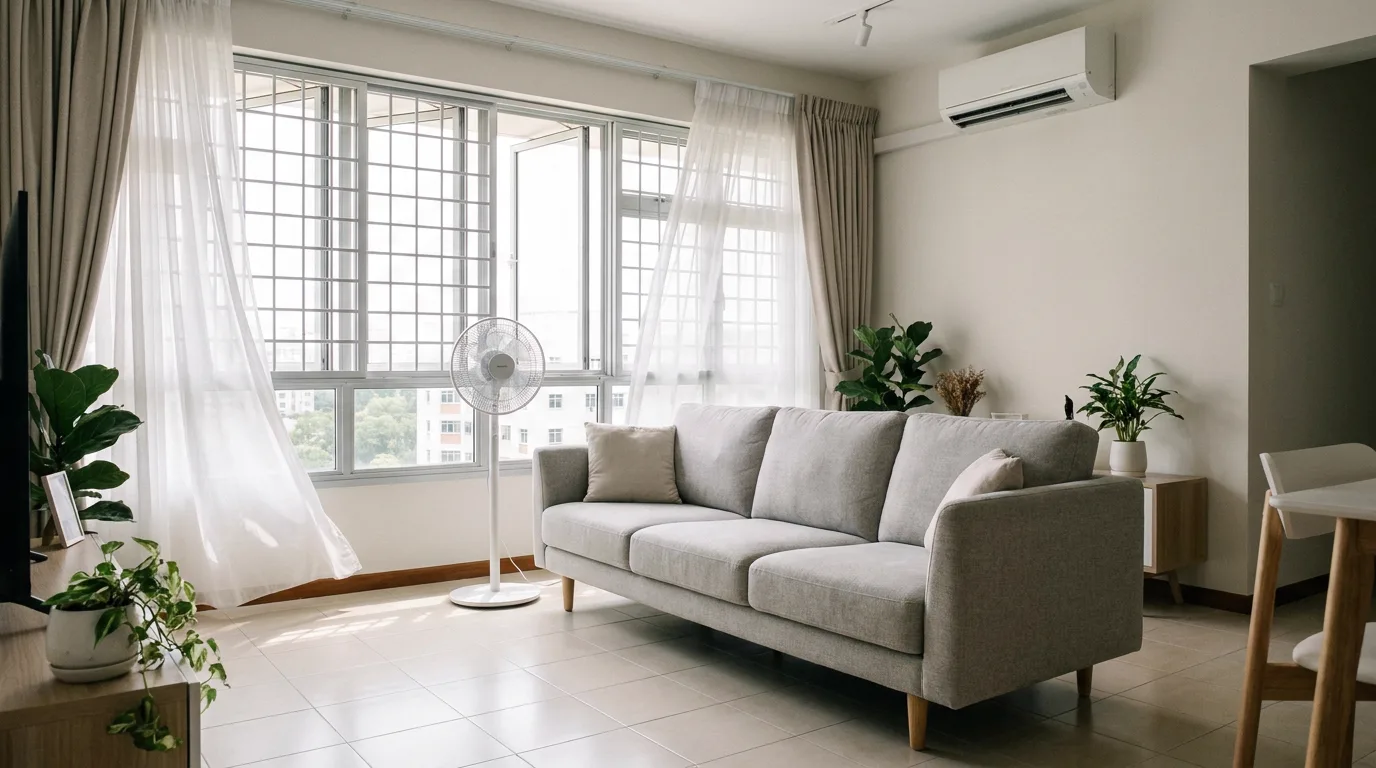
- Dry the sofa outThis is the step most people skip and it is the most important one here. Point a fan directly at the cushions for a few hours, or run the aircon in the room, to draw the trapped moisture out of the foam. Drier foam gives the bacteria nothing to work with.
- Deodorise with baking sodaSprinkle a generous, even layer of baking soda across the fabric, work it in gently with a soft brush, and leave it for at least a few hours or overnight. It absorbs odour and moisture rather than masking them. Then vacuum every trace back up.
- Air it near an open windowOpen the windows, pull the sofa away from the wall, and let it breathe. Cross-breeze on a dry day moves out the stale air that has settled into the padding. A dehumidifier in the room speeds this up in our climate.
- Sun the removable cushionsIf your covers or cushion inserts come off, a few hours of direct sunlight is a natural deodoriser and helps kill surface bacteria. Check the care label first, and never do this with delicate or dark fabrics that can fade.
Work through those and a mild, everyday smell often lifts. Our step-by-step guide to cleaning a fabric sofa covers the full DIY method if you want to go deeper, and cleaning regularly is the best prevention, which is why we suggest a sensible cleaning frequency for Singapore homes.
When DIY will not fix it
Here is the honest bit. Baking soda, fans, and airing all work on the surface and the air around the sofa. They cannot reach odour that has set deep into the foam, and they do nothing for the residue that keeps feeding the smell. Once that line is crossed, you are masking, not removing.
Call a professional when the smell keeps coming back. If mustiness returns within days of a DIY clean, if there is pet urine involved, or if a damp smell has set in after a leak or a long humid spell, the source is deep in the padding. That is exactly what water extraction is built to remove, not cover.
The reason a professional clean works where DIY does not is mechanical. We clean fabric sofas with room-temperature water extraction and a zero-residue rinse. A cleaning solution is worked into the fabric to lift the trapped oils and residue, then the extraction machine pulls the dirty water, the loosened residue, and the excess moisture straight back out of the foam. It physically removes the thing the bacteria were feeding on, rather than perfuming over it. That is why a smell that survives every DIY trick usually clears in one proper visit.
For odours that have really settled in, two things stack on top of the standard clean:
- A second water-extraction pass. For stubborn, deep smells we run the extraction over the affected cushions a second time, drawing out residue the first pass loosened but did not fully lift.
- The Premium Steam add-on (+S$30). An optional high-heat sanitising pass over the fabric after extraction, useful for a deep-set smell you want thoroughly knocked back.
Pet smells are their own category, because urine soaks into the foam and keeps releasing odour long after the surface looks clean. If that is your situation, read our pet-safe zero-residue guide for how we handle it. And if the smell is really coming from the mattress rather than the sofa, our mattress stain and odour guide is the sister article to this one.
What an odour clean costs
Sofa cleaning is priced by the size of the piece, and a deep clean to remove smells is the same job as a standard clean, so there is no odour surcharge. These are the fabric sofa rates:
| Piece | Price | Notes |
|---|---|---|
| 1-seater armchair | S$58 | Comfortably above the S$50 minimum job fee |
| 2-seater sofa | S$90 | Water extraction, zero-residue rinse |
| 3-seater sofa | S$105 | The most common living-room size |
| L-shaped (3-seater) | S$120 | Full extraction across the run |
A minimum job fee of S$50 applies, and every piece above already clears that floor. The only add-on is Premium Steam, +S$30 for a heat-sanitising pass. Every online booking earns a stamp on the Upward Stamp Card. Full rates sit on our services and pricing page. Send a photo of the sofa and describe the smell on WhatsApp and you get a fixed number back before anyone visits.