If you've ever flipped a mattress in Singapore and seen the yellow halo of old sweat, the brown shadow of a teh tarik spill, or a blood spot from a mosquito-bite scratch in the middle of the night – you know how stubborn mattress stains are. They're harder to clean than sheets, harder than sofas, and the wrong move sets them in for good.
This is the short, practical guide to how to clean stains in a mattress – the five most common ones we see in Singapore homes, the right agent for each, and the warnings that matter.
The 5 most common mattress stains in Singapore homes
Across thousands of mattresses cleaned, the same five stains turn up again and again – and humidity makes all of them set faster than they would in a drier climate:
- Sweat – the yellow halo around the upper third of the mattress. Builds invisibly over months, then suddenly shows.
- Urine – kids, pets, the occasional adult mishap. The smell outlasts the visible stain by a lot.
- Blood – mosquito-bite scratches, cuts, nosebleeds. Sets fast and turns brown if you use warm water.
- Drinks – coffee, kopi, wine, teh, soft drinks. Sugar in the liquid attracts dust mites long after the stain dries.
- Period blood – same chemistry as blood but usually larger volume, and soaks deeper before you notice.
Stain-by-stain treatment
The key principle: match the chemistry to the stain. There's no universal mattress cleaner. Each of these needs a different agent, applied a specific way.
| Stain | Treatment | Critical warning |
|---|---|---|
| Sweat | Mix 1 tbsp dish soap, 1 tbsp hydrogen peroxide, 1 tbsp baking soda. Apply, leave 15 min, blot off with cold water. | Test peroxide on a corner first – can lighten coloured fabric. |
| Urine | Blot dry first. Apply enzyme cleaner (pet enzyme works for human urine too), leave to dwell 10–15 min, blot. Do not rinse with water – let it dry. | Soap alone won't remove the smell – uric acid crystals need enzymes. |
| Blood | Cold water + a few drops hydrogen peroxide. Blot, don't rub. Repeat in passes until the stain lifts. | Hot water bonds the protein to the fibre – the stain becomes permanent. |
| Drinks (kopi, wine, soft drink) | Blot up liquid immediately. Dilute with cold water, blot. Then mild dish-soap solution, blot. Sprinkle baking soda once dry to lift residue. | Sugar residue attracts dust mites – a "dry" mattress can still be a problem. |
| Period blood | Same as blood, but expect 2–3 passes minimum. Salt paste (1:1 salt + cold water) for 30 min before the peroxide pass helps for set-in stains. | Never use warm water. Soak depth is the bigger problem here. |
Soaking the mattress. Pour-on cleaning forces liquid deep into the foam, which Singapore's humidity then takes days to dry. Result: a clean-looking surface and a mouldy core. Use a damp cloth or spray bottle, never a pour. Blot, don't scrub.
Why mattress fabric is harder to clean than sheets
Sheets you can wash. A mattress is the opposite of washable – and there are two reasons it's harder than even a fabric sofa:
- Depth. Liquid travels through the quilted top and into the foam layer underneath. The visible stain is only the top of the problem. Surface treatment alone leaves the deeper portion in place.
- Foam absorption. Polyurethane foam holds liquid like a sponge – and unlike fabric, you can't wring it out. Anything you put on the mattress that isn't extracted stays in the foam.
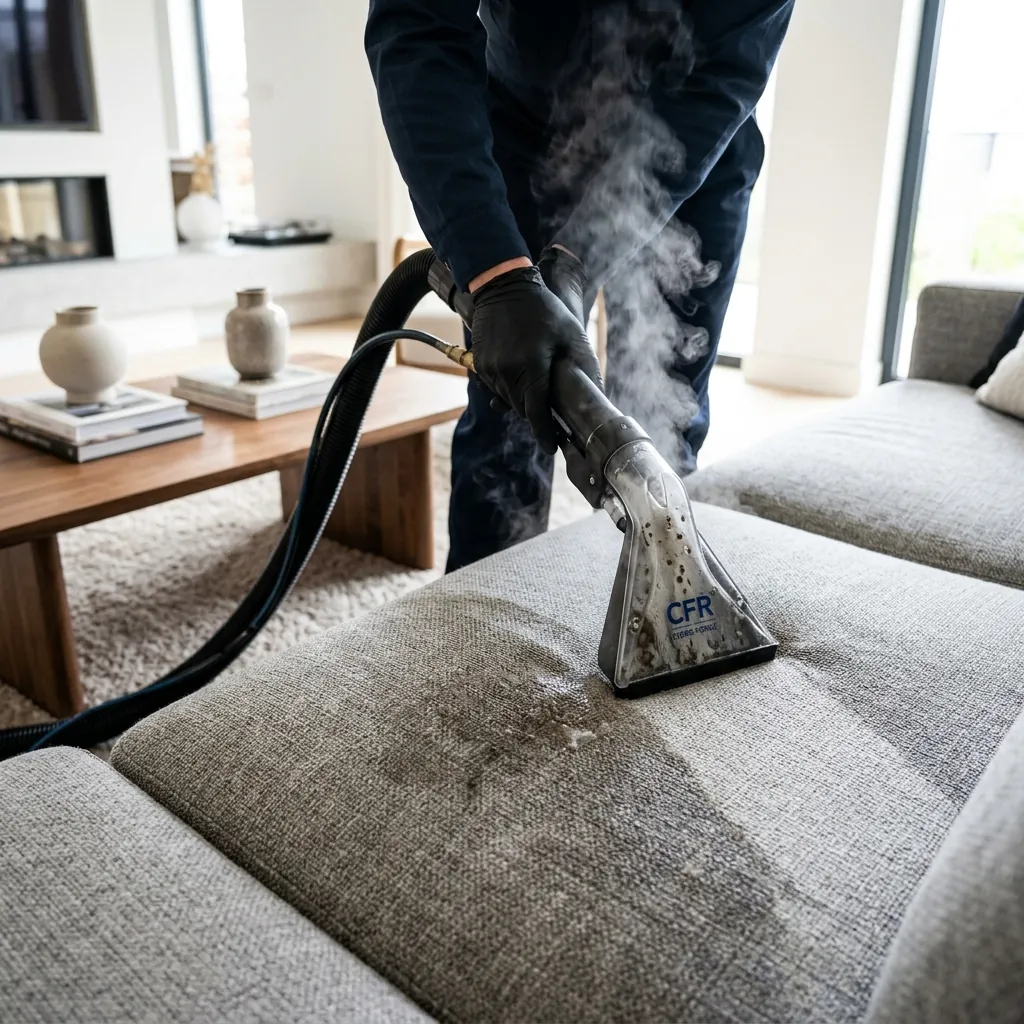
That's why professional mattress cleaning uses water extraction: injecting water into the fabric under pressure, then immediately vacuuming it back out along with whatever it has loosened. Without extraction, you're just rearranging the stain. Our mattress cleaning cost and process guide walks through the full job, step by step, with fixed prices by size.
When to stop DIY and call a pro
Three signs the stain is past the point of home treatment:
- Soak-through. If you can press on the spot and feel dampness on the underside, liquid has reached the foam. You can't reach it from above.
- Set-in or old. Anything that has been there more than a week, or has been "cleaned" once already with the wrong agent, won't lift with a second DIY pass – it'll just smear.
- Persistent smell after drying. Especially with urine. If the smell comes back when the mattress warms up under your body heat, the protein is still in there and only deep extraction will fix it.
This is genuinely what professional mattress cleaning is for – not the visible surface stain, which you can usually lift yourself, but the foam-layer contamination underneath. Our process: water extraction, a clear-water rinse pass, dry extraction, then a closing hospital-grade sanitising pass. The mattress is dry within 4–6 hours under aircon, with no residue, no smell, and nothing left in the foam.