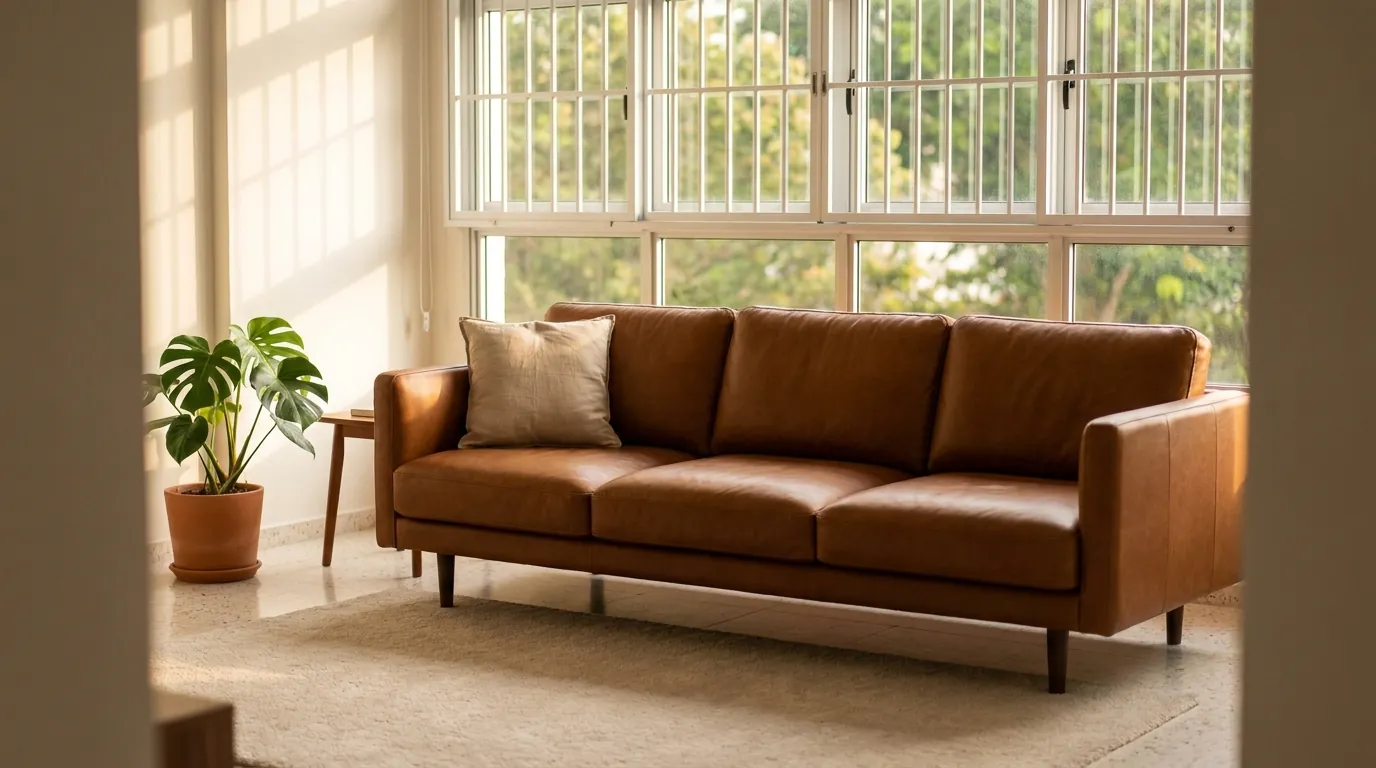
Most leather sofa problems in Singapore homes don't start with dirt – they start with a wipe-down that was meant to help. A spritz of all-purpose cleaner, a "leather wipe" from the supermarket, or a vinegar-and-water mix from a YouTube video. Two months later, the seat cushion has a faint sticky patch. Six months later, the armrest has a hairline crack. The owner assumes the sofa is wearing out. It isn't – it's been slowly stripped of the oils that keep it supple. This guide covers what leather actually needs, what to avoid, and how to keep a leather sofa looking good in Singapore for a decade or longer.
Why leather is different (and what most people get wrong)
A fabric sofa is a textile. You can extract dirt out of it with water, sanitise the fibres, and let it dry. A leather sofa is a piece of treated animal hide that's been dyed, sealed with a top coat, and stretched over a frame. The cleaning rules are opposite:
- Fabric sofa: water and detergent in, dirt and water out. The point is extraction.
- Leather sofa: dust and grime off the surface, conditioning oils in. The point is replenishment.
Almost every mistake people make with leather comes from treating it like fabric – soaking it, scrubbing it, or trying to "deep clean" it with water. Leather isn't porous in the way fabric is. Water that gets into it doesn't lift dirt; it sits behind the protective top coat and rots from the inside out.
The other thing worth knowing: most leather sofas sold in Singapore are pigmented (protected) leather, not aniline or pull-up. That top coat is what makes leather wipeable in the first place. If you use a harsh cleaner that dissolves the coating, you also dissolve the colour underneath – which is why you see uneven patches on old sofas that have been "cleaned" too aggressively.
How often to clean leather in Singapore
The advice you'll see online – "leather only needs a clean once a year" – was written for European or American homes. In Singapore, two forces work against leather simultaneously: humidity introduces mould risk on the back of cushions (where airflow is poor), and aircon strips moisture from the leather face. The result is leather that ages faster on both sides at once.
| Action | How often | What it does |
|---|---|---|
| Dry dust / vacuum (brush nozzle) | Weekly | Removes grit before it gets ground into the surface. |
| Damp microfibre wipe (distilled water, well-wrung) | Monthly | Lifts skin oils, dust, and food residue from daily use. |
| Professional clean & condition | Every 6–12 months | Deep-clean with pH-balanced leather cleaner, then replenish lost oils. |
| Full restoration (re-dye, repair) | Every 5–10 years (if needed) | Only for visible cracking, fading, or colour loss. |
If your home is aircon-heavy (most of the day, every day), bump the professional condition to every 6 months. If the sofa sits in a less-conditioned room with good airflow, 12 months is fine.
The 4 leather cleaning methods (and when to use each)
There are four real options. The right one depends on how dirty the leather is and what's actually on it.
1. Dry dust / vacuum
Brush-nozzle vacuum, low suction, including the seams and under the cushions. Removes grit and food crumbs before they cause abrasion. Takes 5 minutes.
2. Damp microfibre wipe
Distilled water only (tap water leaves mineral deposits), well-wrung cloth. Wipe in straight lines, then immediately dry with a second cloth. No detergent, no spray cleaner.
3. Clean & condition
pH-balanced leather cleaner applied with a soft pad, dirt lifted, then a high-quality conditioner massaged in to restore lost oils. No extraction, no soaking. The standard service for an annual maintenance clean.
4. Deep restoration
For leather with visible cracking, fading, or stains that won't lift. Involves stripping the old finish, re-dyeing, and re-sealing. Usually only needed every 5–10 years on heavily used pieces.
Never use a steam cleaner on leather. Steam softens the protective top coat and can permanently dull or distort the finish. If a cleaner offers "steam cleaning for leather," they don't specialise in leather – book someone else.
Common mistakes that ruin leather sofas in Singapore
If your sofa is showing problems, the cause is usually on this list. Most of these mistakes are recoverable if caught early – but a few aren't.
1. Vinegar and water sprays
Popular in DIY guides, lethal to leather. Vinegar is acidic; the top coat on protected leather is pH-sensitive. Over months, vinegar wipes etch the finish and create dull patches that don't reflect light evenly. Verdict: never use on leather.
2. Alcohol wipes, hand sanitiser, makeup remover
All dissolve the protective finish. The damage isn't always visible the first time – but after a year of regular use, you'll see a smoother, shinier patch where the wipes touched. That's the top coat going thin. Verdict: never on leather. For sanitising, ask your cleaner to use a leather-safe sanitiser.
3. Baby wipes
Parents reach for these reflexively. Most baby wipes contain mild surfactants, fragrance, and propylene glycol – none of which leather likes. They leave a faint waxy film that attracts dust and slowly degrades the finish. Verdict: safe for skin, not for leather.
4. Soaking the leather with water
Water that gets past the top coat – through a seam, a scratch, or a thin spot – can rot the leather from the inside. By the time you see the discolouration, the damage is permanent. Verdict: always wring cloths until they feel only slightly damp.
5. Direct sun or AC vent in front of the sofa
Sunlight fades the dye and dries the leather; an AC vent blowing directly on the leather strips oils 24/7. The fix is positional – move the sofa or redirect the vent. Verdict: a problem that compounds for years before it's visible.
6. Pen marks left untreated
Ballpoint ink sets into leather within a few hours. After that, home remedies (hairspray, alcohol) usually make things worse because they damage the finish around the mark. Verdict: if it's been longer than a day, call a professional rather than scrubbing.
How to choose a leather sofa cleaner in Singapore
Leather is a specialist material. A cleaner whose main expertise is fabric sofas, mattresses, or carpets isn't automatically qualified to clean leather. These five questions will tell you who actually knows what they're doing:
What to ask before you book
- "Do you use water extraction on leather, or a leather-specific cleaner?" The correct answer is the second one. Extraction belongs on fabric, not leather.
- "Do you condition after cleaning, or just clean?" Cleaning without re-conditioning leaves leather drier than before. A real leather service does both in one visit.
- "What's your process for cream or light-coloured leather?" Light leather is more prone to dye transfer from jeans. A good cleaner will mention spot-testing and a specific approach.
- "Can you tell me what type of leather I have?" A good cleaner can identify pigmented, semi-aniline, aniline, or PU leather by sight and touch. If they can't, they shouldn't be cleaning it.
- "Is the conditioner safe for babies and pets?" A confident answer should reference no chemical wait time and zero residue once the surface dries.
What leather sofa cleaning costs in Singapore
Leather is typically priced per piece – by seater – rather than per square metre, because the work is on the surface area rather than the depth of the fabric. Most reputable Singapore services include both cleaning and conditioning in one quoted price. If you are comparing quotes, our guide to choosing a sofa cleaner covers the five questions to ask first.
| Service | Typical SG range | Upward price |
|---|---|---|
| 1-Seater Leather Armchair | S$60–S$100 | S$110 |
| 2-Seater Leather Sofa | S$90–S$150 | S$140 |
| 3-Seater Leather Sofa | S$110–S$180 | S$160 |
| L-shaped / Custom configurations | S$150–S$280 | Custom quote |
| Pen mark / spot stain removal (add-on) | S$30–S$80 per mark | Quoted on inspection |
See our full sofa pricing on our sofa cleaning page, or message us on WhatsApp with a photo of the sofa for a fixed quote. Leather cleaning at Upward includes a full clean plus moisturise, zero residue left behind – same-day appointments often available.