Singapore renovates more than almost any city on earth. HDB BTOs hand over by the hundred every quarter, en-bloc condos generate full-unit refurbishments, and resale flats get gutted between owners. The renovation calendar is year-round – and behind every handover photo is a unit that is technically "done" but absolutely not ready to live in.
The problem most homeowners discover too late: general home cleaners are not post-renovation cleaners. The work is harder, the materials are different, and the soft furnishings that arrive in the same week need their own specialist clean before a child or pet ever touches them. This guide walks through the 4-phase post-reno clean, when to book it, what it costs in Singapore, and where the specialist work (the part Upward does) actually fits into the bigger job.
Why post-renovation cleaning is different from regular cleaning
Most general cleaners in Singapore are trained for two scenarios: weekly maintenance, and end-of-tenancy cleaning. Post-renovation is a third category, and it behaves like neither.
Three things make it harder than a regular deep clean:
- Cement and gypsum dust penetrates deep. Renovation dust is far finer than household dust – small enough to settle 2–3mm into porous surfaces (grout, fabric, the texture on matt paint, even the inside of switch covers). A vacuum alone removes the top layer and leaves the rest. Wipe it dry and you smear it. The right move is HEPA vacuum first, then damp microfibre in a one-direction wipe.
- Sealant, paint and adhesive fumes off-gas for weeks. Silicone sealant around tiles, water-based paint, vinyl flooring glue, MDF cabinet panels – they all release volatile organic compounds (VOCs) for 2–4 weeks after installation. Cleaning before they've had time to off-gas traps the fumes under whatever you put down (furniture, mats, sealed cabinets) and slows the process.
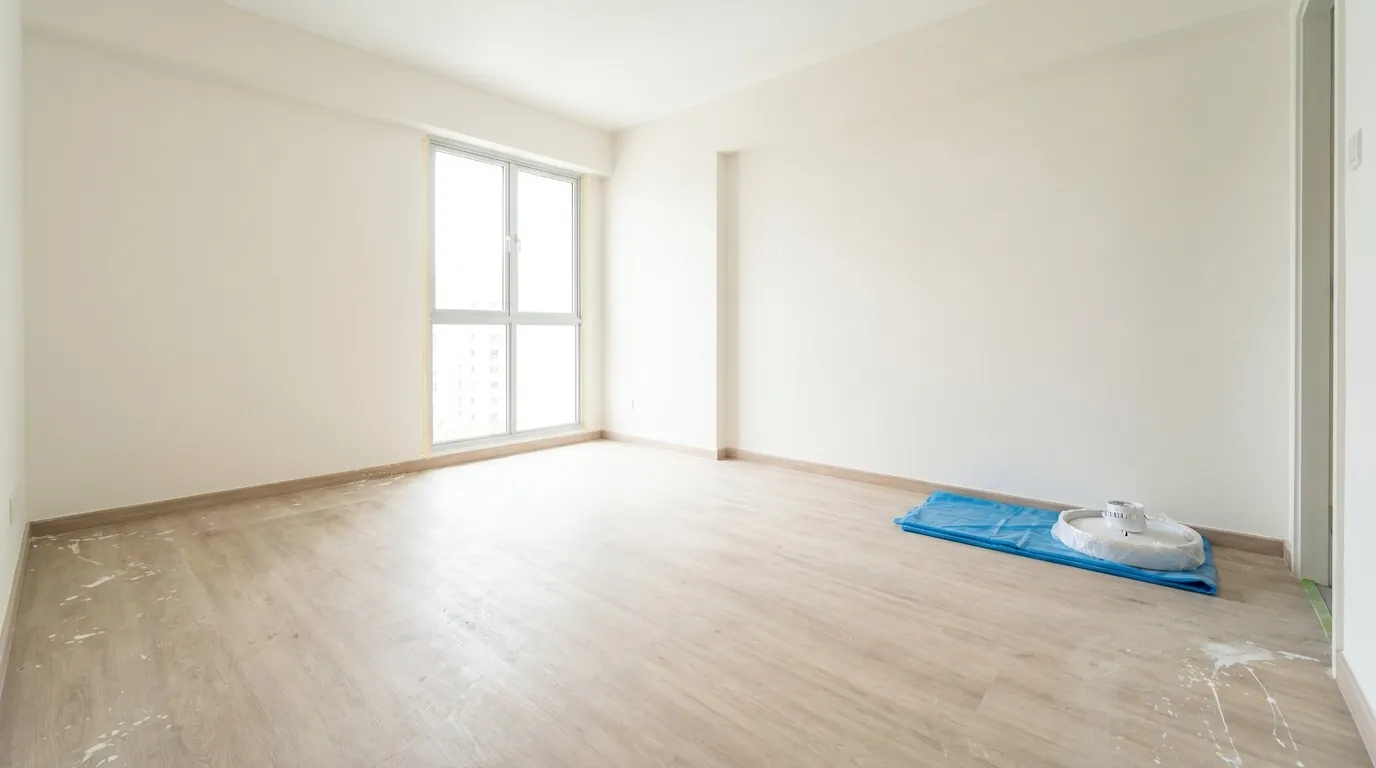
- Paint splatters and grout haze need solvents, not scrubbing. The fine paint specks on a freshly tiled floor look like they'll wipe off. They won't. Scrubbing them moves the colour into the grout. They need the right solvent (paint-specific remover for emulsion, mineral spirits for oil-based) applied carefully – a step most regular cleaners skip and most homeowners damage their floor attempting.
The result: a "post-renovation clean" by a general cleaner often leaves a unit that looks bright on day one and starts coughing up streaks, dust bunnies, and residue smells over the next month. The clean wasn't wrong – it just wasn't the right type of clean.
The 4-phase post-renovation clean
A proper post-reno job is sequential. You cannot do phase 3 well if phase 2 was rushed. The right team works through the unit in this order:
Rough debris sweep
Bag up leftover offcuts, packaging, masking tape, paint tin lids, cable clippings. Vacuum loose dust from the floors. Most renovation contractors do this before handover – but verify, don't assume.
Dust extraction
HEPA vacuum every horizontal surface, then every vertical (yes, walls). Pay special attention to AC vents, ceiling fan blades, top of door frames, and the rim of light fixtures – all dust traps. Damp-wipe last to lift the residual fines.
Surface deep clean
Paint splatter removal (right solvent for the paint type), grout haze stripping, polish floors, scrub bathroom tiles, descale taps, degrease kitchen surfaces. This is where most of the labour-hours go.
Soft furnishing sanitisation
New sofa, mattress, curtains, rugs – all arrive with factory chemicals, shipping dust, and (in Singapore's humidity) a head-start on dust mites. Water extraction with a clean-water rinse pass for the sofa, mattress and rugs, and on-rail steam for the curtains, before family use. This is the part Upward specialises in.
The expensive mistake: bringing in furniture and unrolling rugs before phase 2 is complete. Dust extraction with a freshly delivered sofa in the room means the sofa becomes a dust sink – and you'll feel it for months. Wait until phases 1–3 are signed off before any soft furnishings come through the door. Schedule the delivery for the day after the deep clean.
What to do with new sofas, mattresses, and curtains
This is the part most Singapore homeowners get wrong, and it's also where the worst hidden problem lives. Brand new soft furnishings are not clean. They have been:
- Sprayed with flame retardants at the factory (regulatory requirement in many supply chains – including imports into Singapore).
- Treated with anti-stain chemistry (fluorocarbons, acrylic resins) that off-gas slowly into the room.
- Shipped in plastic-wrapped containers that trap formaldehyde from MDF frames, glues, and foam.
- Stored in showroom or warehouse conditions where dust, perfumes, and (in Singapore) high ambient humidity have already done weeks of work on them.
None of this is dangerous in trace amounts. But for a family with a toddler, a baby on the way, or a pet that will spend hours a day on the fabric, the difference between "showroom-fresh" and "actually clean" is worth the one-off specialist pass. More on zero-residue cleaning for households with children and pets.
| New item | What's on it | Recommended clean |
|---|---|---|
| Fabric sofa | Flame retardant spray, anti-stain coating, shipping dust, warehouse humidity | Water extraction + clean-water rinse |
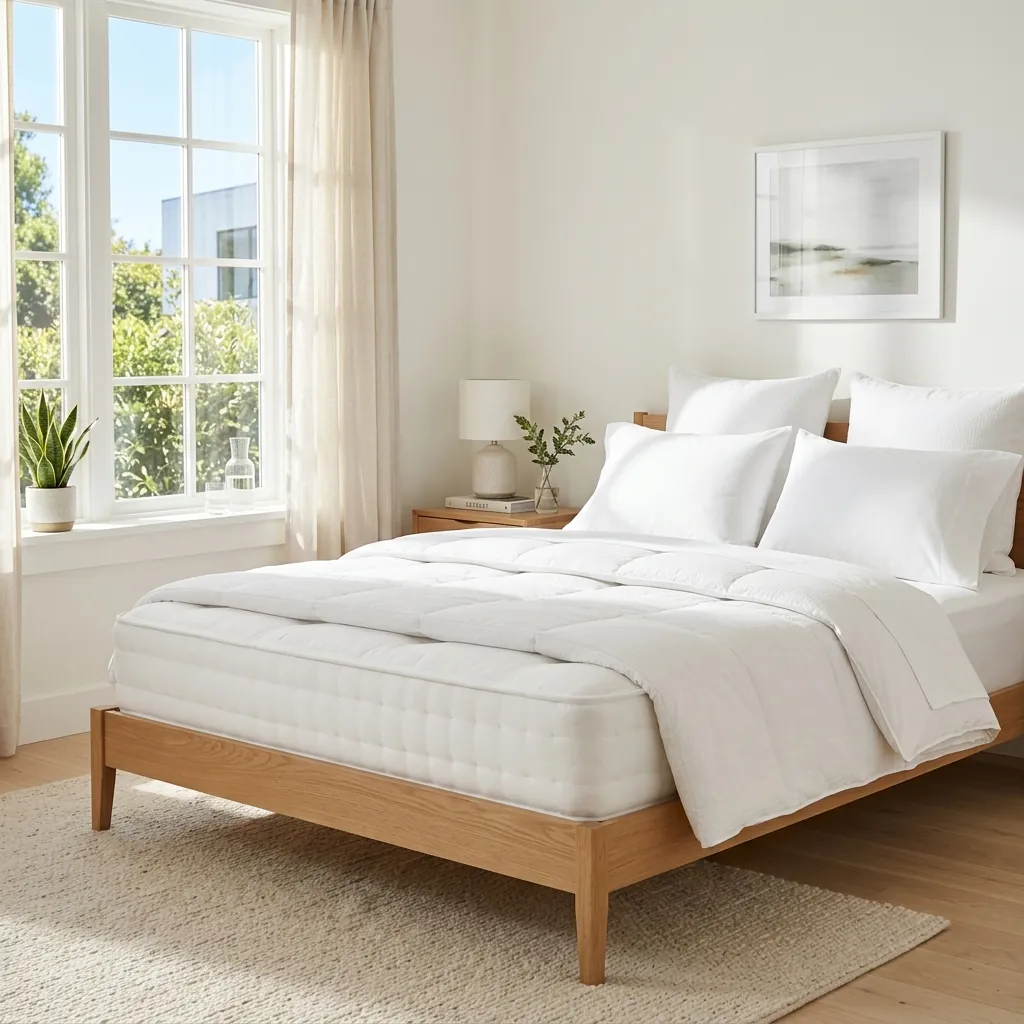
| New mattress | Formaldehyde from foam & glue, fire-resistant chemistry, sometimes a "new mattress" odour | Air out for 24–48 hours, then full extraction sanitisation before sheets go on |
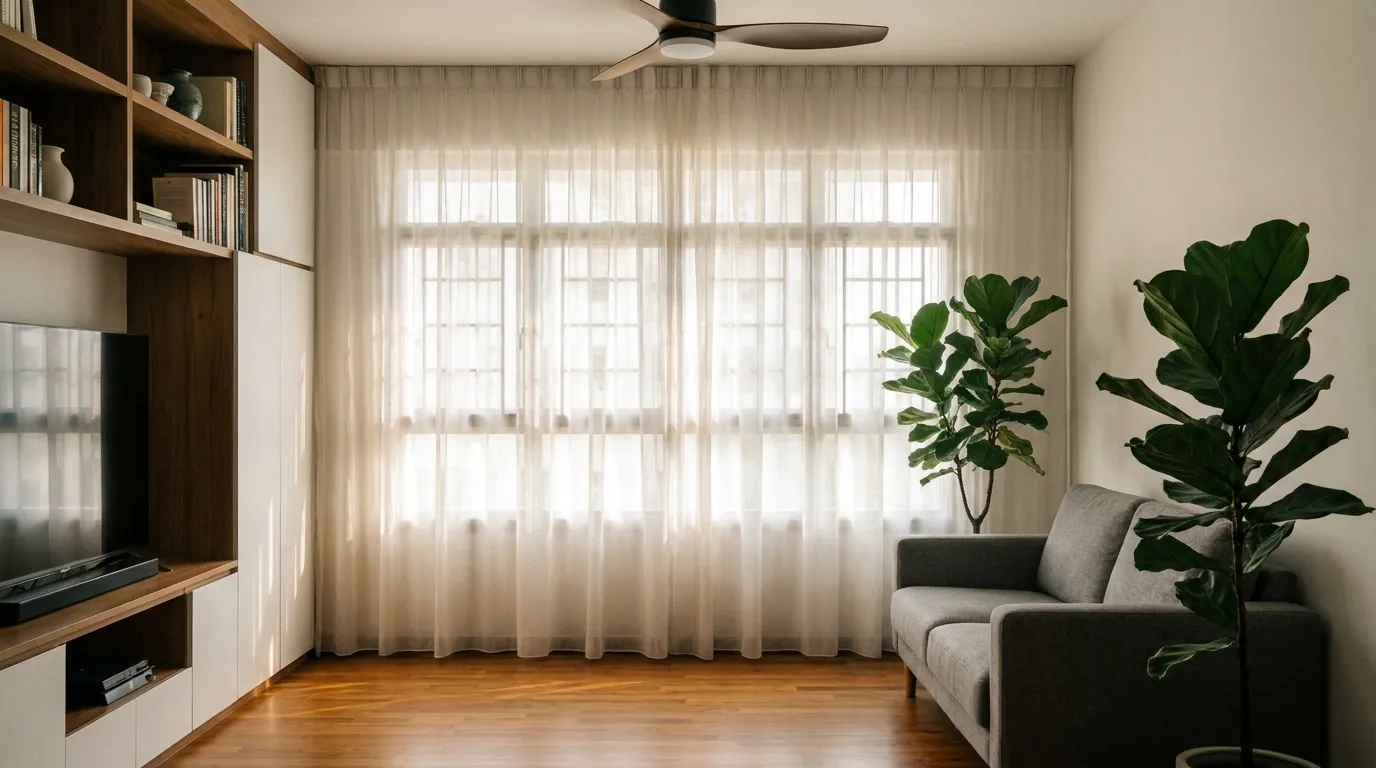
| Curtains (new) | Fabric finish chemicals, packaging creases, sizing starch, dust from rail installation | On-rail steam to set the pleats and lift finish chemicals – avoid washing-machine shrink |
| Wool / synthetic rugs | Backing-adhesive off-gas, shipping dust, fibre shed | Room-temperature water extraction, with less water on wool; vacuum daily for the first week |
| Cot / nursing chair | The same chemistry as adult furniture, but used by infants whose skin and lungs are far more sensitive | Deep clean + medical-grade sanitisation – this is non-optional if the baby moves in immediately |
How long after handover should you book the deep clean?
Earlier is not better. The sweet spot is 3–5 days after handover, for three reasons:
For families with infants or anyone with asthma or eczema, lean towards the longer end of every window. The extra few days of off-gassing makes a measurable difference to indoor air quality in the first month.
What post-renovation cleaning costs in Singapore
Pricing varies more in this category than in any other home-cleaning service, because the scope varies enormously. A 3-room HDB with two bathrooms and no soft furnishings is a completely different job from a 5-room with three bathrooms, a balcony, and a full set of brand new fabric furniture.
The going Singapore rates for the post-reno (phases 1–3) portion as of 2026:
| Unit type | Typical scope | Indicative price |
|---|---|---|
| 1–2 room HDB / studio | 1 bathroom, basic kitchen, ~40–55 sqm | S$280–S$420 |
| 3-room HDB | 1 bathroom, 2 bedrooms, ~60–70 sqm | S$380–S$520 |
| 4–5 room HDB | 2 bathrooms, 3 bedrooms, ~90–120 sqm | S$480–S$680 |
| Executive / condo (3-bedroom) | 2–3 bathrooms, balcony, kitchen island | S$580–S$800 |
| Larger condo / landed | Multi-floor, >1,500 sqft | S$800+ (quoted per visit) |
Note: the table above is for phases 1–3 only (the dust + surface job). Phase 4 – soft furnishing sanitisation – is priced separately based on items. See our sofa & upholstery pricing.
Two things will push the price up beyond these ranges:
- Visible paint splatter or grout haze. Solvent work is slow and careful. If the contractor handover was sloppy, plan for an extra S$80–S$200 on the cleaner's quote.
- Built-in carpentry with deep grooves. Wardrobe interiors, kitchen toe-kicks, and built-in TV consoles trap dust in a way painted walls don't. They take longer to extract clean.
Where Upward fits into your post-reno project
To be transparent: Upward does not currently offer the full phase 1–3 post-renovation clean. That's a different specialism (paint solvents, grout chemistry, broad surface coverage) and we'd rather refer you to a dedicated post-reno crew for that part of the job.
What we do handle is phase 4 – the soft furnishing + sanitisation portion. This is the step most post-reno cleaners skip or do badly, because it requires extraction equipment they don't carry. Specifically:
- Brand new sofa water extraction – removes flame retardant, anti-stain coating, and warehouse dust before the family sits on it for the first time.
- New mattress sanitisation – water extraction + medical-grade sanitiser (the same chemistry used on infant feeding equipment) so the children's room is genuinely safe from night one.
- On-rail curtain steam – lifts factory finish chemicals and sets the pleats without the wash-machine shrink risk that ruins so many new curtains.
- New rug / carpet extraction – at room temperature, with less water on wool. Tell us first if the rug is viscose or silk.
- Nursery items – cot mattress, nursing chair, soft toys. The non-negotiable step if a baby is moving in straight after handover.
The cleanest workflow we see from our most-organised clients: their post-reno contractor finishes phases 1–3 on day 4 or 5, furniture and soft furnishings arrive on day 6, and we come in on day 7 or 8 to do phase 4. Total cost works out around S$500–S$1,100 depending on the unit, and the unit is genuinely move-in ready when it's done – not just "looks bright" ready.
Booking tip: WhatsApp us with your handover date and a photo of the new sofa / mattress / curtains. We'll suggest a phase-4 slot that fits around your contractor's deep clean, plus a fixed price quote – no site visit needed for standard items.