The ads make it look simple: a handheld machine taps the mattress, shines a UV light on it and fills a clear cup with grey powder. Most models we priced cost under S$100 at the time of writing, so it is a tempting fix for sneezy mornings. We clean mattresses for a living. We do not sell vacuums or covers, but we do sell deep cleaning, so weigh our view with that in mind.
What is a dust mite vacuum, and what does each part do?
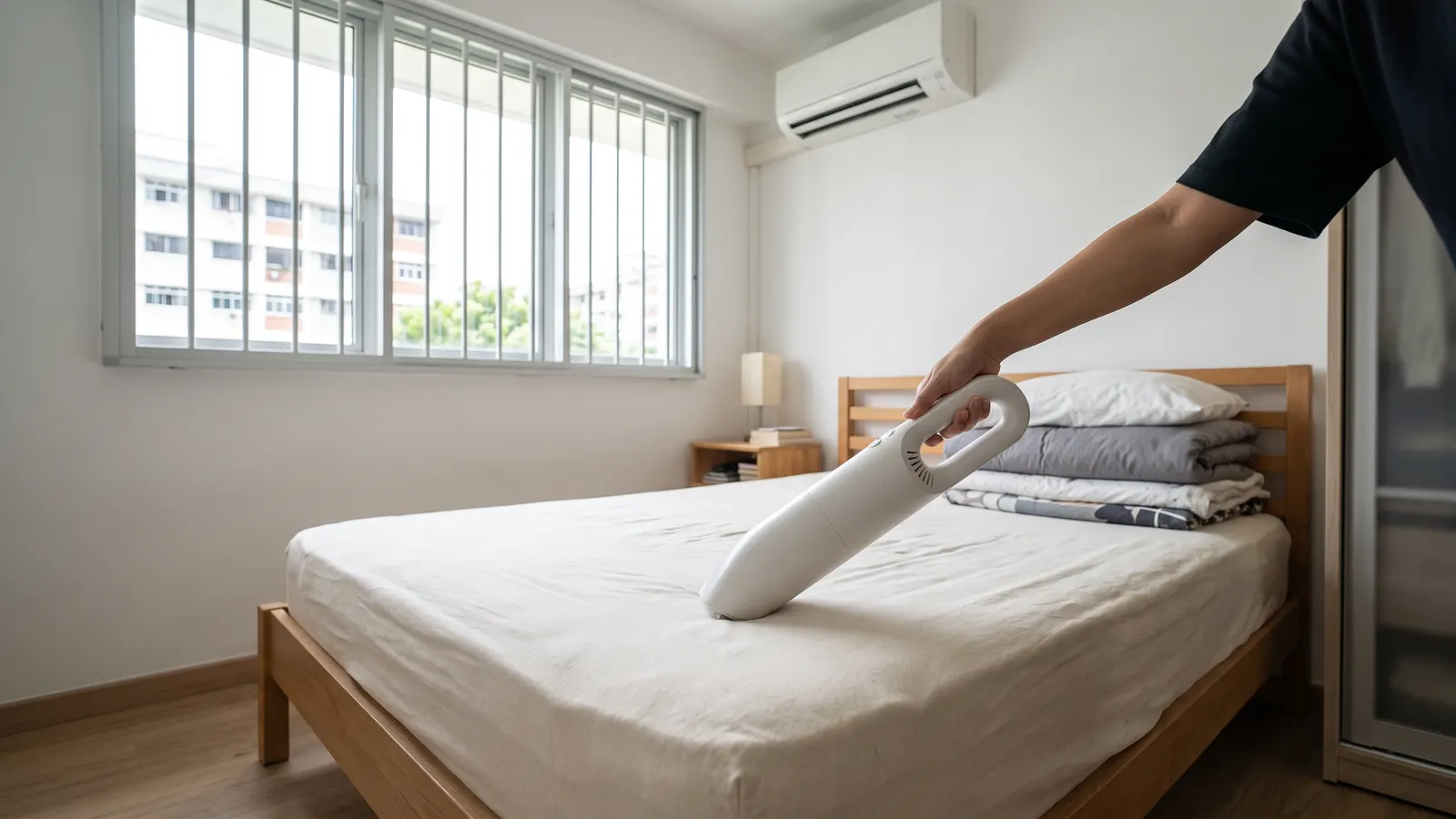
It is a small vacuum with a wide, flat head for beds and sofas, also sold as a mattress vacuum cleaner. Most pack the same four parts into that head.
Suction
Pulls loose dust, skin flakes and mite droppings off the surface. This part does the real work.
Beating pad
Taps the fabric to shake dust loose for the suction to catch.
UV-C lamp
Meant to kill mites and germs as the head passes. The lab study below suggests a quick pass is far too short.
HEPA filter
Stops fine dust blowing back out of the exhaust. A HEPA filter can trap at least 99.97% of particles 0.3 microns in size. Some budget listings only mention a washable filter, so read the spec sheet.
The allergy trigger is mostly not the live mite but a protein in its droppings, and Allergy UK notes that the droppings keep causing symptoms after the mite has died. KK Women's and Children's Hospital calls them the most common trigger of allergy and asthma. So ask how much dust a machine removes, not how many mites it claims to kill.
Does vacuuming a mattress really lower dust mite allergen?
Yes, if you keep at it. In a study published as an abstract in the World Allergy Organization Journal, 20 volunteers vacuumed their mattresses every day for 8 weeks. Mite allergen in the dust fell by 85.1%, mainly because the dust itself fell by 77.7%. Look at the dose, though: daily, for two months, in a small group compared only with its own starting level. The abstract does not name the vacuum used.
The Asthma and Allergy Foundation of America (AAFA) recommends a HEPA vacuum weekly, then adds that vacuuming alone is not enough to remove all dust mites and their waste.
A Cochrane review of 55 trials covering 3,121 people with asthma found no effect on asthma from mite-control measures, mattress covers included. Allergy UK's advice is that several measures done properly beat one or two, and that the only way to know if they help is to try. So nobody can promise that a vacuum will stop the sneezing. Less allergen in the bed is what it can deliver.
What can the UV-C light do in a quick pass?
Less than the box suggests. In a lab study in the Asian Pacific Journal of Tropical Biomedicine, researchers put dust mites directly under a UV-C lamp. Every mite was dead on the spot only when the lamp sat 10 cm away for a full 60 minutes. After 5 minutes at the same distance, about 4% were. Eggs were far more sensitive. None of the eggs exposed for 30 seconds to 5 minutes hatched, against more than 70% of the untreated ones. Those eggs sat bare in a glass dish, though, not buried in a mattress.
The researchers concluded that UV-C is not yet practical for mattresses and carpets because it needs prolonged exposure, and that mites hidden under dust or in dense fabric may escape the light altogether.
At home: a handheld head sits over each patch of mattress for a second or two, not an hour.
How much does a dust mite vacuum cost in Singapore?
On FairPrice's online store at the time of writing (checked 03/10/2026), dedicated models ran from S$47.99 to S$169, all at promotional prices. Several of these listings showed as out of stock online when we checked, so treat the prices as a guide.
Russell Taylors VM-10 at S$47.99. A Cornell corded model and the PowerPac PPV1023 at S$49.90 each.
Three Xiaomi models at S$69, S$83 and S$101. Toyomi's own store listed its VC 221 at S$79.90, sold out when we checked.
A vacuum you own with a HEPA filter and a clean upholstery head has the two parts that matter.
Is a dust mite vacuum worth it for you?
Answer these three questions for the bed you are most worried about.
How do you use a mattress vacuum cleaner properly?
- Strip the bed firstSheets go into the wash. Vacuum the bare mattress.
- Go slowlyOverlapping rows across the whole top, then the sides and seams.
- Make it weeklyAAFA advises weekly, so tie it to sheet-changing day.
- Protect the allergic personAAFA suggests an N95 mask while vacuuming, and staying out of the room for 20 to 30 minutes after.
How to get rid of dust mites: what do allergy bodies advise first?
Allergy UK is blunt that no home can be cleared of dust mites, however clean it is. The aim is to keep the level down. Allergy bodies advise three things alongside any vacuum. The fourth card is what we do.
A 60°C wash
Sheets and pillowcases at 60°C or above, as KKH and the NHS advise. Allergy UK adds that a cooler wash rinses allergen out, but the mites survive.
Zipped covers
Allergen-barrier covers on the mattress and every pillow. Allergy UK calls them a first step. See our waterproof mattress protector guide before buying.
Humidity under 50%
AAFA's target is 30% to 50%. Singapore's mean is around 82%, so this takes a dehumidifier or the aircon, with the windows shut.
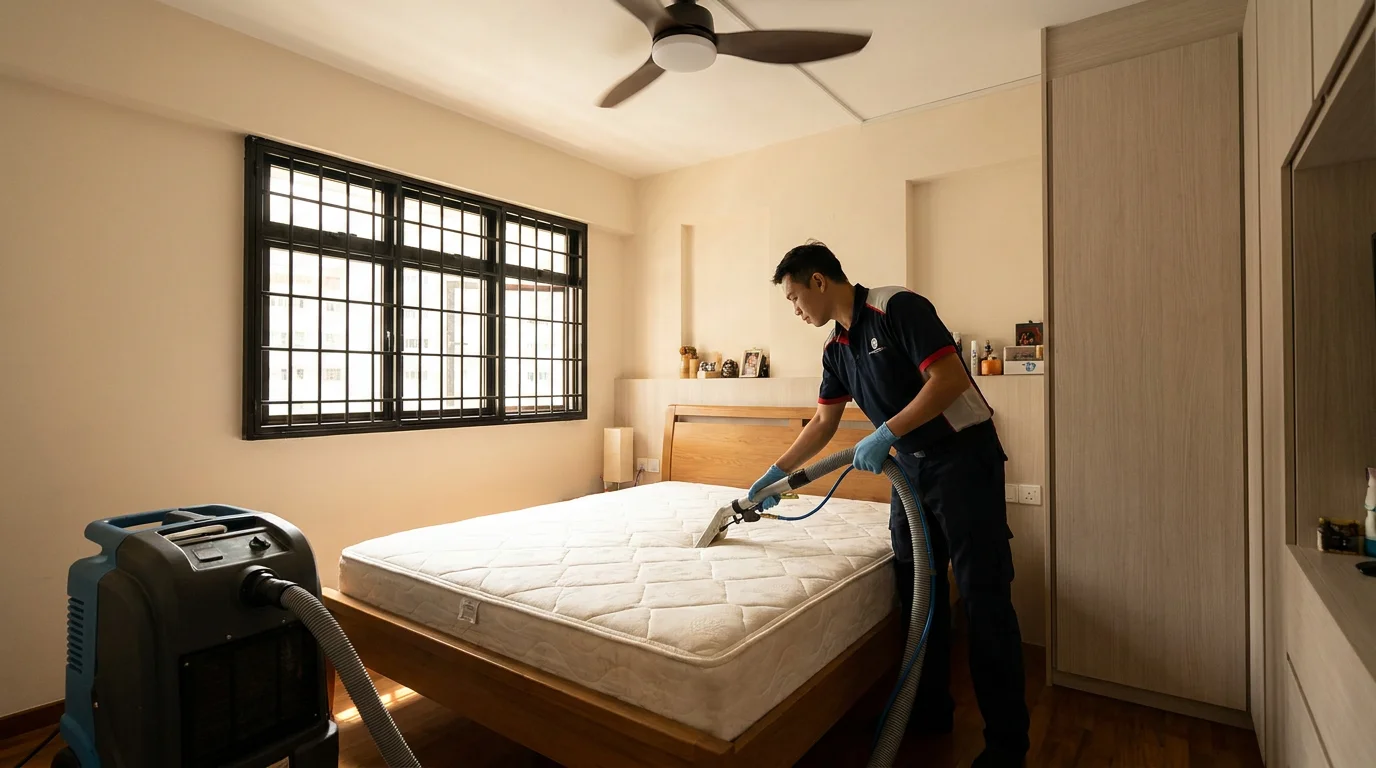
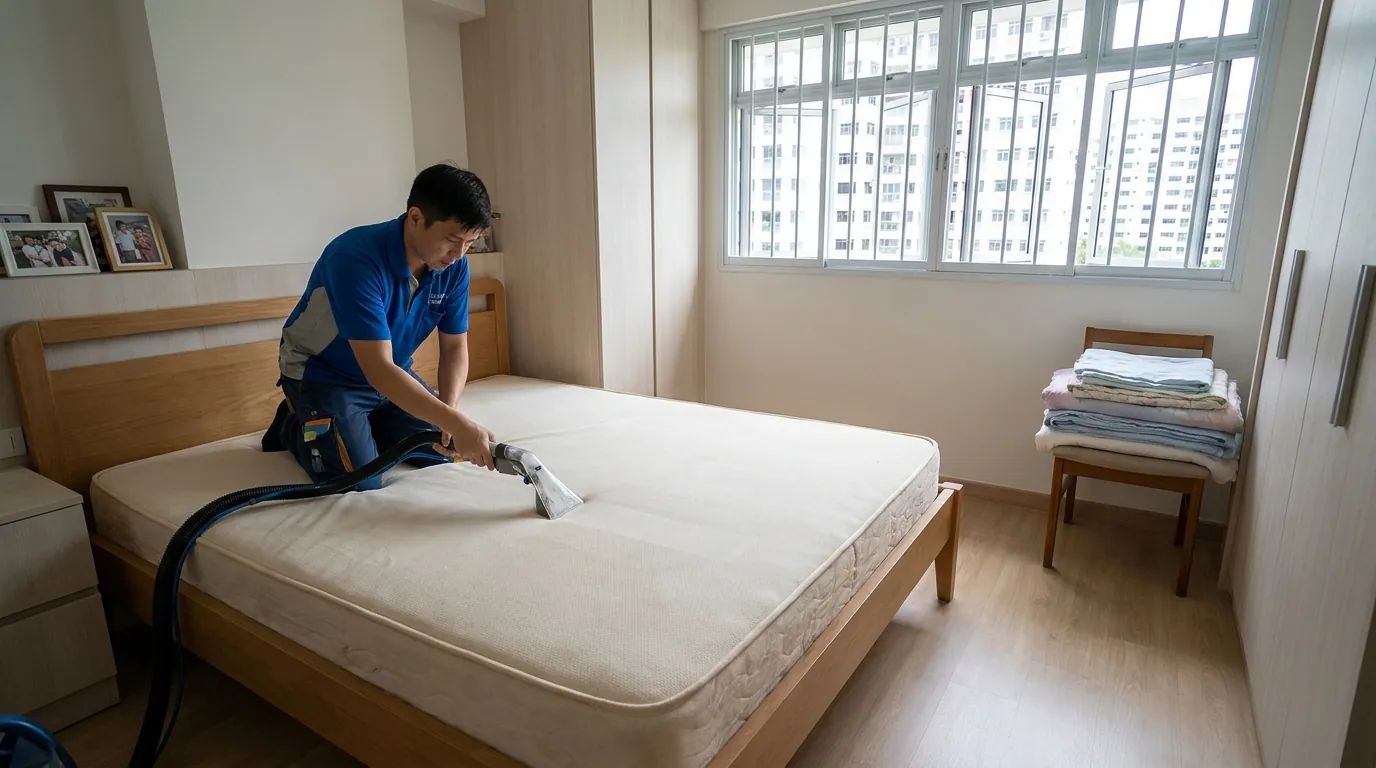
Deep extraction
Room-temperature water extraction, a clear-water zero-residue rinse, then a hospital-grade sanitising pass, included free. Single S$80, Super Single S$85, Double S$90, Queen S$100, King S$110.
Allergy UK notes that mite allergen dissolves in water. A dry vacuum only takes what is loose on top, while extraction flushes the upper layers and pulls the water back out. We have no trial to point to for this, so read it as how the method works, not as proof it beats vacuuming. Mites return in this humidity, so we suggest a clean every 6 to 12 months. Our mattress cleaning page covers drying time, and the full price list has every size.
Bed bugs need a pest control company, as our bed bug guide explains, and mould inside a mattress needs a mould remediation specialist or a new mattress. We treat neither.
So should you buy one?
Buy one if the covers and hot washes are already in place, you have no HEPA vacuum with an upholstery head, and you will use it every week. Then S$50 to S$100 is fair money for less dust in the bed.
Skip it if you are counting on the UV light, or if it will sit in the storeroom after the second week. If the mattress has never been deep cleaned, our own view is to start there. Our Singapore bedroom allergy guide lays out the full routine, and the dust mite guide covers the warning signs.