A mattress cannot go into the washing machine. A protector can. That matters in Singapore. Relative humidity here averages around 82% over the year, so the sweat a mattress takes in each night is slow to leave. A waterproof layer keeps that sweat, and the odd spilled drink, in something you can wash on a Saturday morning.
What does a waterproof mattress protector actually do?
It is a cover with a thin plastic film bonded under the fabric. Sweat, urine and milk stop at the film, so they never reach the foam and set as a stain or a smell.
A protector cannot undo what is already inside an older mattress, and it will not fix bed bugs. Upward does not treat bed bugs. That is a job for a pest control company, and our bed bug guide explains what to do first.
Which type should you look for?
Shops use many names. There are really three kinds.
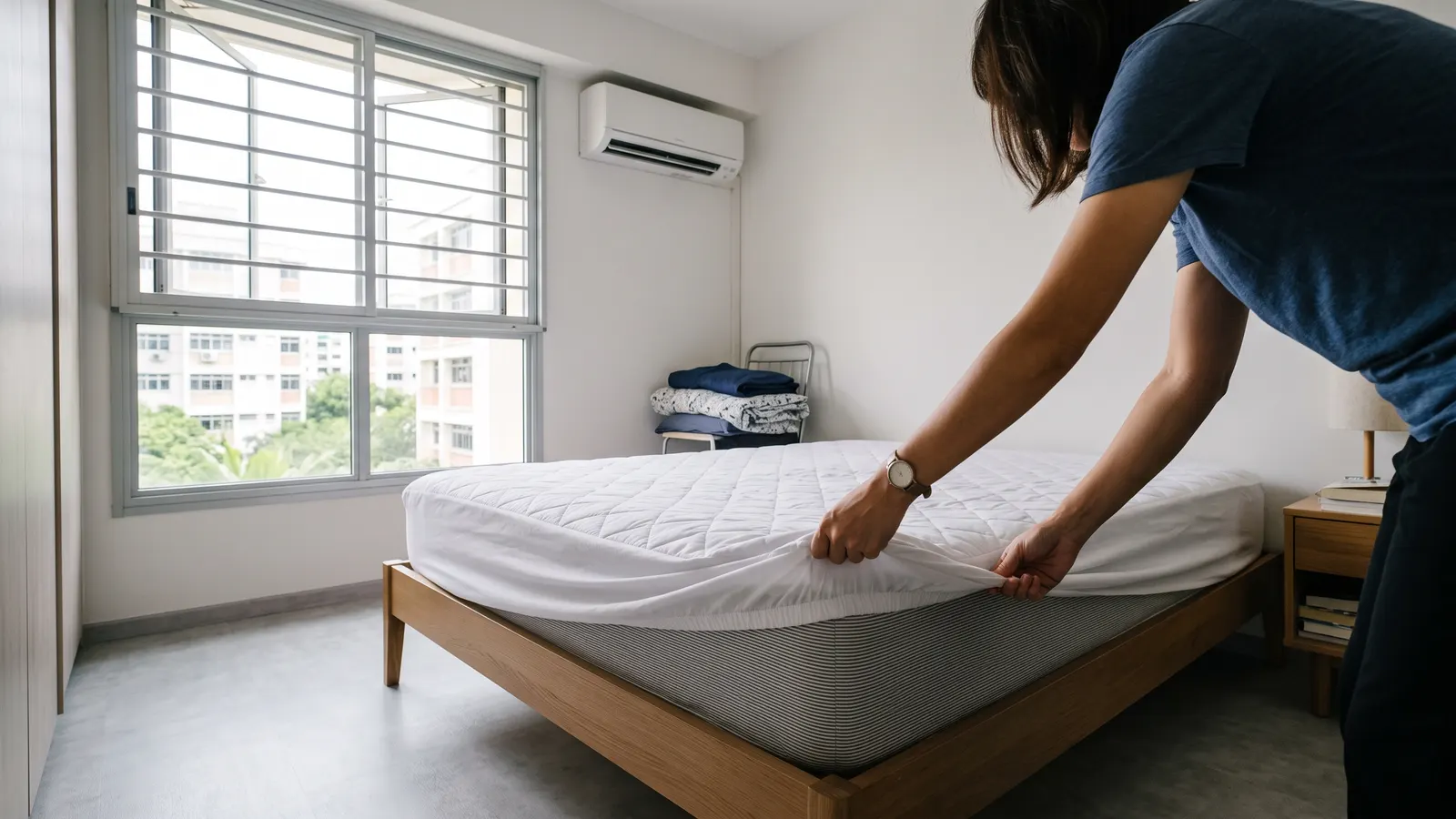
Goes on like a fitted sheet. The waterproof layer is a thin polyurethane film, often labelled TPU.
The same film with towelling or bamboo fibre on top, for a softer feel.
Zips shut around all six sides. This is the type allergy bodies mean by a dust-mite cover.
Which protector suits your bed?
It depends on who sleeps on the mattress.
Toddler or bed-wetting
Dust-mite allergy
Pets on the bed
Hot sleeper
Will a waterproof protector make the bed hot?
It can, and the film is the reason. Mattress maker Saatva's protector guide describes polyurethane as a very thin, highly breathable film. Vinyl blocks liquid just as well, it says, but is much less breathable, traps sweat and can be noisy. If the bed feels warm, change the protector before you blame the mattress.
What do allergy bodies say about zipped covers?
The Asthma and Allergy Foundation of America (AAFA) advises covering mattresses and pillows in zipped allergen-barrier covers, made of material with pores too small for mites and their waste to pass through. The American Academy of Allergy, Asthma and Immunology says the same. Closer to home, NHG Health tells patients with house dust allergy to encase mattresses, pillows and bolsters in vinyl or special mite-proof covers, and to wash those covers every three months. Vinyl works as a barrier, but it is the less breathable kind described above.
A cover on its own is not a treatment, though. A Cochrane review of 55 trials, 26 of them using mattress covers, found no measurable improvement in asthma from mite-control measures. Treat a cover as one part of what your doctor recommends.
How much does a mattress protector cost in Singapore?
About S$20 to S$100 for a fitted waterproof one. These were the public listings at the time of writing, checked on 03/10/2026. All three FairPrice ones were out of stock online that day.
GRUSNARV waterproof protector: 90 × 200 cm at S$19.90, 150 × 200 cm at S$29.90, 180 × 200 cm at S$39.90.
Upward does not sell protectors and has no tie-up with any brand or shop. Measure before you buy: one listing is 150 × 200 cm and another's queen is 152 × 190 cm.
How do you wash it, and how often?
Read the care label first, because makers differ. Protect-A-Bed tells owners to wash a new protector before use, then every one to two months on a warm 30–40°C setting. No bleach, no dry cleaning, and medium heat in the dryer, because too much heat blisters the lining and a blistered lining leaks. IKEA's GRUSNARV label allows a 60°C wash.
That gap matters if allergy is your reason for buying. NHG Health says detergents do not kill house dust mites and tells patients to wash bedding in water above 55°C. The AAFA says at least 130°F, about 54°C. So pick a protector whose label allows 60°C.
Does a protector replace mattress cleaning?
No. A protector only slows the build-up. The AAFA points out that mites live deep inside the stuffing of mattresses. A mattress that went years without a cover still holds old sweat and stains under the new protector. Our mattress stain guide covers what you can lift yourself.
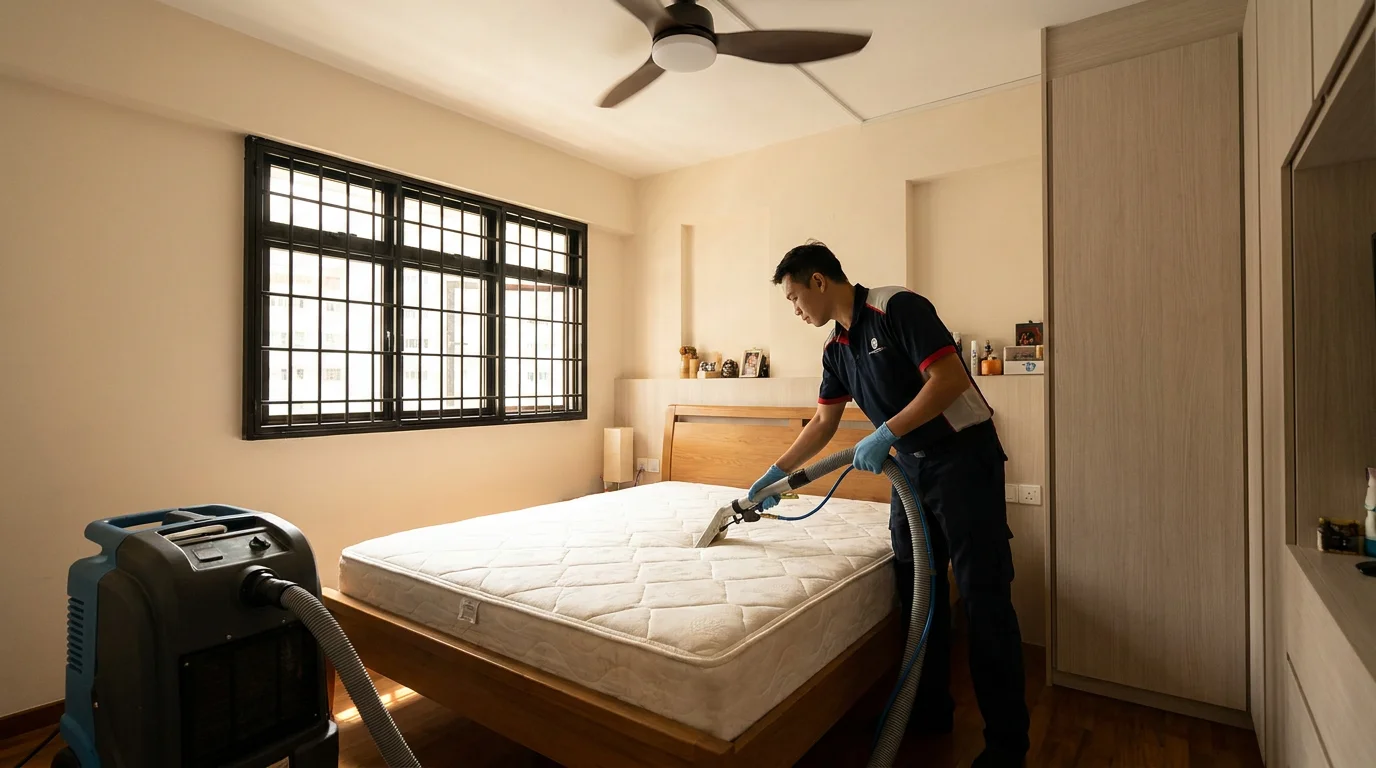
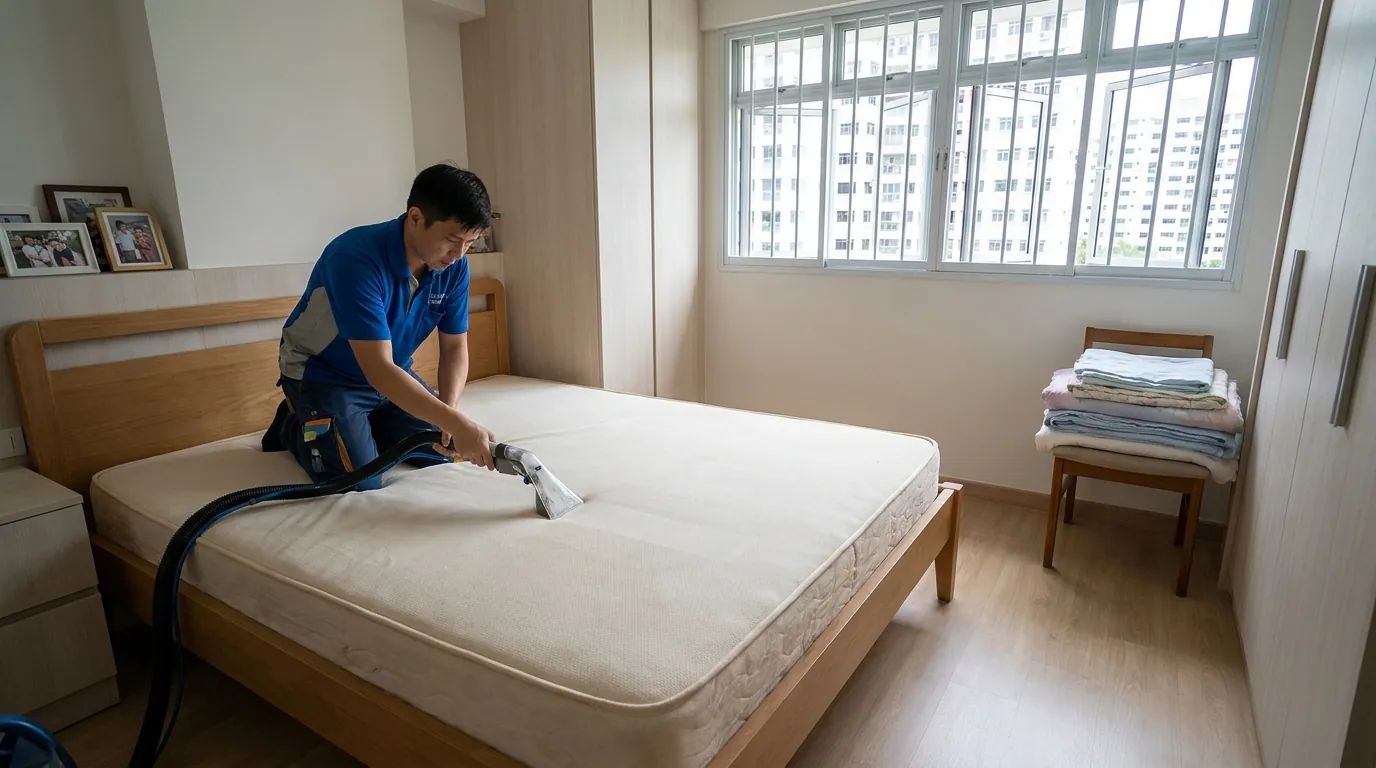
Upward cleans the mattress in your bedroom by room-temperature water extraction, rinses with clear water so no shampoo stays in the bed, and finishes with a hospital-grade sanitising pass that is included free. Prices are fixed:
- S$80 Single
- S$85 Super single
- S$90 Double
- S$100 Queen
- S$110 King
- S$65 Cot mattress
A queen takes about 1 hr 30 min on site, set-up and packing away included, and is dry in up to 7 hours with a fan or the aircon on. Most adult bedrooms need this every 12 months, or every 6 months if anyone in the bed has allergies, asthma or eczema, or is a child. Our bedroom allergy guide has more.
Strip the bed before we arrive, protector included, and put it back only when the mattress is fully dry. More detail is on the mattress cleaning page, and every other price is on the full price list.