House Mite Bites in Singapore: What Is Really Causing the Itch?
Dust mites do not bite, so something else is leaving the marks, or the rash is an allergy. Answer four questions to see the likely cause and who to call.
- House dust mites do not bite. A rash from them is an allergic reaction.
- Itchy marks after a night in bed are more often bed bugs, mosquitoes, bird or rodent mites, or scabies.
- Where the marks are, their pattern, when they appear and who else itches point to the cause. Try the checker.
- A doctor treats the skin, pest control deals with pests, and a clean comes after that. See who to call.
House dust mites do not bite. Itchy marks after a night in bed in Singapore usually come from bed bugs, mosquitoes or another kind of mite, such as the scabies mite, or the rash is an allergic reaction to dust mites. Healthline says dust mites do not bite the skin, and that an allergy to them can cause a red, itchy rash that looks like eczema. The checker below uses where the marks are, what they look like, when they appear and who else itches. It guides your next step and does not replace a doctor or a pest inspection.
What is causing my itchy marks?
Answer all four questions for the likeliest cause and who to call.
Answer all four questions to see the result.
Bed bugs are the likeliest cause
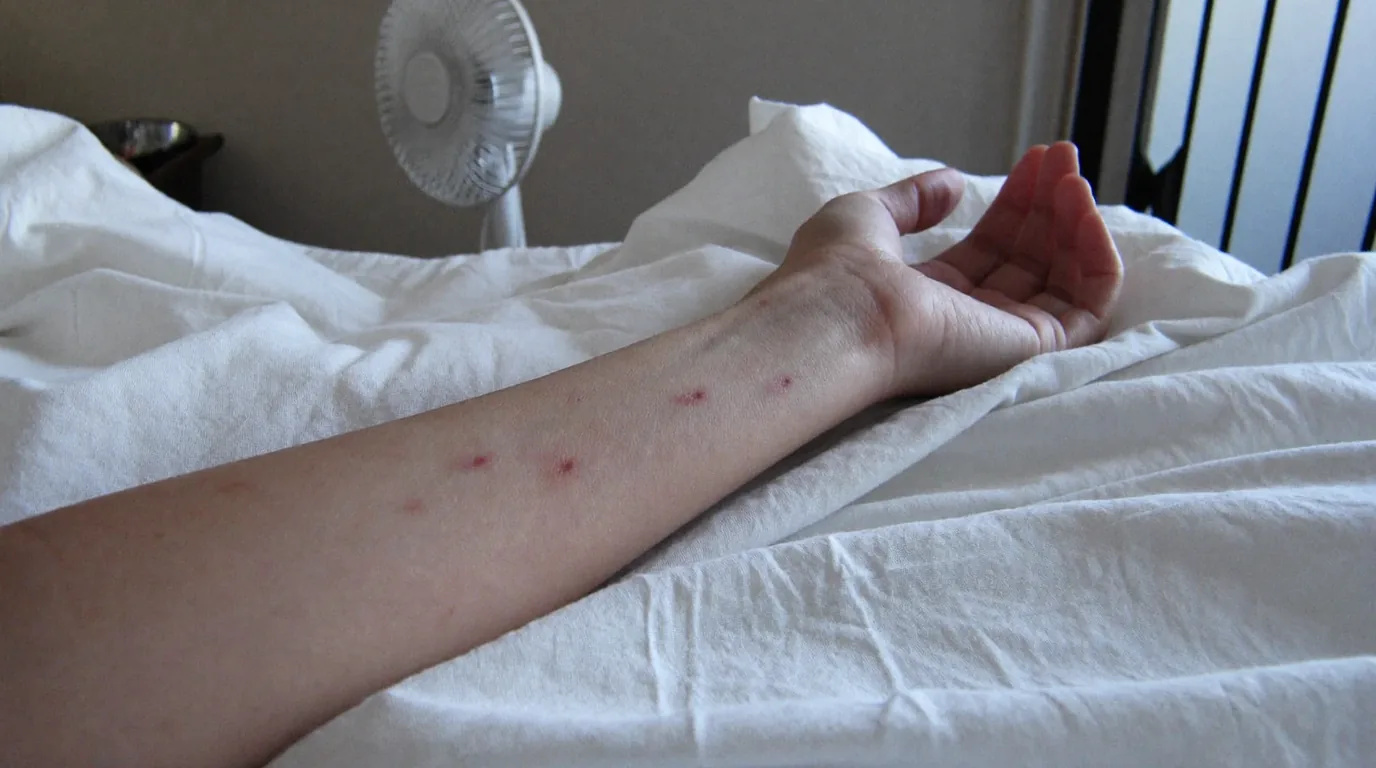
Why: Healthline says bed bug bites usually appear on skin left exposed during sleep, often in lines or clusters, and can take a few days, and up to 14 days in some people, to show. HealthHub says they often form a straight line of marks with intense itching.
Check: mattress seams, headboard and bed frame for live bugs, reddish-brown streaks, dark faecal stains and shed shells, the signs HealthHub lists. Bites alone cannot prove it.
Next step: if you find signs, NEA advises engaging a pest management company. Pest control comes first and a mattress clean after. Our bed bug guide sets out the order.
See a doctor if the bites get worse or last more than five days, says HealthHub, or if scratched skin looks infected.
Mosquito bites are the likeliest cause
Why: single, scattered bumps with no line or cluster fit mosquitoes better than bed bugs, and HealthHub lists mosquitoes with bed bugs, ticks and fleas as common causes of itchy bumps. The WHO says the mosquitoes that spread dengue are active during the day, so marks that appear in daylight fit.
Check: pot trays, drains and water containers for standing water, which the WHO advises removing.
Next step: the WHO recommends covering up and using repellent with DEET, picaridin or IR3535. A mattress clean will not help here.
See a doctor if you have a fever with the bites, or if the marks have not improved in a few days or are getting worse, as HealthHub advises.
Bird or rodent mites are a possible cause
Why: Healthline says these mites normally live in nests and on animals, and may bite people when the host dies or leaves. Bites can bring extreme itching, a rash and swelling.
Check: ceiling voids, aircon trunking, balconies and ledges for nests, droppings or a dead bird or rodent.
Next step: the source has to go, so call a pest control company. For rats, NEA says only companies registered as Vector Control Operators can be engaged for vector control works.
See a doctor if the bites have not improved after one to two weeks, or if creams from the pharmacy do not ease the itch, says Healthline.
Scabies is possible, and it needs a doctor
Why: the NHS describes intense itching, especially at night, with a rash that often shows between the fingers, around the wrists, under the arms and around the waist and groin. The rash can take up to 8 weeks to appear.
Check: whether anyone else at home has started itching. Scabies spreads between people.
Next step: see a doctor. The NHS says everyone in the same home should be treated at the same time, even without symptoms. Cleaning is not a treatment.
See a doctor soon if the skin looks infected, or the itching lasts 2 to 4 weeks after treatment, as the NHS advises.
A dust mite allergy is the likeliest cause
Why: Healthline says an allergy to dust mites can cause a red, itchy rash that resembles eczema. The Asthma and Allergy Foundation of America (AAFA) lists a runny or stuffy nose, sneezing and itchy eyes, nose, ears or mouth as common signs.
Check: whether symptoms are worse in the bedroom, which AAFA says usually has the most mites.
Next step: speak to a doctor, who can confirm it and suggest treatment. Our bedroom allergy guide covers what helps in the room.
See a doctor if symptoms continue even after you cut down dust mites at home, as Healthline advises.
Do house dust mites bite?
No. Dust mites are too small to see and feed mainly on the skin flakes people shed each day, according to AAFA. They collect in furniture, carpets, curtains and bedding. The reaction comes from their waste, which Healthline says can trigger reactions that look like bites.
Humidity matters. AAFA says mites prefer humidity above 50% and advises keeping a home between 30% and 50%. The Meteorological Service Singapore puts the annual mean at about 82%, so the aircon or a dehumidifier does most of that work.
Other mites do bite: the scabies mite, and the mites from bird and rodent nests.
What is biting you in bed instead?
Bed bugs
They hide in the bed by day and feed at night, according to HealthHub, and they can travel home on luggage and clothing. Healthline notes that only some people react, so a partner who is fine does not rule bed bugs out. NEA says bed bugs are not known to transmit diseases to humans, but can cause itching, discomfort and allergic reactions in some people. Our mattress bed bug guide covers treatment.
Mosquitoes
HealthHub names mosquitoes as a common cause of bites. In Singapore the day-biting Aedes mosquitoes matter most, since the WHO says the species that spread dengue are active during the day. Healthline says bed bug bites take longer to appear than mosquito bites, so marks that came up quickly, rather than days later, fit mosquitoes better.
Bird and rodent mites
These live in nests and on animals and turn to people when the host dies or moves on. If a pigeon has been nesting on the aircon ledge, or rats have been in the ceiling, look there before looking at the mattress.
Scabies
Scabies is the mite that burrows into the skin and spreads between people. Healthline says it is highly contagious and that symptoms may take several weeks to appear. It is a medical condition and needs a doctor.
How do you tell these causes apart?
| Cause | Where on the body | Pattern and timing | Other clue |
|---|---|---|---|
| Bed bugs | Skin uncovered in bed: face, neck, arms, hands | Lines or clusters. Can take days, up to 14 days, to show | Blood specks, dark droppings or shed shells near the bed |
| Mosquitoes | Any exposed skin | Itchy bumps that show sooner than bed bug bites | Aedes bite during the day |
| Bird or rodent mites | No usual site given by Healthline | Itching, rash and swelling | A nest, or a dead or departed bird or rodent, nearby |
| Scabies | Between the fingers, wrists, armpits, waist, groin | Itch worst at night. Rash can take up to 8 weeks | Others at home start itching |
| Dust mite allergy | No bites. Eczema-like rash | Red, itchy rash with sneezing or a stuffy nose | The bedroom usually has the most mites |
When should you see a doctor?
You do not need to work out the cause first. See a doctor if any of these apply.
- You think it may be scabies. Healthline says suspected scabies always needs medical treatment.
- The marks get worse or have not improved in a few days. HealthHub says to see a doctor in that case.
- The skin looks infected. HealthHub warns that severe scratching can lead to infection or scarring.
- The rash stays even after you cut down dust mites at home. Healthline says a doctor can confirm an allergy and plan treatment.
- You have trouble breathing, widespread swelling or rash, dizziness or a fast heartbeat. HealthHub says a severe allergic reaction needs immediate medical attention.
Who do you call: a doctor, pest control or a cleaner?
- Doctor: the rash, the itch, scabies, an allergy, or anything that looks infected.
- Pest control: bed bugs, or birds and rodents near the bedroom. NEA says premises with a bed bug infestation are advised to engage a pest management company. NEA also says only companies registered with it as Vector Control Operators can be engaged for vector control works, and publishes a list of them. Its bed bug page does not say whether registration is required for bed bug work, so ask any company for its registration and technician licences.
- Cleaner: once the cause is dealt with, or when the problem is dust, sweat and skin flakes in the mattress.
Where does a mattress clean fit in?
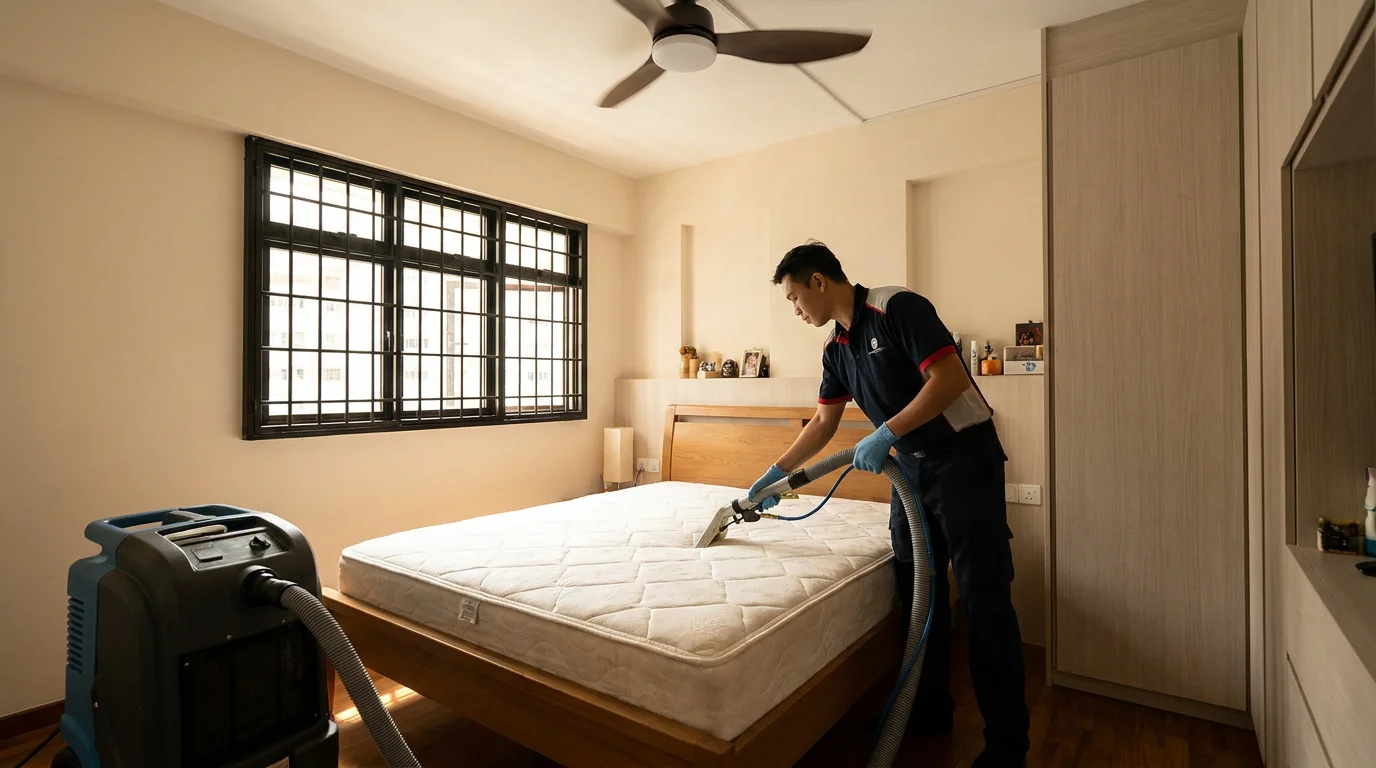
Cleaning is not treatment. Our mattress cleaning service does not kill a bed bug colony, treat scabies or cure an allergy, and we do not do pest control. What it does is clean the mattress in your bedroom: a dry vacuum, a cleaning shampoo sprayed on and gently scrubbed, extraction, a clear-water rinse, extraction again, then a hospital-grade sanitiser. The solutions are child-safe and pet-safe, and the mattress dries in 5 to 7 hours with the aircon or a fan on.
The order matters. With bed bugs, pest control comes first and the clean follows. If a doctor confirms a dust mite allergy, a clean removes dust, sweat and skin flakes from the mattress, and our dust mite vacuum guide covers what a vacuum can do between cleans.
If you suspect pests: tell us when you message. If it sounds like bed bugs, we will say to call pest control first.
Frequently asked questions
Cause sorted and mattress due a clean? Send us a photo.
We'll tell you what a clean can still do. Mattresses from S$80, cleaned in your bedroom.