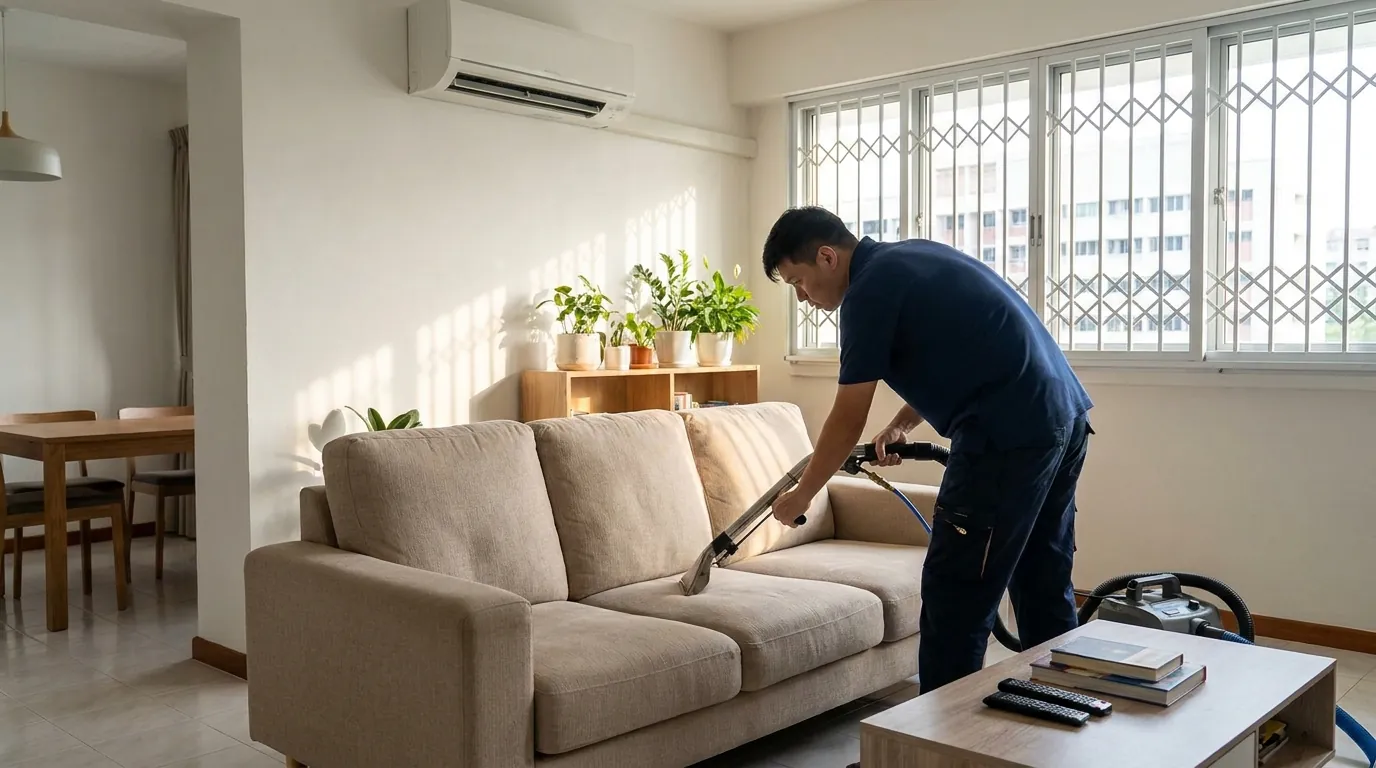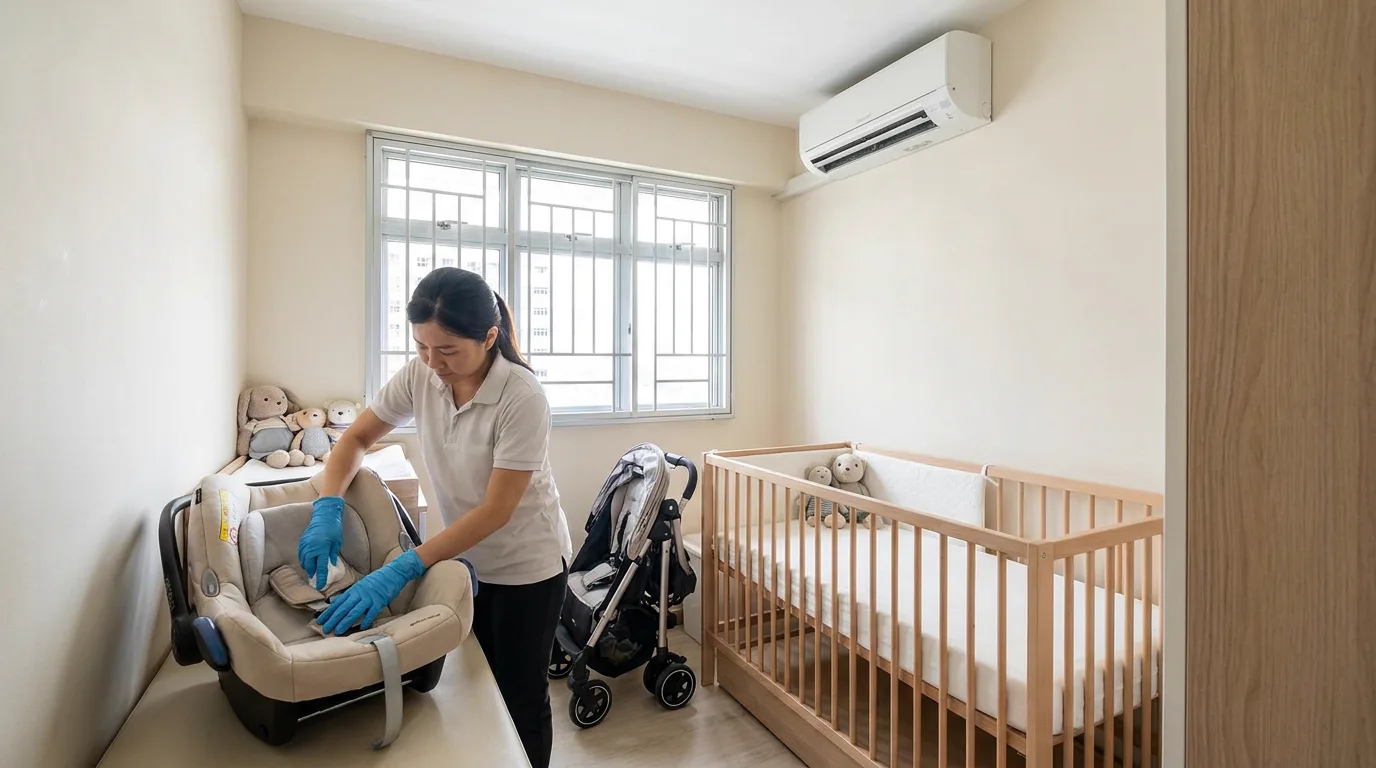
A car seat is the one piece of baby gear engineered to save a life in a crash, so the way it gets cleaned is a safety question first and a hygiene question second. Most new parents in Singapore reach the same point around the third trimester: the gear has arrived, some of it second-hand, and it needs to be genuinely clean before a newborn touches it. The trick is knowing that not every part of that gear can be treated the same way. Some of it takes a full deep clean, and some of it must only ever be wiped by hand. This guide walks through both, and links to the wider upholstery cleaning hub if you want the bigger picture.
The one rule that never bends: straps are hand-cleaned only
Here is the part every parent should know before handing gear to any cleaner. The harness straps and webbing on a car seat are load-bearing safety components. They are woven to stretch a precise amount and hold a child firmly in a sudden stop. Aggressive washing, wringing, scrubbing with strong detergent, or soaking in warm water weakens those fibres. Weakened webbing can fail exactly when it matters most.
So the straps get surface hand-cleaning only. A damp cloth, a gentle wipe along the webbing, no submerging, no machine, no soaking, nothing that could compromise the weave. This is not us being cautious for the sake of it. It is what every reputable car seat manufacturer specifies, and it is the single most important thing that separates a safe baby-gear clean from a risky one.
Never machine-wash or soak a harness. The webbing that restrains your child in a crash loses strength when it is scrubbed hard, heated, or left submerged. On every car seat we clean, the straps are hand-wiped on the surface only. The plastic shell and the fabric seat pad get the deeper treatment; the harness never does.
What gets hand-cleaned versus deep-extracted
Every item splits into two groups: the parts that can take water and the parts that cannot. Getting this split right is the whole job. Here is how each piece of common baby gear breaks down.
| Component | Method | Why |
|---|---|---|
| Harness straps & webbing | Surface hand-clean only | Safety-critical fibres. Never soaked, wrung, or machine-washed. |
| Car seat fabric pad | Deep water extraction | Removes milk, spit-up, and sweat trapped in the padding. |
| Car seat plastic shell & buckle | Hand-clean & sanitise | Wiped and disinfected; buckle checked and flushed clear of crumbs. |
| Stroller seat & liner | Deep water extraction | Fabric holds outdoor grime, food, and rain residue. |
| Stroller frame & wheels | Hand-clean | Wiped down; wheels cleared of grit from HDB corridors and pavements. |
| Cot mattress | Deep water extraction | Draws out sweat, dust mites, and any accidents from the core. |
| Cot frame | Hand-clean & sanitise | Rails and slats wiped and disinfected where a baby will teethe. |
| Nursing chair | Deep water extraction | Upholstery deep-cleaned for the seat you will feed in nightly. |
Deep cleaning means room-temperature water extraction with a zero-residue rinse. The rinse is what makes it safe for newborn skin: it flushes out every trace of cleaning solution so nothing is left in the fabric for a baby to press a cheek against. No harsh chemistry, no sticky film, no smell. If you have read our pet-safe and baby-safe zero-residue guide, this is the same principle applied to nursery items.
Build your baby-gear clean
Tap the items you want done. You will see a running total. The WhatsApp button carries your list across so you do not have to type it out.
Every item is cleaned with baby-safe, zero-residue extraction, and a single item clears the S$50 minimum job fee. Full rates sit on the baby and nursery page.
How a safe baby-gear clean actually runs
The whole job happens in your home, so nothing leaves the flat and you can watch every step. Here is the order it runs in:
- Inspect and separateThe technician identifies what can take water and what cannot. Straps and webbing are set aside for hand-cleaning; fabric pads, liners, and the cot mattress are marked for extraction.
- Hand-clean the safety partsHarness straps, buckles, plastic shells, stroller frames, and cot rails are wiped down by hand. The harness is cleaned on the surface only, never soaked or scrubbed hard.
- Deep water extractionFabric seats, stroller liners, cot mattresses, and nursing chairs are cleaned with room-temperature water extraction that pulls out milk, sweat, dust mites, and grime from deep in the padding.
- Zero-residue rinseA clean-water pass flushes out every trace of cleaning solution. This is the step that makes the fabric safe for a newborn to lie against, with no chemistry left behind.
- Medical-grade sanitisationThe finishing pass clears remaining bacteria and allergens. Add Premium Steam for +S$30 if you want the extra heat treatment on the washable fabrics.
When to clean baby gear
There are four moments when a professional clean earns its keep. Book ahead for the first, because the last weeks before a due date fill up fast.
- Before a newborn arrives. A newborn spends most of the day against fabric surfaces with an immune system that is still building. Getting the cot mattress, car seat, and stroller extracted and sanitised before the birth means the gear is ready the day you bring the baby home.
- After inheriting hand-me-down gear. Second-hand cots, strollers, and car seats are common and sensible in Singapore, but you inherit another household's dust, mites, and history. A deep clean resets it. On a hand-me-down car seat we also flag any harness wear we see, since that webbing is the safety-critical part.
- After any illness. Once a stomach bug or a bad cold has been through the household, the soft surfaces a child touches most hold the germs longest. Extraction plus medical-grade sanitisation clears them properly rather than smearing them around.
- After home renovation. Fine renovation dust travels everywhere and settles deep into fabric that a wipe cannot reach. If you have been through a reno, our post-renovation cleaning guide explains why that dust needs extracting out of nursery items rather than pushing further in.