
Carpet Cleaner: Buy One, Rent One or Hire One for Your Singapore Home?
Spray shampoo, spot extractor, carpet washer or steam cleaner: what each one actually removes, why heat is risky on wool, and the point where paying someone costs less than owning a machine.
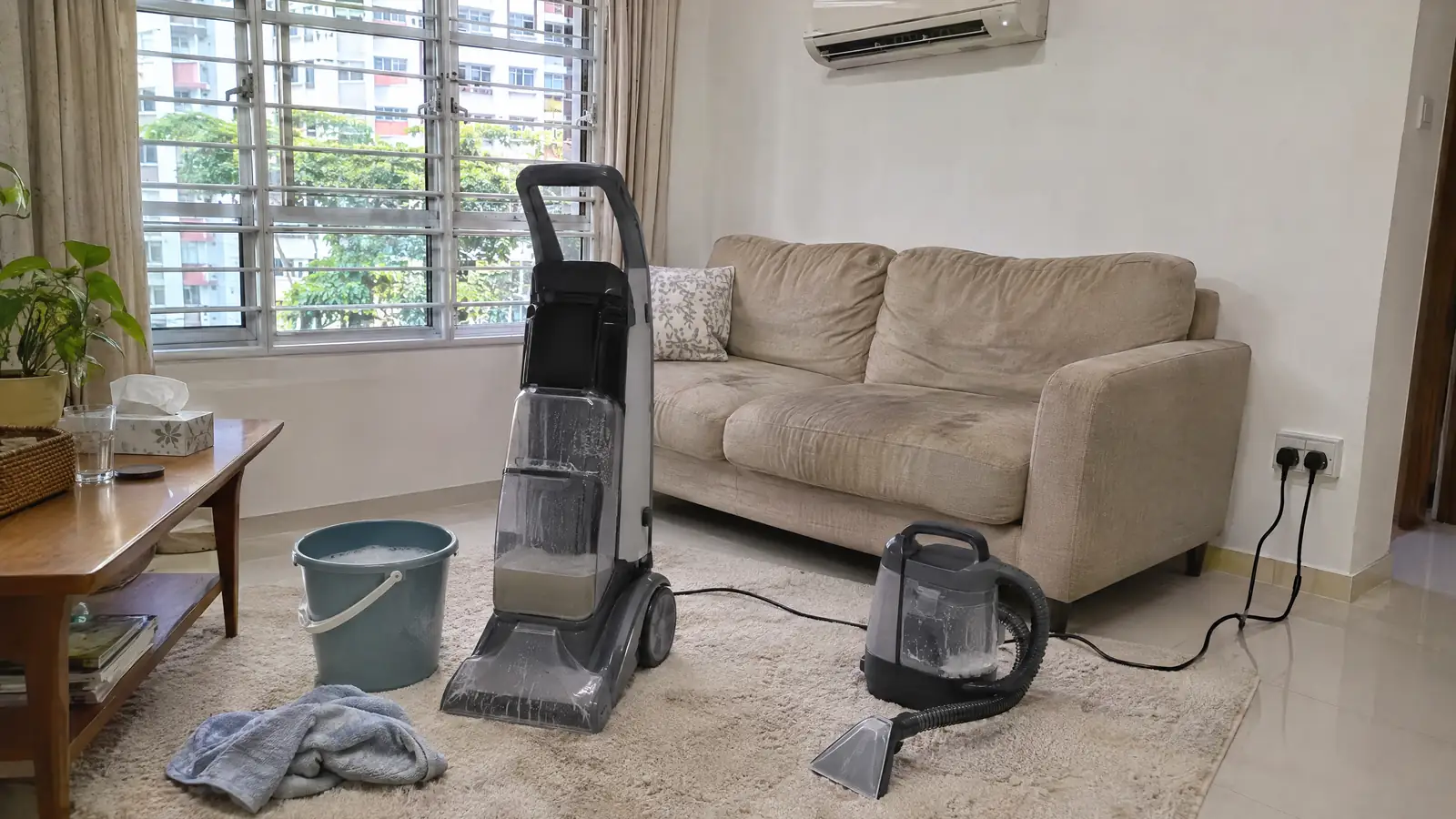
- There are four kinds: spray or foam shampoo, a handheld spot extractor, a full-size carpet washer and a steam cleaner. Only the extractors suck the dirty water back out.
- Heat is the risk. Hot water and steam can felt a wool rug for good, and they set a pet urine stain and its smell.
- We found nowhere in Singapore renting a home carpet washer to the public at the time of writing, so the real choice is buy or hire.
- At one deep clean a year, two years of Upward visits cost S$190–340 by carpet size. The full-size machine we priced was S$698 at the time of writing.
- A spot extractor (S$149–169 at one retailer, at the time of writing) is a fair buy if pets or small children spill on the carpet every week.
Shopping for a carpet cleaner usually turns into a money question. Do you buy a machine, find one to rent, or pay someone to come in? The answer depends on the size of the carpet, how often it needs a proper clean and how often something lands on it. We clean carpets for a living, so weigh our view with that in mind. We also think a small spot machine is a good buy for some homes, and we say which.
What kinds of carpet cleaner are there?
Shops sell four quite different tools under similar names, and they don't remove the same things.
One catch in the listings: plenty of machines sold as a "carpet steam cleaner" are really hot-water extractors. Hot water extraction is sometimes mistakenly called steam cleaning. Look for a dirty-water tank and a suction nozzle in the photos.
Buy, rent or hire: what do two years cost?
Pick your carpet size, how many deep cleans it needs a year and whether spills are a weekly event. The Carpet and Rug Institute suggests a professional deep clean every 12 to 18 months, or more often with pets.
Machine prices are assumptions taken from one Singapore retailer each, at the time of writing: the Kärcher SE 4 spray extraction cleaner at S$698 on Hardwarecity, and the Tineco iCarpet Spot at S$149 (usual price S$169) on HipVan. Upward prices are our fixed size-band prices.
Why are steam and hot water risky on wool and some rugs?
Heat does the damage. Woolmark explains that wool fibres carry tiny scales that lift when exposed to heat and moisture, and agitation in water then locks them together. It calls the process irreversible. That is how a wool rug felts and shrinks. Kärcher, which sells carpet washers, tells customers to use warm water but never hot, because hot water can damage wool fibres and even the adhesive layer of a glued carpet.
Other fibres have their own trouble. Rug maker Edward Fields says viscose (rayon) breaks easily when wet and is prone to shrinking when soaked, and it advises against steam cleaning plant fibres such as jute and sisal. On pet urine, the Carpet and Rug Institute says not to use a steam cleaner, because the heat will set the stain and the smell.
Not sure what your rug is made of? Our wool and viscose rug guide shows how to tell the two apart. We clean every carpet and rug at room temperature for the same reason.
Why is drying the hard part in Singapore?
Singapore's mean annual relative humidity is around 82%, so a wet carpet is trying to dry into air that is already damp. The US Environmental Protection Agency says water-damaged items should be dried within 24–48 hours to prevent mould growth.
This is where the four kinds differ most. A spray bottle adds water and takes none away. An extractor pulls most of it back, but only if you finish with slow passes that suck without spraying. Whatever you use, aim a fan across the carpet, switch on the aircon and hang a small rug over two chairs. Our step-by-step guide to cleaning a carpet at home covers the rest. Still damp the next morning? It got too much water.
Can you rent a carpet cleaner in Singapore?
Not easily. We looked for a shop or rental service hiring out a home carpet washer to the public and could not find one at the time of writing. If you know of one, the same rules apply: warm water at most, a clear-water rinse, and dry passes until the pile feels only slightly damp. For most homes the choice comes down to buying a machine or hiring someone.
When does hiring work out cheaper?
We price a carpet by the size band it fits within, at a fixed rate.
At one deep clean a year, two years of visits cost S$190–340. That's under half the price of the washer, with no machine to store and no Saturday spent on it. Two cleans a year on a large carpet comes close to the machine's price, and three or four can pass it. Buying can win then, as long as the carpet is synthetic and you can get it dry the same day.
The spot extractor is the fair exception. If a dog, a cat or a toddler leaves a mess most weeks, a small machine that lifts it on the spot is money well spent. It handles the spills and a professional clean handles the build-up. Our sofa cleaner guide covers using the same kind of machine on fabric. A spill that has dried into the pile, or a smell that returns once the carpet dries, is the point to book.
Upward cleans carpets and rugs in homes by room-temperature water extraction, then a clear-water rinse and a dry pass so no shampoo stays in the pile. A hospital-grade sanitising pass is included. Most carpets are dry in 5 to 7 hours with a fan or the aircon on. Our carpet and rug cleaning page has the full process. If the label says wool or viscose, keep it to dry vacuuming. Jute or silk? Send us a photo on WhatsApp first.
Already seeing mould? Don't clean it yourself and don't book a carpet clean. Upward does not do mould remediation. That is a job for a mould remediation specialist.
Frequently asked questions
Skip the machine. Book the clean.
Room-temperature extraction with a clear-water rinse, in your home. Carpets from S$95 by size. Every online booking earns a stamp on the Upward Stamp Card.
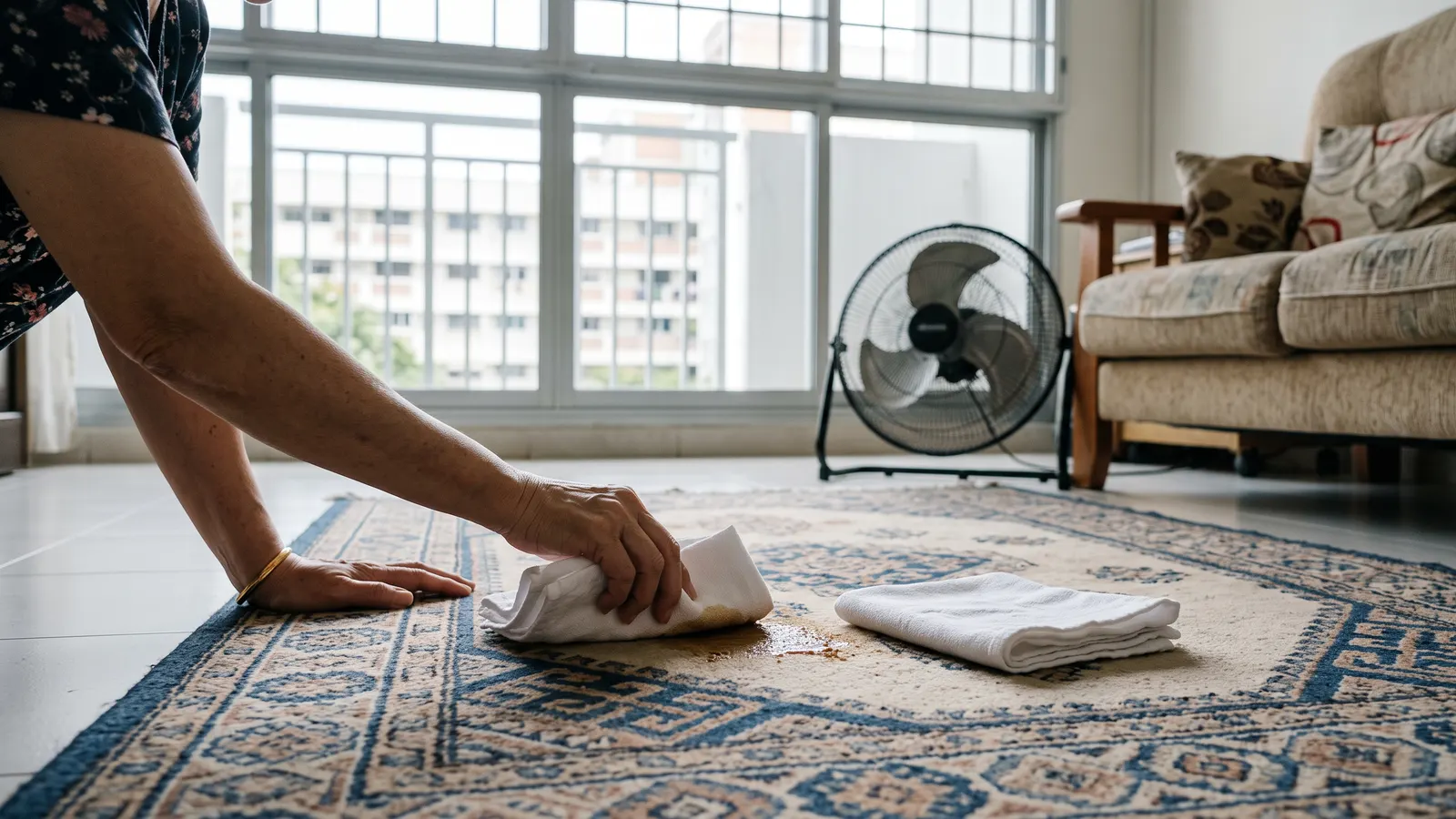
How to Clean Carpet at Home in Singapore: Step by Step
The weekly vacuum, the first five minutes after a spill, and drying it fast.
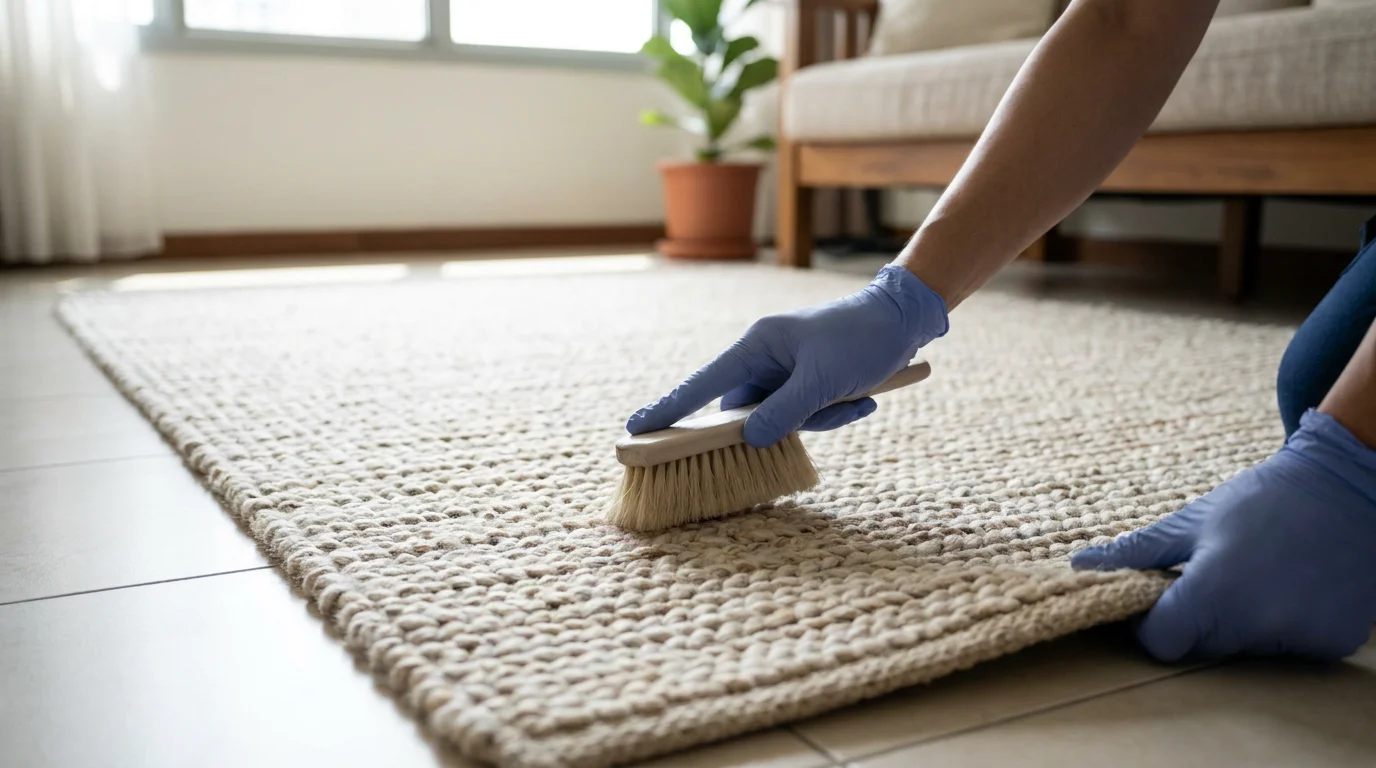
Wool & Viscose Rug Cleaning in Singapore
How to tell them apart, and why one felts and the other watermarks.
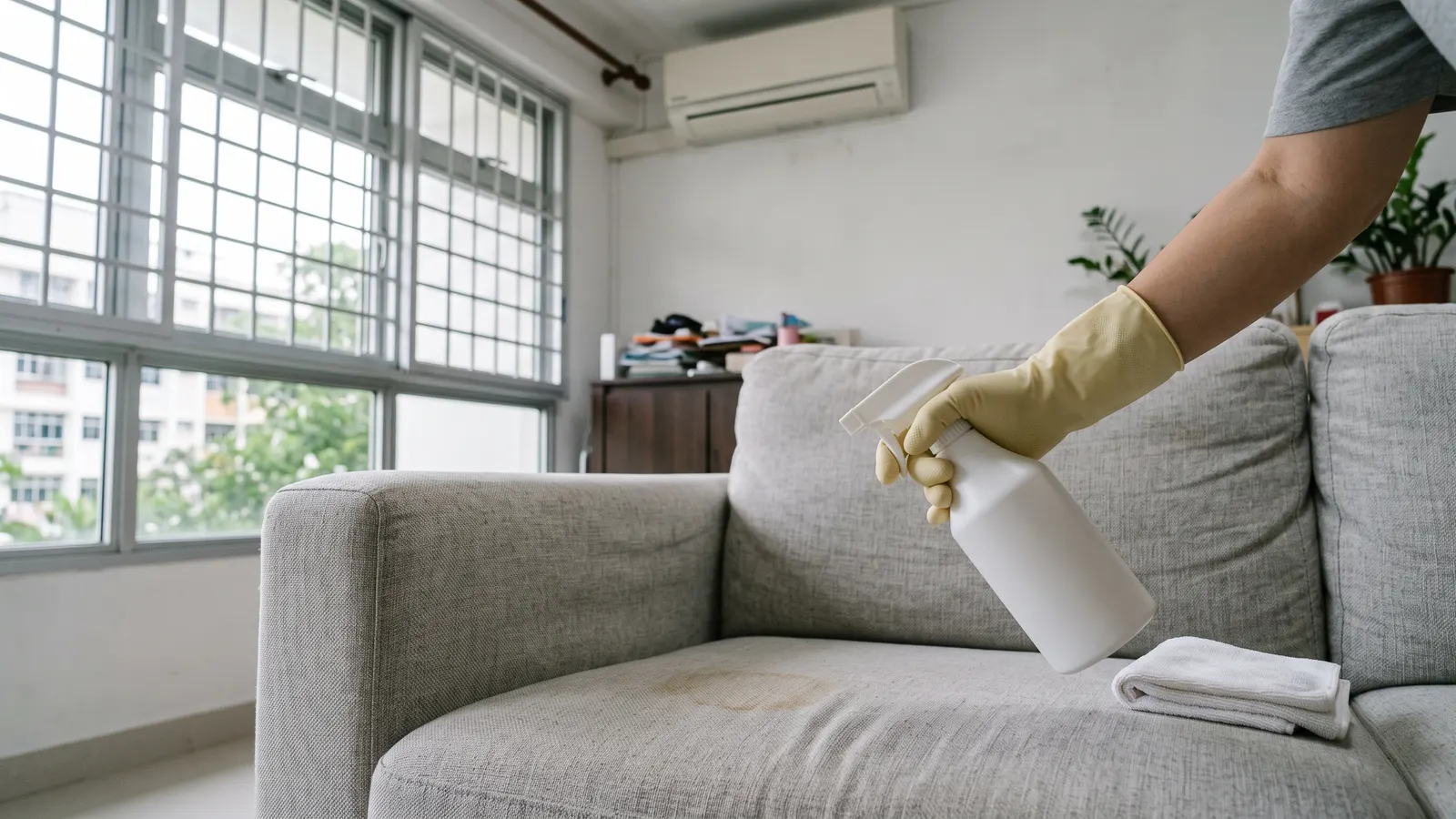
Fabric Sofa Cleaner Singapore: Sprays, Soap and Machines
Foam sprays, dish soap and spot machines, matched to your care tag.