A carpet at home needs two things from you: a slow vacuum every week, and a calm first five minutes when something spills. The rest is about water. Use too much in a flat where the air is already damp and you can do more harm than the stain did.
How do you clean a carpet at home, step by step?
You need a vacuum, white cloths or plain paper towels, a spoon, plain dishwashing liquid and a standing fan.
- Check the fibre labelFlip a corner and find the tag. Nylon, polyester and polypropylene can take every step here. Wool, viscose, jute and silk skip steps 4 and 5. Blot, then go straight to step 6.
- Vacuum slowly, at least once a weekThe Carpet and Rug Institute advises weekly vacuuming with slow passes, and more often where people walk most.[1] In most flats that is the strip between the front door and the sofa.
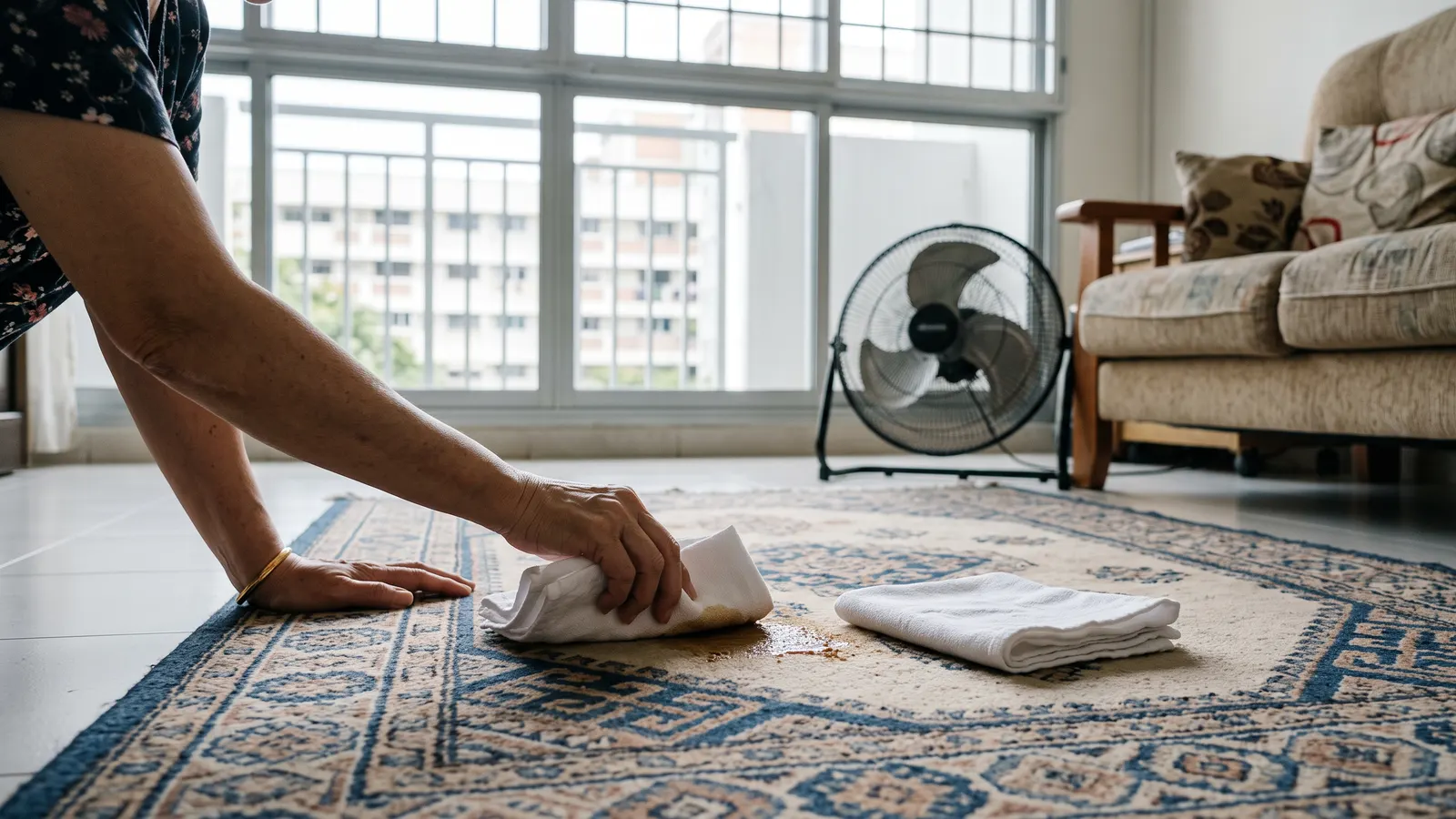
- Blot spills straight awayPress a dry white cloth onto the spill and lift. Work from the outer edge towards the centre, and scoop up solids with a spoon. No rubbing, no brush.[1]
- Dab on a weak detergent mixStir ¼ teaspoon of plain dishwashing liquid into 1 cup of water. Test it on a hidden corner, then apply it with the cloth, never straight onto the carpet. Do not use a stronger mix.[2]
- Rinse, then blot dryDab with plain water to lift the soap back out. Leftover detergent attracts soil, so press with dry towels until they come up dry.[2]
- Dry it the same dayAim a fan across the spot and switch on the aircon. Hang a small rug over two chairs so air reaches the backing.
- Deodorise only once it is drySprinkle bicarbonate of soda lightly, wait about 15 minutes and vacuum. Arm & Hammer says dry carpet only, and to check colour-fastness first.[3]
What should you do in the first five minutes of a stain?
Pick what landed on the carpet.
Coffee, tea or wine
Food grease or oil
Pet accident
Mud or soil
Why is too much water the biggest mistake in Singapore?
Singapore's mean relative humidity is around 82%, and it climbs above 90% just before sunrise.[4] A wet carpet here is trying to dry into air that is already nearly full.
The US Environmental Protection Agency says wet materials dried within 24–48 hours will not grow mould in most cases.[5] So a bucket and a scrubbing brush is the wrong kit. Water that reaches the backing sits against the vinyl or tile floor, where no air moves. If the spot is still damp the next morning, you used too much water.
Already seeing or smelling mould? Stop cleaning. Upward does not do mould remediation. That is a job for a mould remediation specialist.
What should you never do on wool, viscose, jute or silk?
- Wool
- Do not rub, scour or over-wet it. The International Wool Textile Organisation's guide says to use small amounts of a pre-tested cleaner made for carpet, on a cloth.[6] Dishwashing liquid is not made for carpet, so stop at blotting.
- Viscose
- Also labelled rayon. Carpet maker Edward Fields, a Tai Ping brand, says it breaks easily when wet, can shrink when soaked, and is best cleaned by a professional.[7]
- Jute
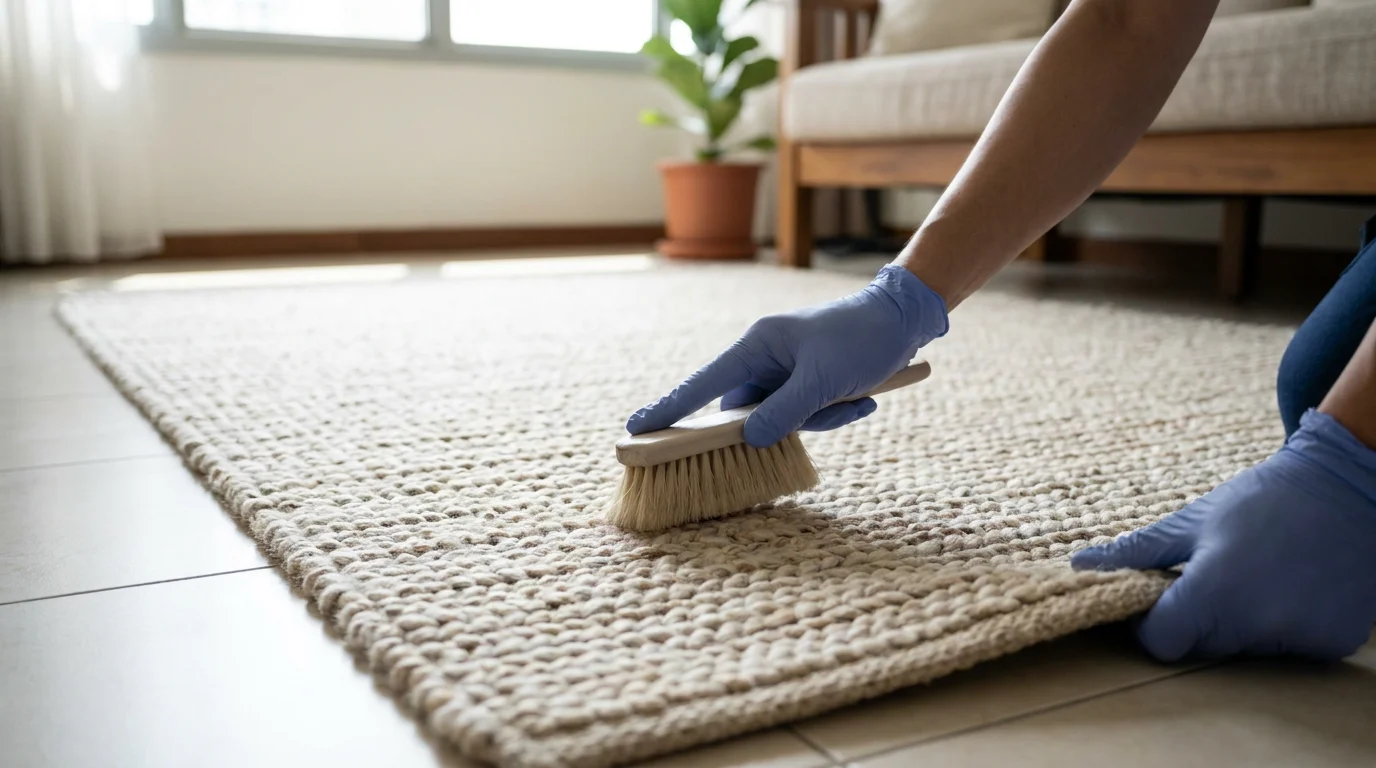
- Never wet shampoo or wash it. Rug retailer Sisal Rugs Direct warns that excess moisture can cause shrinkage, discolouration or mould if it is not dried quickly.[8]
- Silk
- Blot and leave it. Tai Ping's guide warns that water and water-based cleaners can damage silk, and says to call a professional instead of spot cleaning.[7] Upward only cleans in homes, so a silk rug that needs a full wash belongs with an off-site specialist rug washer.
Not sure which one you own? Our wool and viscose rug care guide shows how to tell them apart.
When should you book a professional carpet clean?
Book a deep clean when a mark keeps coming back or a smell stays after the carpet has dried. It also makes sense before a rental handover. The Carpet and Rug Institute suggests one every 12 to 18 months.[1]
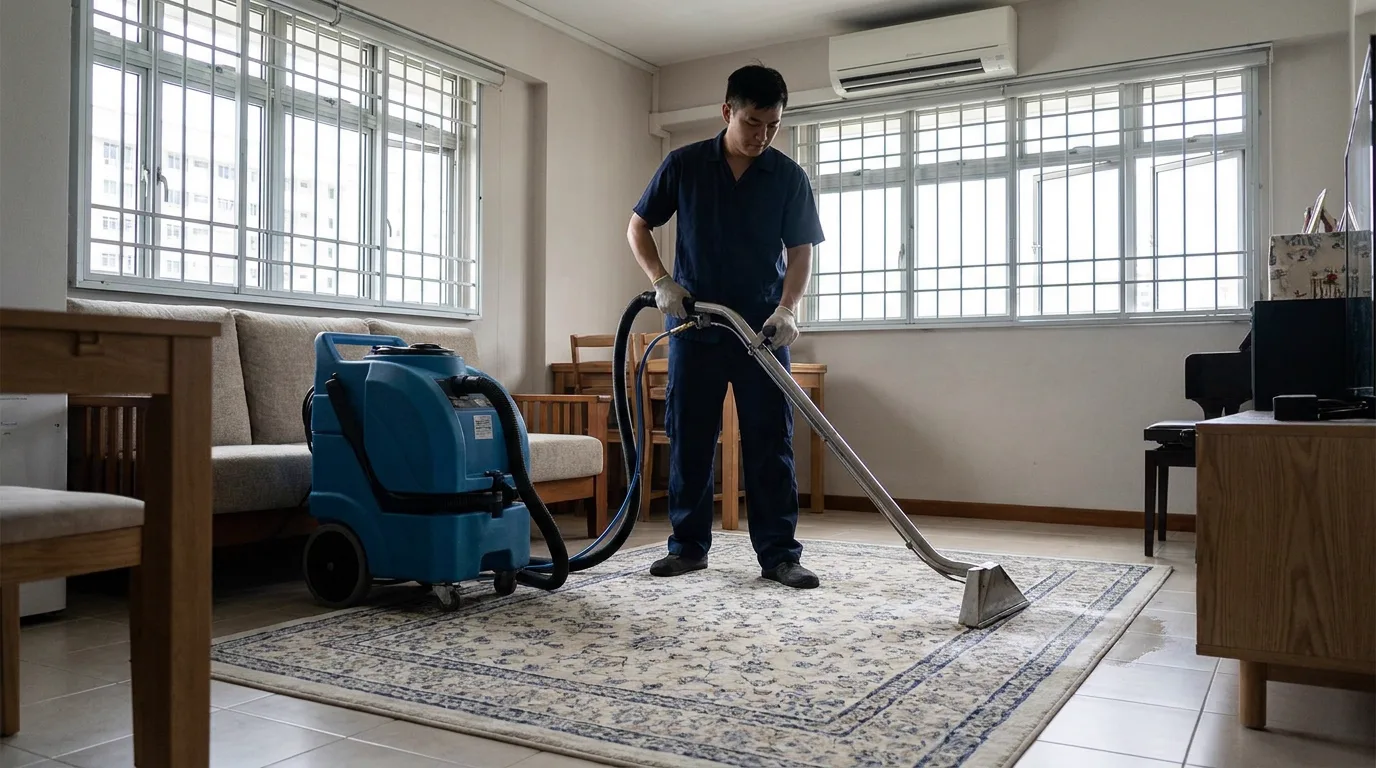
Upward cleans carpets and rugs in homes only, by room-temperature water extraction with a clear-water, zero-residue rinse. A hospital-grade sanitising pass is included free at the end. If the label says viscose, rayon, silk or jute, WhatsApp us before you book. Prices are fixed by the size band your carpet fits within, so a 2.4m × 1.8m carpet books at the 3m × 3m rate.
1m × 1.5m
within 1m × 1m
within 2m × 2m
within 3m × 3m
within 4m × 4m
Bigger than 4m × 4m, or another rug size? WhatsApp the measurements for a quote.
The carpet and rug cleaning service page explains what a visit covers, and the full price list has every other item.