Rug cleaning in Singapore starts from S$90 for a standard 1m × 1.5m rug, done in your home, dry the same day. The reason there is no single flat price is that a rug is not one product. A machine-made polypropylene runner and a hand-knotted wool piece look similar on the floor but need almost opposite treatment, and getting that wrong is how rugs come back shrunken or watermarked. This guide covers the price, the process, and the one thing most quotes leave out: which method your rug can actually survive. It sits alongside our broader carpet and rug cleaning guide and the wider upholstery cleaning hub.
What rug cleaning costs in Singapore (2026)
Two things set the price: the surface area, and the fibre. Area is simple, bigger rug, more extraction time. Fibre matters because a delicate wool or viscose rug is cleaned slower and more carefully than a hardy synthetic, and heavy soiling or old pet accidents add a treatment step.
| Rug size | Guide price | What affects it |
|---|---|---|
| Small (about 1m × 1.5m) | From S$90 | Fibre type, soiling level |
| Runner / medium | By area quote | Length, pile depth |
| Large / room-size | By area quote | Area, material, stains |
Rug cleaning falls under a S$50 minimum job fee, which a single rug already clears. Because rug prices scale with dimensions, the honest way to quote is on the actual measurements. Send a photo and the rough size on WhatsApp and you get a fixed number back before anyone turns up, no on-the-day surprises. Full pricing for rugs sits with our mattress and rug rates. You can also price a rug or carpet by size on our carpet and rug cleaning page.
Find the right method for your rug
Pick the material closest to your rug. You will see the method it needs, the main risk to watch for, and a link that carries the material into a WhatsApp quote so you do not have to explain it twice.
How an in-home rug clean actually works
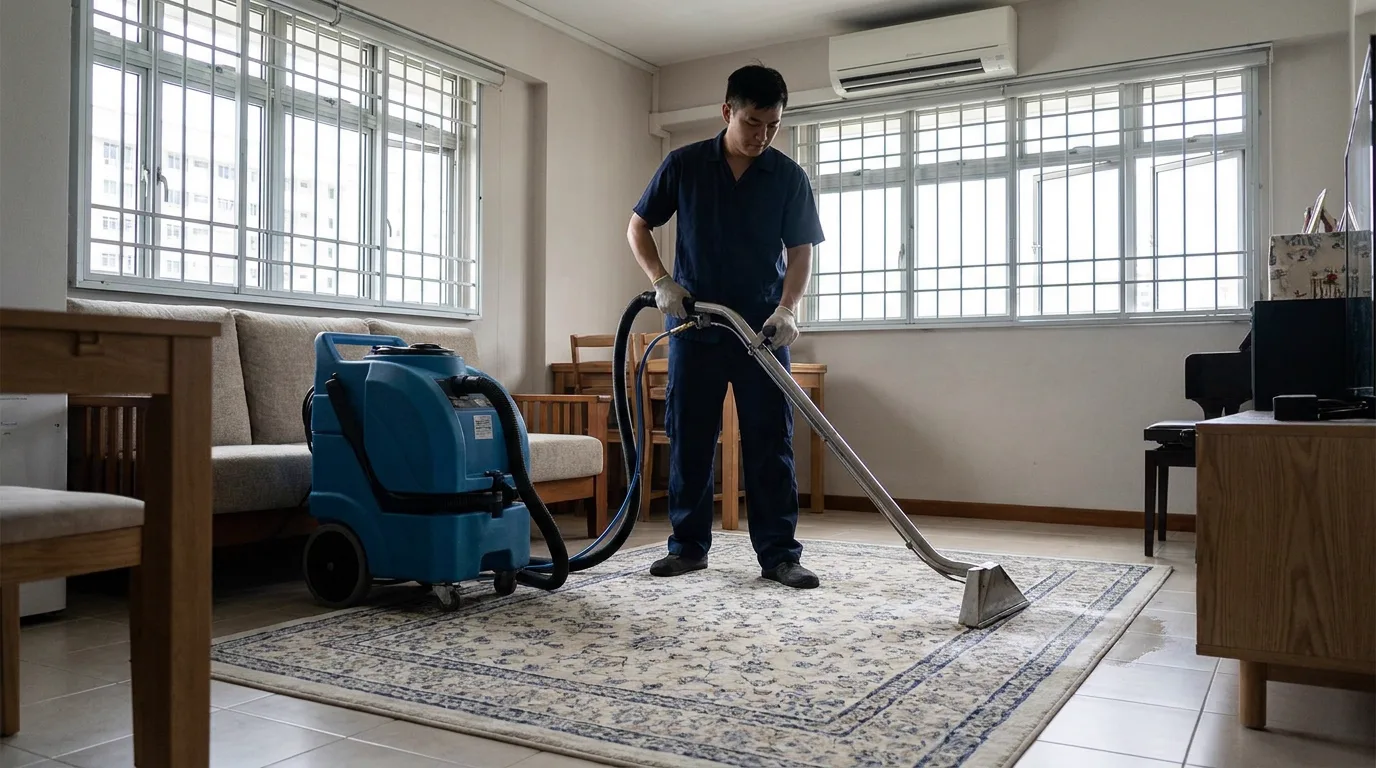
Everything happens on site, usually in about an hour for a small rug. Here is where that hour goes:
- Dry soil removalA high-suction vacuum pass lifts out the loose grit, sand, and hair packed down at the base of the pile. This step matters more than it sounds: dry grit is abrasive, and pulling it out before any water goes in stops it turning into mud.
- Fibre and colour checkThe technician confirms the material, tests a hidden corner for colour bleed, and sets the moisture level accordingly. A wool or viscose rug is dialled right down here.
- Cleaning solution and gentle agitationA measured spray of pH-appropriate solution is worked in softly by hand or a low pile brush. No soaking. The aim is to loosen dirt, not flood the backing.
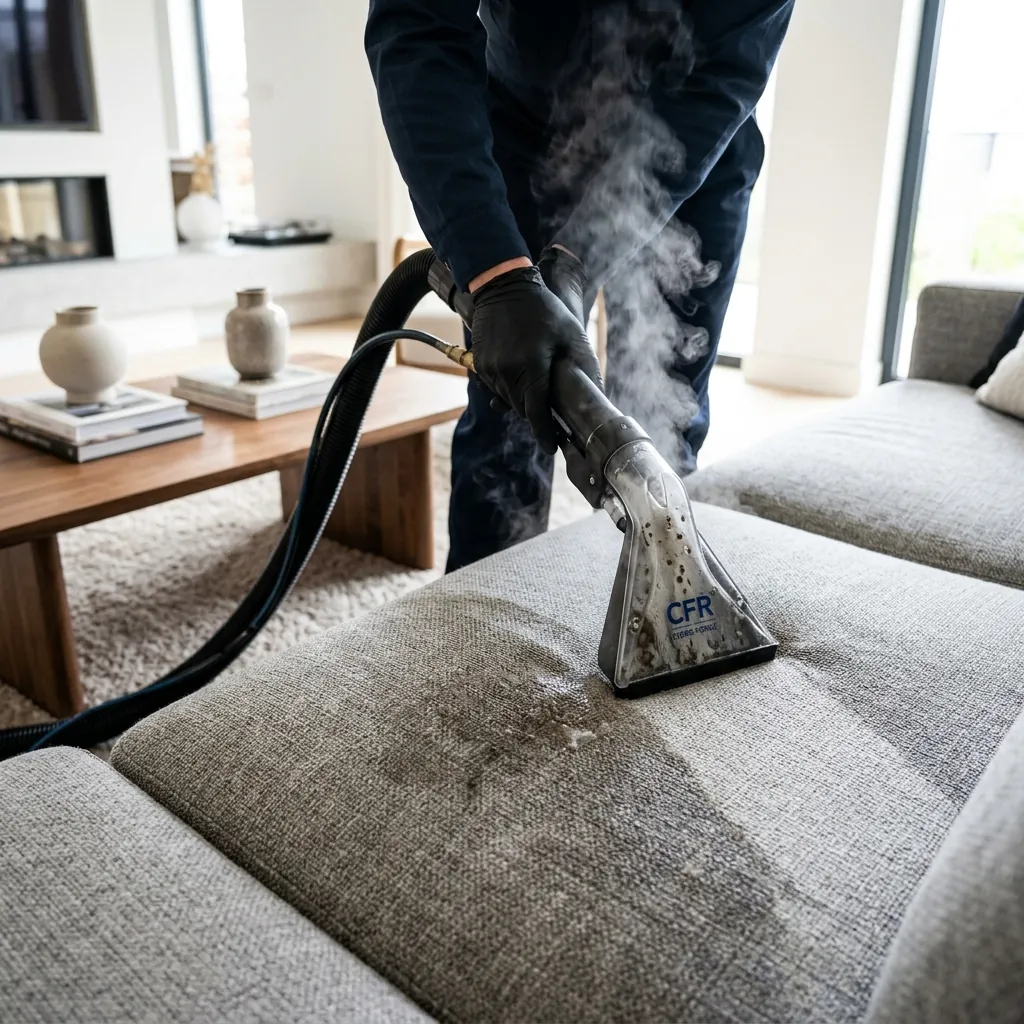
- Water extractionThe extraction machine pulls the solution straight back out, carrying the suspended dirt and dust with it. This is the step a home vacuum or a rented spot cleaner cannot match.
- Zero-residue rinse and dry extractionA clean-water pass removes any leftover detergent, then dry extraction pulls out most of the moisture so the rug dries in hours. The rinse is what stops a cleaned rug feeling crunchy or re-soiling fast in the humidity.
- Hospital-grade sanitising passHospital-grade sanitisation is applied again at the end of the cleaning, leaving a protective film that may last up to 30 days. All our solutions are child and pet friendly.
Why we clean in-home, not at a plant: most Singapore homes do not have space or time to send a rug away for a week. In-home extraction at room temperature is safe for the vast majority of rugs and keeps yours where you can see it. The few rugs that genuinely need off-site washing, antique hand-knotted silk, for example, we will tell you honestly rather than risk on your floor.
What each material can and can't take
This is the part that saves rugs. The same clean that refreshes a synthetic rug can ruin a viscose one, so the method always follows the fibre.
Wool
Durable and forgiving, but it felts and shrinks if it gets too wet or too warm, which is exactly why we keep the water at room temperature and the moisture low. Cleaned correctly, a good wool rug takes a deep clean beautifully and lasts decades. Natural lanolin also means wool resists staining better than most fibres if spills are blotted early.
Synthetic (polypropylene, nylon, polyester)
The workhorses of Singapore living rooms. They handle a full wet extraction without complaint, dry fast, and hold colour well. These are the lowest-risk, best-value rugs to have professionally cleaned.
Viscose, rayon, and "art silk"
The problem child. Viscose is wood pulp spun to look like silk, and it turns weak and yellow-brown where it gets wet, leaving watermarks that are hard to reverse. It needs a low-moisture method and a technician who knows to expect it. If a cleaner treats your viscose rug like a synthetic, you get permanent marks. Our wool and viscose rug care guide shows how to tell the two fibres apart before anyone wets the rug.
Cotton, jute, sisal, and seagrass
Cotton flatweaves clean up well but can shrink, so they get controlled moisture. Jute, sisal, and seagrass are natural plant fibres that hate water: they brown, smell, and go brittle when soaked, so they are cleaned almost dry, with as little liquid as possible. Silk sits at the delicate end and is assessed case by case; genuine silk usually belongs in specialist off-site hands.
How often should a rug be cleaned?
A rug is a filter you walk on. It traps dust, skin flakes, and the fine grit tracked in from outside, and in Singapore's humidity that trapped organic matter feeds dust mites and mustiness. Sensible intervals:
- Once a year for a normal living-room rug.
- Every 6 months for homes with pets, young children, or anyone with allergies or asthma. Our dust mite guide explains why the interval halves.
- As soon as it happens for pet accidents, spills, or a musty smell after a rainy spell.
Between cleans, vacuum both sides monthly, rotate the rug twice a year so foot traffic wears it evenly, and lift and air it after any damp weather. Those habits are free and they stretch the life of the fibre noticeably. For spills in between, follow our guide on how to clean a carpet at home.