Wool and viscose rugs are two of the most commonly confused materials in a Singapore living room, and getting the identification wrong is the single most common way a premium rug is ruined. Both can have a soft, slightly lustrous surface, both are sold as "hand-knotted" or "hand-tufted," and both show up in the same size range at the same furniture stores. But one is a hard-wearing natural fibre that shrugs off years of foot traffic, and the other is a delicate regenerated fibre that permanently watermarks the first time it gets properly wet. This guide is the material deep-dive behind our main rug cleaning cost and method guide, for anyone who owns, or is about to buy, a rug in either fibre.
Why the difference matters more in Singapore
Singapore's mean relative humidity runs around 82% year-round, with mornings routinely above 90%.[1] That humidity is already working against a rug before anyone cleans it: moisture sits in the fibres longer, dries slower, and gives any wrongly-applied wet clean more time to do damage. A method mistake that might dry out and mostly recover in a drier climate has far less margin for error here. Premium rug owners, the households most likely to have a genuine wool or viscose piece, are also the ones with the most to lose from a guess made without checking the label first.
Identify your rug before anyone cleans it
Pick whichever description is closest to your rug. This isn't a lab test, it's the same quick check a technician runs before touching any water to the pile.
If you're genuinely unsure after that, the safest step is to send a close-up photo on WhatsApp before any cleaning happens. Misidentifying a viscose rug as wool, or cleaning it with the same method, is how watermarks happen.
Wool: why it felts, and why it's still the safer fibre
Wool fibre is covered in microscopic overlapping scales, similar in principle to the scales on a strand of hair. Heat and moisture cause those scales to open, and agitation, scrubbing, tumbling, or heavy foot traffic on a wet pile, causes the opened scales from neighbouring fibres to interlock and lock together permanently.[2] That's felting, and once it happens it can't be reversed. It's why wool care instructions consistently call for cool or lukewarm water rather than hot,[3] and why we keep both the water temperature and the moisture level low on every wool rug we clean.
The upside: wool is naturally stain-resistant thanks to its lanolin content, holds its colour well, and, cleaned correctly, a good wool rug can last decades. Of every material we clean, wool rewards a careful, low-moisture deep clean the most.
Viscose: why it watermarks, and why it needs a different rulebook entirely
Viscose, sold under the names rayon or "art silk," isn't a natural fibre at all. It's regenerated cellulose, made by dissolving wood pulp and extruding it into fibre, which is why it can mimic silk's sheen at a fraction of the cost.[4] That manufacturing process is also its weakness: viscose has the lowest wet strength and lowest elastic recovery of any common textile fibre, meaning it loses structural integrity the moment it's wet, which is exactly why standard viscose rugs are labelled dry-clean only.[4] In practice, that weakness shows up as watermarking: uneven drying leaves visible rings and a yellow-brown tint exactly where the fibre got wet, and once that mark sets, it's extremely difficult to reverse.
This is the single biggest reason viscose gets misdiagnosed and ruined. Treated like a hardy synthetic and given a full wet clean, it comes back permanently marked. Treated with the low-moisture respect it needs, it can be safely refreshed.
The care that protects both
Wool and viscose land in different places on the risk scale, but the safe approach for both starts the same way:
- Confirm the fibre firstLabel, feel, and sheen, cross-checked before any liquid touches the rug. When in doubt, a photo sent ahead of time settles it.
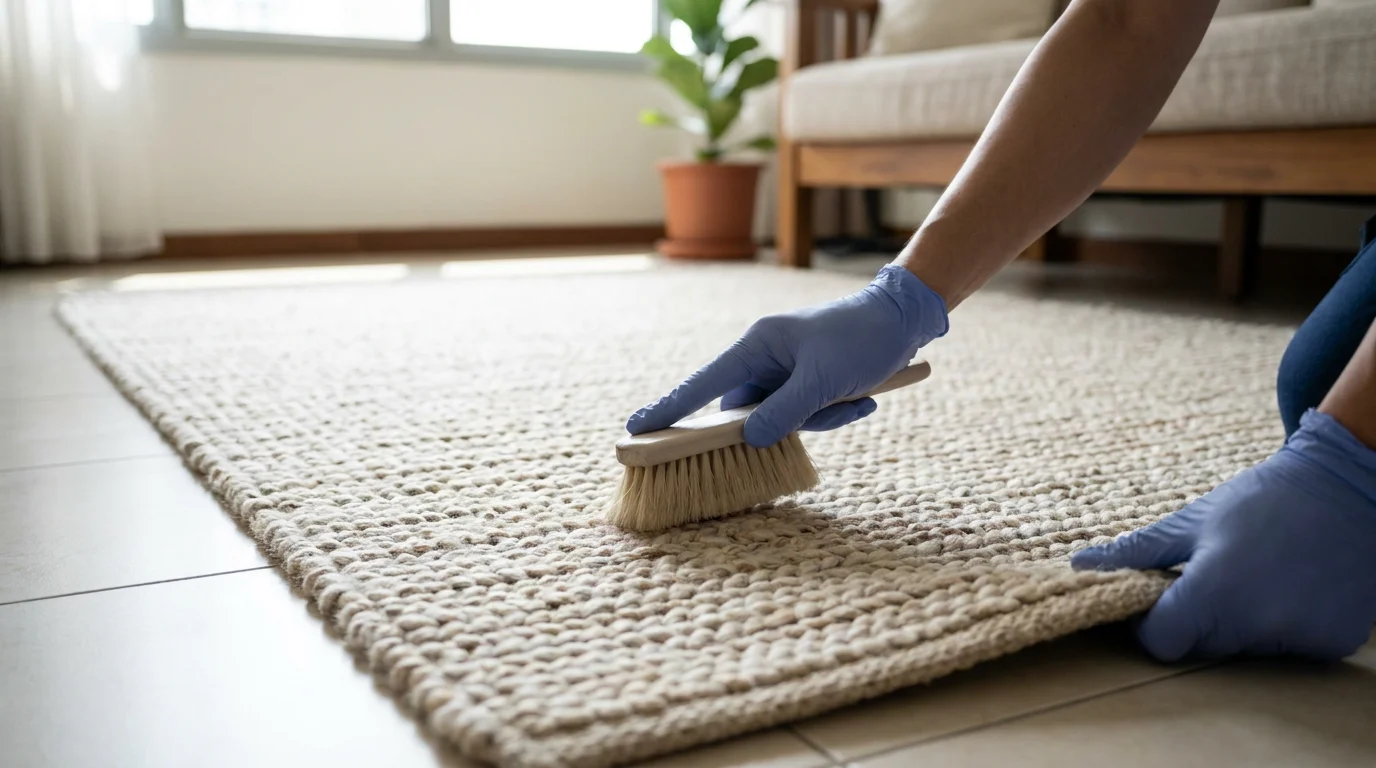
- Dry soil removal by suction, not brushingLoose grit is abrasive and works into both fibres the same way. Pulling it out dry, before any moisture goes in, protects the pile regardless of material.
- Room-temperature water only, and less of it on viscoseWool tolerates a controlled low-moisture extraction. Viscose gets even less liquid, applied more slowly, and is never left to air-dry unevenly.
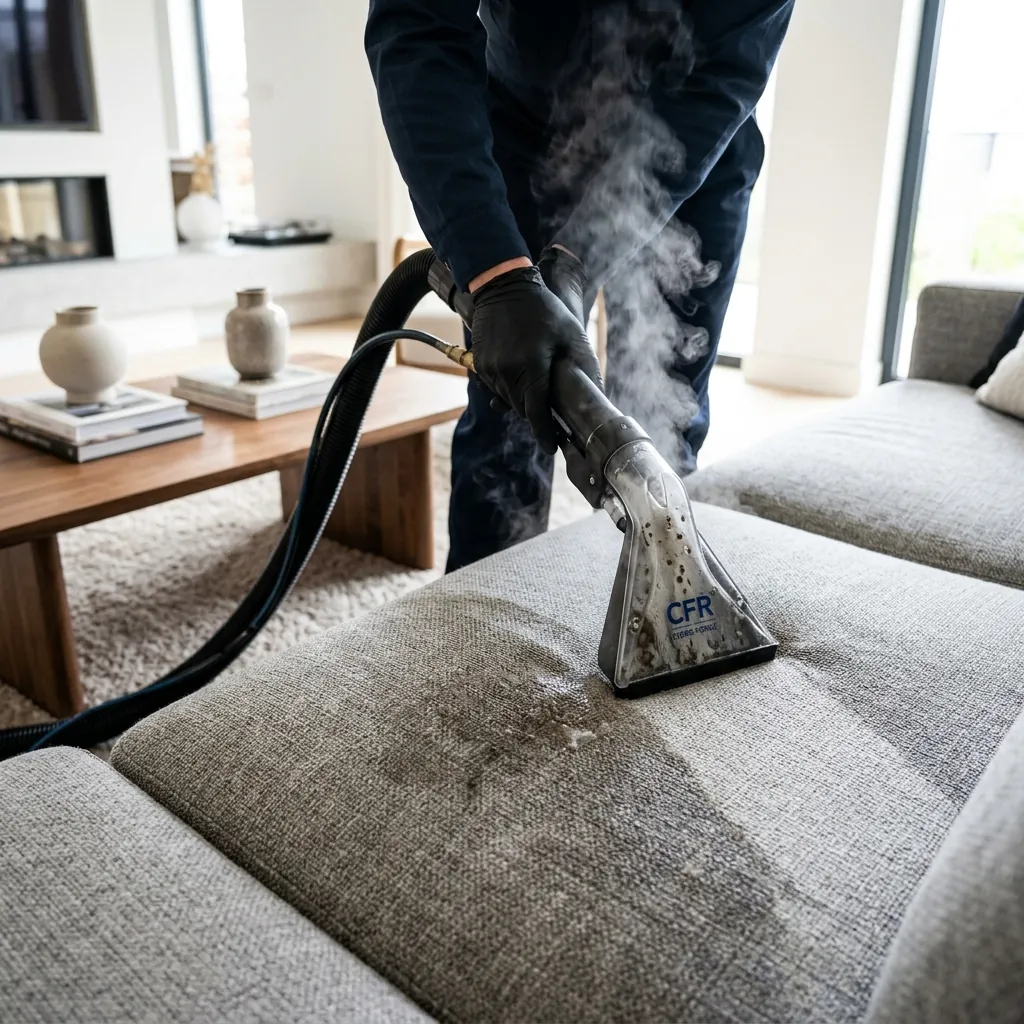
- Fast, even dryingUneven drying is what causes viscose's watermarking and encourages wool's felting risk if any residual heat is involved. A controlled dry-extraction pass and airflow finish the job evenly.
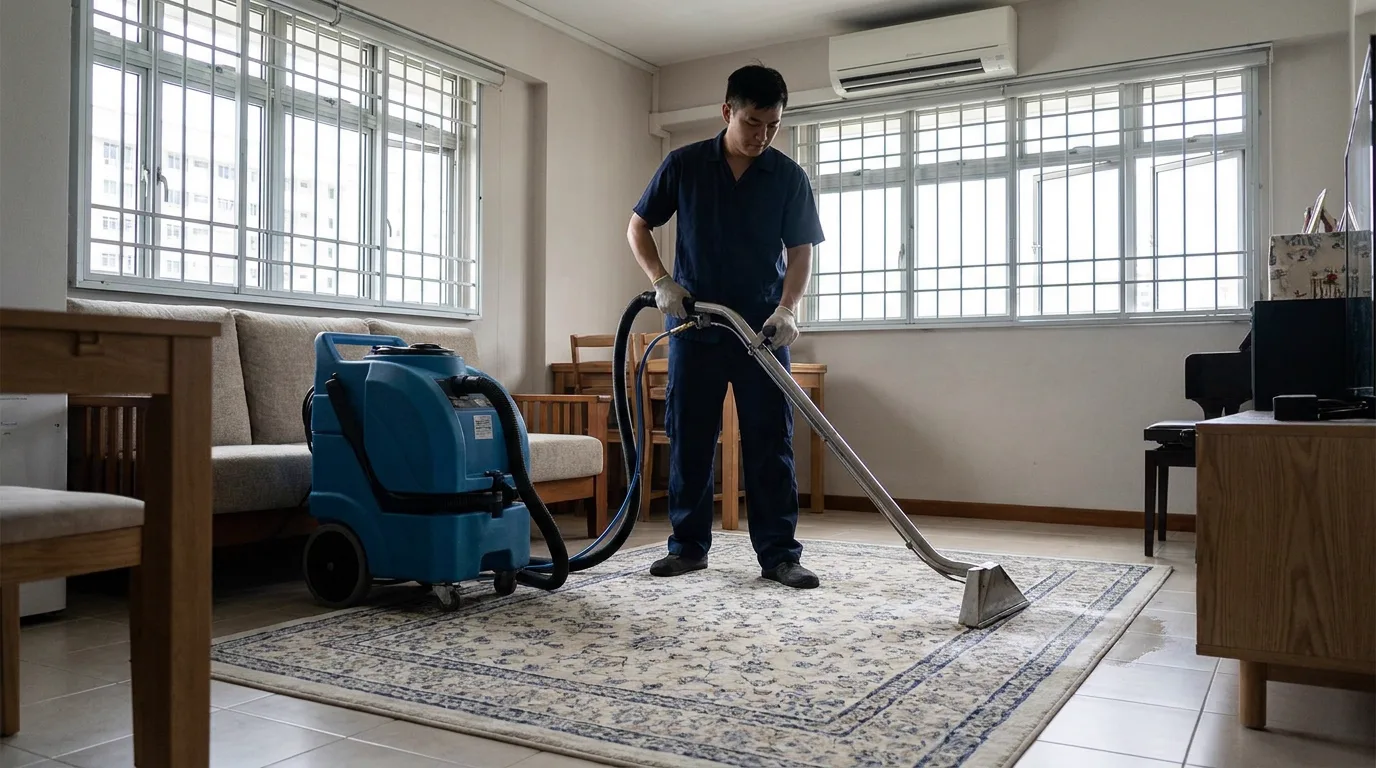
Both materials, along with synthetic, cotton, jute, and silk rugs, are covered by the same in-home, room-temperature water extraction we run for every rug, from S$90 for a standard 1m × 1.5m piece. The full pricing table and the six-material picker tool are in our rug cleaning cost and method guide. To price a rug or carpet by size and book the visit, go to our carpet and rug cleaning page.
When we say no to a rug. A handful of pieces, genuine antique silk in particular, are fragile enough that even a careful low-moisture clean carries real risk. We'll tell you honestly if your rug falls into that category rather than risk it on the floor.