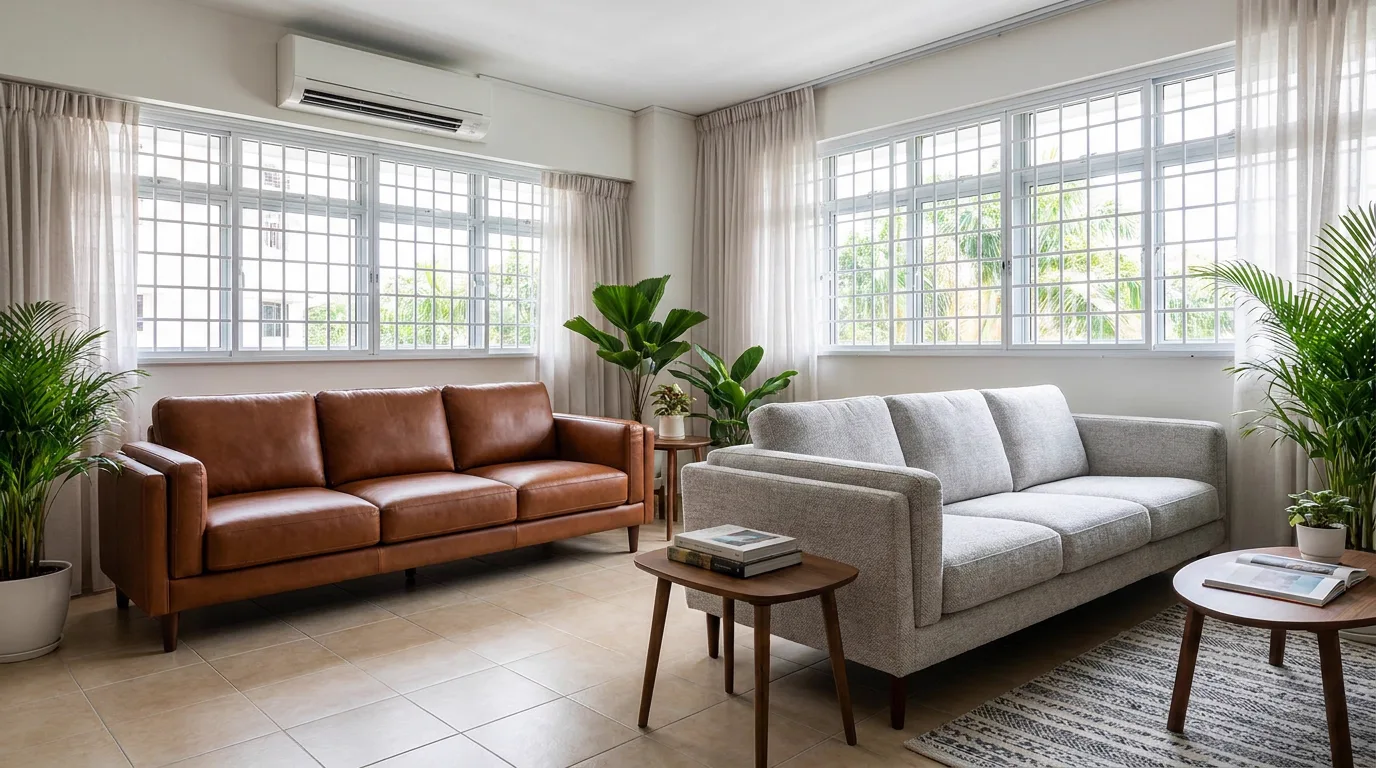
You are in the showroom, choosing between a buttery leather three-seater and a soft fabric one, and the salesperson swears both are perfect. Neither is perfect for a Singapore home until you factor in two things a showroom never mentions: our air sits around 80 percent humidity most of the year, and many living rooms run the aircon for hours a day. Those forces pull leather and fabric in opposite directions. Here is an honest look at how each holds up, who each suits, and what it really costs to keep looking good.
Humidity and aircon change the maths
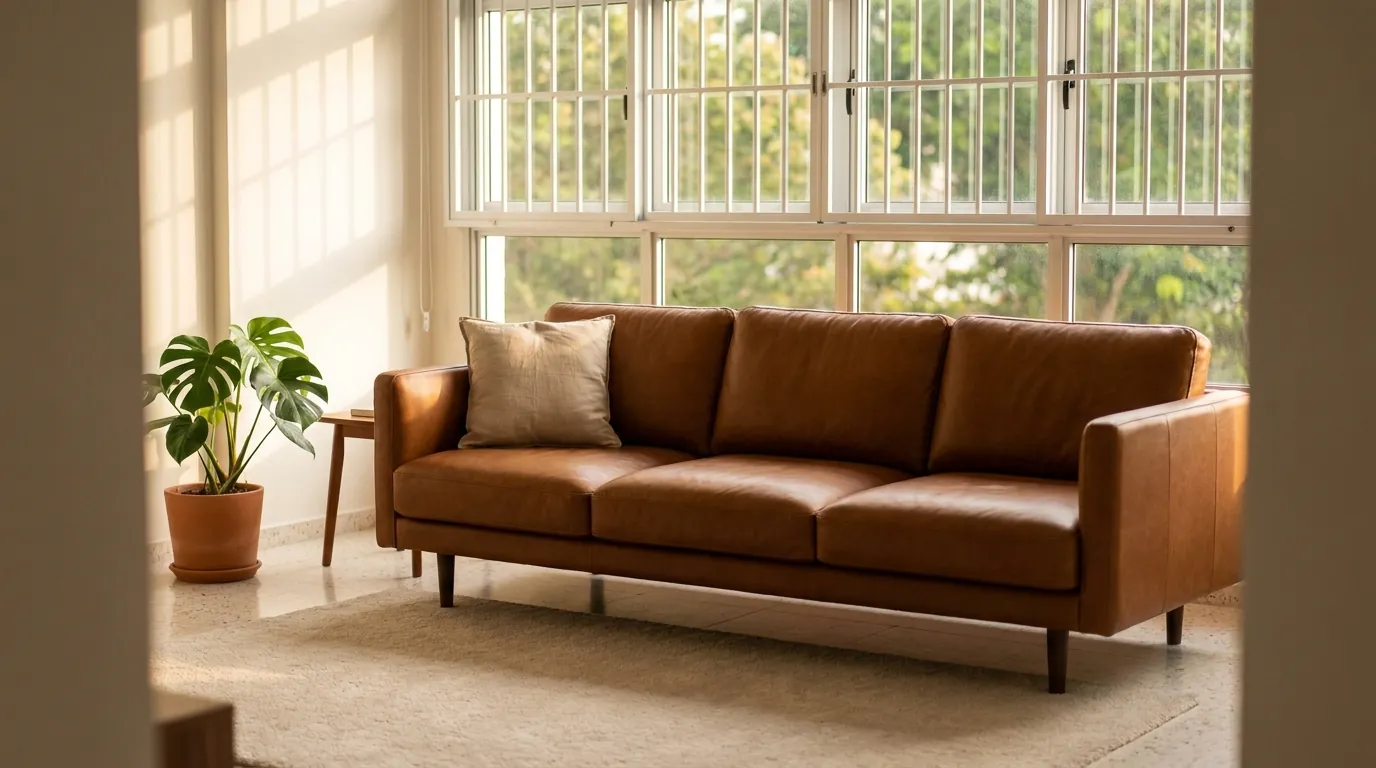
In a temperate country this is mostly a debate about taste. Here it is also about physics. Leather is skin, and skin dries out. Park a leather sofa in the path of an aircon that runs all evening and the surface slowly loses its natural oils, which is what leads to the stiff, cracked look on older leather. The fix is cheap: wipe it down and condition it a couple of times a year. Skip that and humid heat plus dry aircon age it faster than the leather deserves.
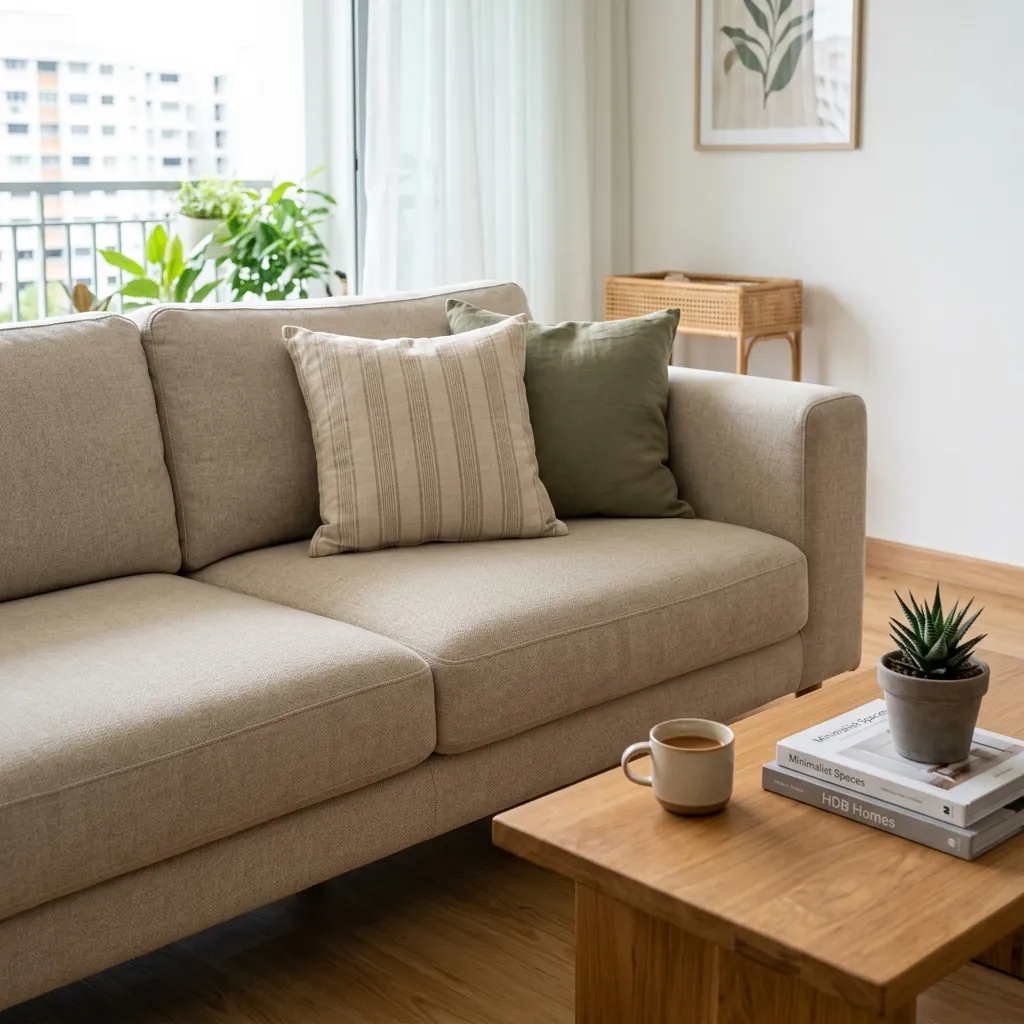
Fabric has the opposite personality. It breathes, so it does not crack, and on a sticky evening it feels less clammy than leather (leather can turn cool and slightly tacky in a warm, damp room, then cold once the aircon bites). The trade-off is that fabric drinks in everything: a spilled drink, sweat, and the moisture in the air itself. That trapped damp feeds the musty smell and the dust mites deep in the cushions, which is why a fabric sofa needs a proper clean more than people expect.
The quick version: leather needs feeding (conditioning), fabric needs flushing (extraction). Both are easy to look after once you know which chore is yours. The material that fits your home is the one whose upkeep habit you will actually keep.
Which sofa suits you?
Tap your single biggest priority. You get a leaning, leather or fabric or either, with the one-line reason behind it. It is a nudge, not a verdict, so treat it as a starting point and message us if your home is a mix.
Leather vs fabric, side by side
Here is the honest scorecard for a local home. Neither column is all wins.
| What matters | Leather | Fabric |
|---|---|---|
| Durability | Very good. Good hide lasts 10 to 15 years, ages with character | Good. 7 to 10 years, depending on weave and use |
| Comfort in a warm room | Can feel cool then tacky in humidity, warms up once you sit | Breathable, softer, cosier straight away |
| Aircon effect | Dries out and can crack without conditioning | Unaffected, but holds room moisture |
| Spills and stains | Wipes off in seconds | Absorbs fast, sets if not treated early |
| Scratches | Shows claw and buckle marks | Hides scratches and pet claws |
| Smell and mites | Wipes clean, does not trap much | Can hold odour and dust mites in the fill |
| Upkeep habit | Condition twice a year, clean yearly | Vacuum often, professional clean yearly |
The pattern is clear once you read down the rows: leather trades a little day-one softness and scratch resistance for very low mess and long life, while fabric trades stain resistance for comfort and a lower price. If you want the deeper how-to on either, we have full guides on caring for a leather sofa and cleaning a fabric sofa at home.
Families with kids and pets
This is where most Singapore buyers actually decide, so it deserves its own section. The rule of thumb: leather forgives mess, fabric forgives energy.
If you have young kids
Leather is the low-drama choice. A dropped ice cream, a felt-tip attack, a juice flood: all of it wipes off a sealed leather surface before it soaks in. Fabric with a toddler means you accept the odd permanent mark unless you jump on spills fast. Some parents split the difference with a performance fabric that has a tighter, stain-resistant weave, which helps but does not make fabric wipeable. If you are also weighing up a protector spray, our fabric protection guide covers what it does and how long it lasts.
If you have pets
This one cuts both ways, so there is no blanket answer. Claws scratch leather, and those marks show. Fabric hides claw snags far better. But pet hair, dander, and the smell of a dog that came in from the rain all embed in fabric and wipe straight off leather. If your pet is a scratcher, lean fabric; if it sheds and smells, lean leather. Either way, a household with pets should read our note on how often to clean a sofa, because pets roughly halve the sensible interval.
The 5-year upkeep cost, honestly
Sticker price is only half the story. What actually separates the two over time is upkeep, so here is the arithmetic on a 3-seater using our real cleaning rates, not made-up numbers.
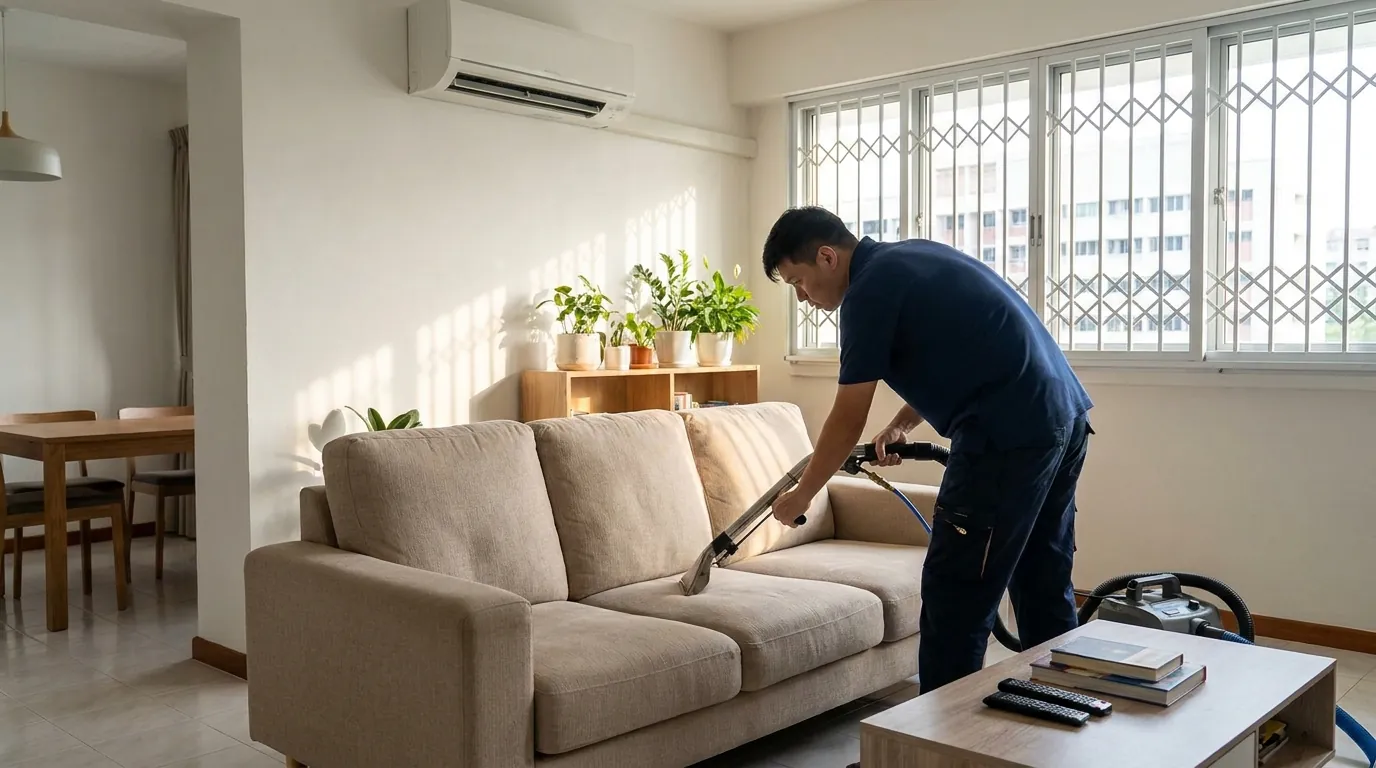
A fabric 3-seater clean is S$105, done by room-temperature water extraction with a zero-residue rinse. A leather 3-seater clean is S$160, which includes the pH-balanced conditioning that replaces the oils the aircon strips out. Both are worth doing once a year in this climate.
| Cleaning over 5 years | Fabric 3-seater | Leather 3-seater |
|---|---|---|
| Per clean | S$105 (extraction) | S$160 (clean + condition) |
| Interval | Once a year | Once a year |
| 5 cleans total | S$525 | S$800 |
So across five years the professional-cleaning gap is about S$275 on a 3-seater, roughly S$55 a year. Leather costs more to service, but it also tends to last longer and shrugs off the daily mess that wears fabric out, so the lifetime picture often evens up. For a smaller piece, a fabric 2-seater clean is S$90 and a 1-seater armchair S$58, versus S$140 and S$110 for the leather equivalents. All jobs sit under a S$50 minimum, and you can add a Premium Steam sanitising pass for S$30. Full rates live on our sofa cleaning pricing page, with a wider walk-through in the upholstery cleaning guide.
The takeaway is not that one material is cheaper. It is that both are affordable to maintain, so pick on how you live, then keep to the yearly clean. That is the single habit that decides whether either sofa still looks good at year five.