
How to Remove Carpet Stains in Singapore, Stain by Stain
Kopi, curry, red wine, blood, pet urine, gum, wax, ink and nail polish each need something different. Here's the right first move for each, what changes on wool or on an old mark, and when to stop.
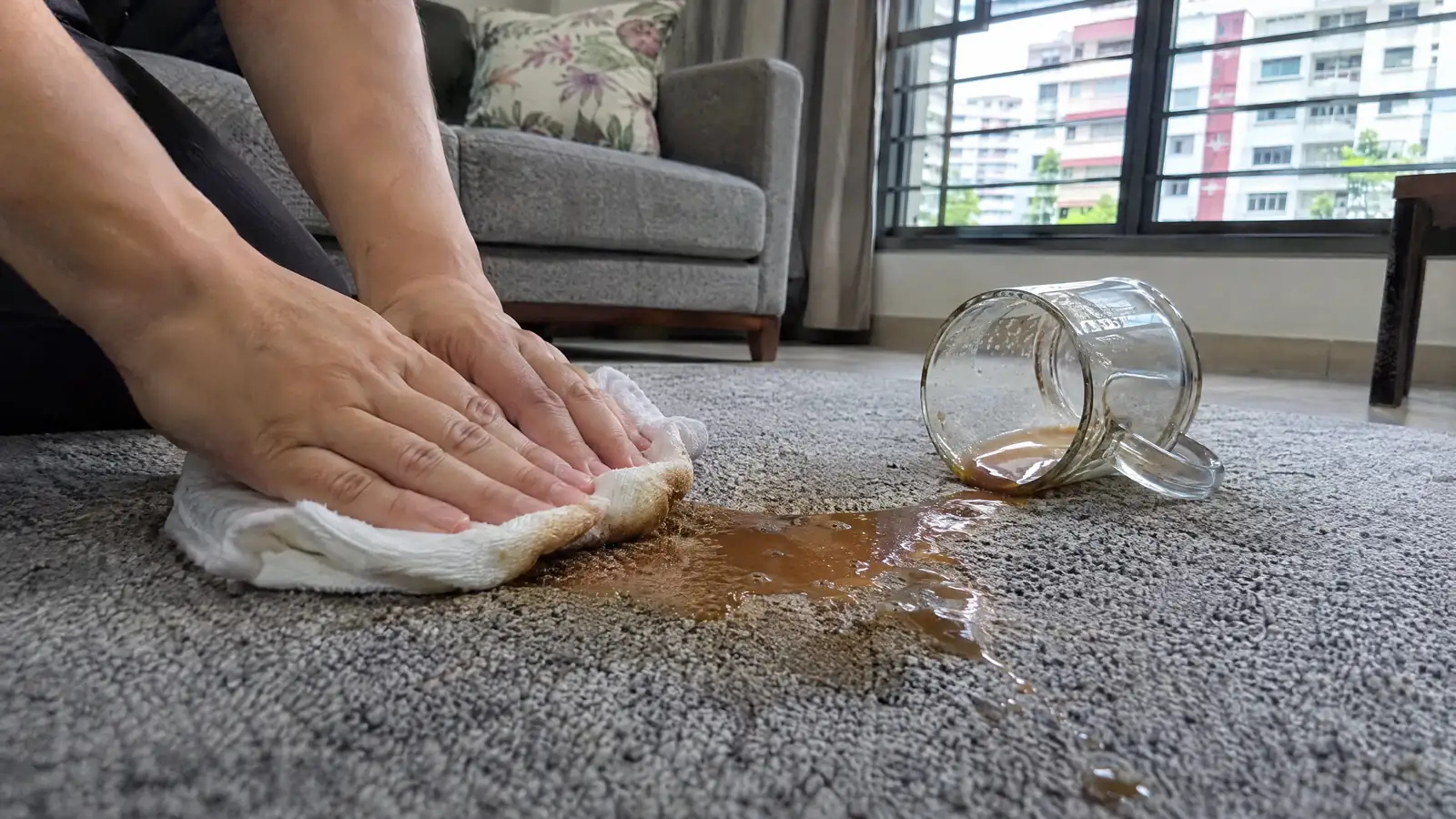
- Blot, never rub. Work from the edge in, and put the cleaner on a white cloth, not on the carpet.
- Cold water for blood and vomit. Hot water can set protein stains. No heat or steam on pet urine either.
- Freeze gum, lift wax through paper with an iron, and take ink and nail polish out with a solvent on a cloth. The stain picker has the steps.
- Wool needs gentler products: a spot remover labelled safe for wool, nothing strongly alkaline and never bleach.
- Old pet urine, bleach marks and set-in curry are where home methods stop. A carpet clean with us is S$95–170 by size.
Most carpet stains come out if you know what the stain is made of. Kopi is coffee with condensed milk and sugar in it. Curry is oil carrying a yellow spice. Blood and vomit are protein, and urine soaks down past the pile into the underlay. Use one spray on all of them and you'll lift some, set others and spread the rest. For the weekly vacuum and drying a wet patch, start with our guide to cleaning a carpet at home.
Which stain do you have?
Choose the stain, how long it has been there and what the carpet is made of. You get the steps in order, what to avoid, and an honest flag when it's a job for a professional.
- Blot with a dry white cloth or paper towel, working from the edge towards the centre. Press and lift. Never rub.
- Dab on ¼ teaspoon of clear dishwashing liquid in 1 cup of lukewarm water, using a white cloth. Leave it 3 to 5 minutes, then blot.
- Mark still showing? Dab on 1 cup of white vinegar in 2 cups of water, then blot.
- Rinse with a little plain water on a cloth, then press with a pad of dry towels until they come up dry. Sweet drinks leave a sticky residue that picks up dirt.
What should you do before treating any carpet stain?
Four habits apply to every stain on this page. They come from the Carpet and Rug Institute's spot guides and carpet makers' own care manuals.
- Find out the fibre. The label on the back or the receipt usually says. Wool and synthetic carpet need different products, as the next section explains.
- Test on a hidden spot. Try the cleaner under the sofa or inside a wardrobe line first. The institute says to pretest every solution and pick another if the carpet or cloth changes colour.
- Cleaner goes on the cloth. Never pour it onto the carpet. Solvent that reaches the backing can damage the latex that holds it together, and water down there is slow to dry in our humid air.
- Rinse out what you put in. Shaw's care guide warns that detergent left in the pile turns sticky and makes the spot dirty again quickly. Dab with plain water, then press with dry towels.
Is your carpet wool or synthetic?
Synthetic carpet means nylon, polyester or polypropylene. If there's no label, treat yours as wool until you know, because the wool steps are gentle enough for either.
Wool is the fussy one. Carpet and rug maker Stark tells owners to use wool-safe products and to avoid cleaners above pH 8.0, alkaline household products, bleach and heat. The International Wool Textile Organisation's guide, written with WoolSafe, uses a pre-tested spot remover on a white cloth where most guides use dish soap, and says to blot, never rub or scour.
Synthetic carpet takes more, but not everything. In a patent on turmeric stains, chemical maker DuPont notes that most nylon carpet is coloured with acid dyes that strong oxidising agents readily bleach. So bleach can take the carpet's colour out along with the stain.
If the label says viscose, rayon, silk or jute, blot the spill and stop. Our wool and viscose rug guide shows how to tell wool from viscose, and why viscose marks so easily when wet.
Does it matter if the stain is fresh or old?
A great deal. Iowa State University Extension notes that fresh stains are far easier to remove than ones over 24 hours old. An old mark has dried into the fibre, and anything already tried on it, such as hot water, may have set it.
For an old stain, the picker adds soak time to re-wet the mark and sends more cases to a professional. The wool guide does the same, sending extensive or set-in stains on wool to a cleaner with wool experience.
What is the first move for each stain?
The first minute matters most. Here it is for each stain, with the mistake that makes it worse.
Methods come from the Carpet and Rug Institute's coffee and wine guides, Shaw, the IWTO, Iowa State, Humane World for Animals and the Edmonton Humane Society. The cold-water rule holds on a bed too, as our mattress stain guide explains.
What should you never put on a carpet stain?
Shaw's care guide names the worst offenders. Bleach, tile cleaners, mildew removers, oven cleaners and drain openers can discolour or dissolve carpet fibre. So can acne creams containing benzoyl peroxide, a strong bleach, which is worth knowing if homework happens on the floor.
- Laundry or dishwasher detergent. The institute warns the first can contain optical brighteners that dye the fibre, and the second may contain bleach.
- A stronger mix than the recipe. More soap only means more residue to rinse out.
- Hot water or steam on protein and urine. Iowa State says hot water can set protein stains such as blood and vomit. Humane World for Animals warns that heat bonds urine stains and smell into man-made fibres.
- Ammonia or vinegar on pet urine. Strong smells can lead a pet to mark the same spot again, and the Edmonton Humane Society adds that ammonia and bleach cleaners can leave a residue that smells like urine.
- A scrubbing brush. Rubbing drives a stain deeper and spreads it sideways.
When should you stop and call a professional?
Stop after two careful rounds on the same mark, or at once if the carpet's own colour starts to change. Some stains go straight to a professional. The wool guide sends bleach, rust and old urine stains to a professional cleaner. Urine that has soaked into the underlay is the hardest, and Humane World for Animals notes that sometimes parts of the carpet and padding have to be replaced. Old curry is the other common one. DuPont found mild cleaners alone don't shift turmeric, and anything strong enough to bleach it out can take the carpet's dye with it.
That's where we come in. Upward cleans carpets and rugs in your home by room-temperature water extraction with a clear-water, zero-residue rinse, so no shampoo stays in the pile to attract dirt. Most new stains lift out. An old stain that has changed the colour of the fibre may only lighten, and we'll tell you which before we start. Enzyme cleaners are a shop product for use at home, not part of our service.
The carpet and rug cleaning page explains what a visit covers. For a bleach or dye mark, or a viscose, silk or jute rug, send us a photo on WhatsApp first.
Frequently asked questions
Stain still there? Send a photo.
We'll tell you straight whether a clean will shift it. Carpets from S$95, rugs from S$90. Every online booking earns a stamp on the Upward Stamp Card.
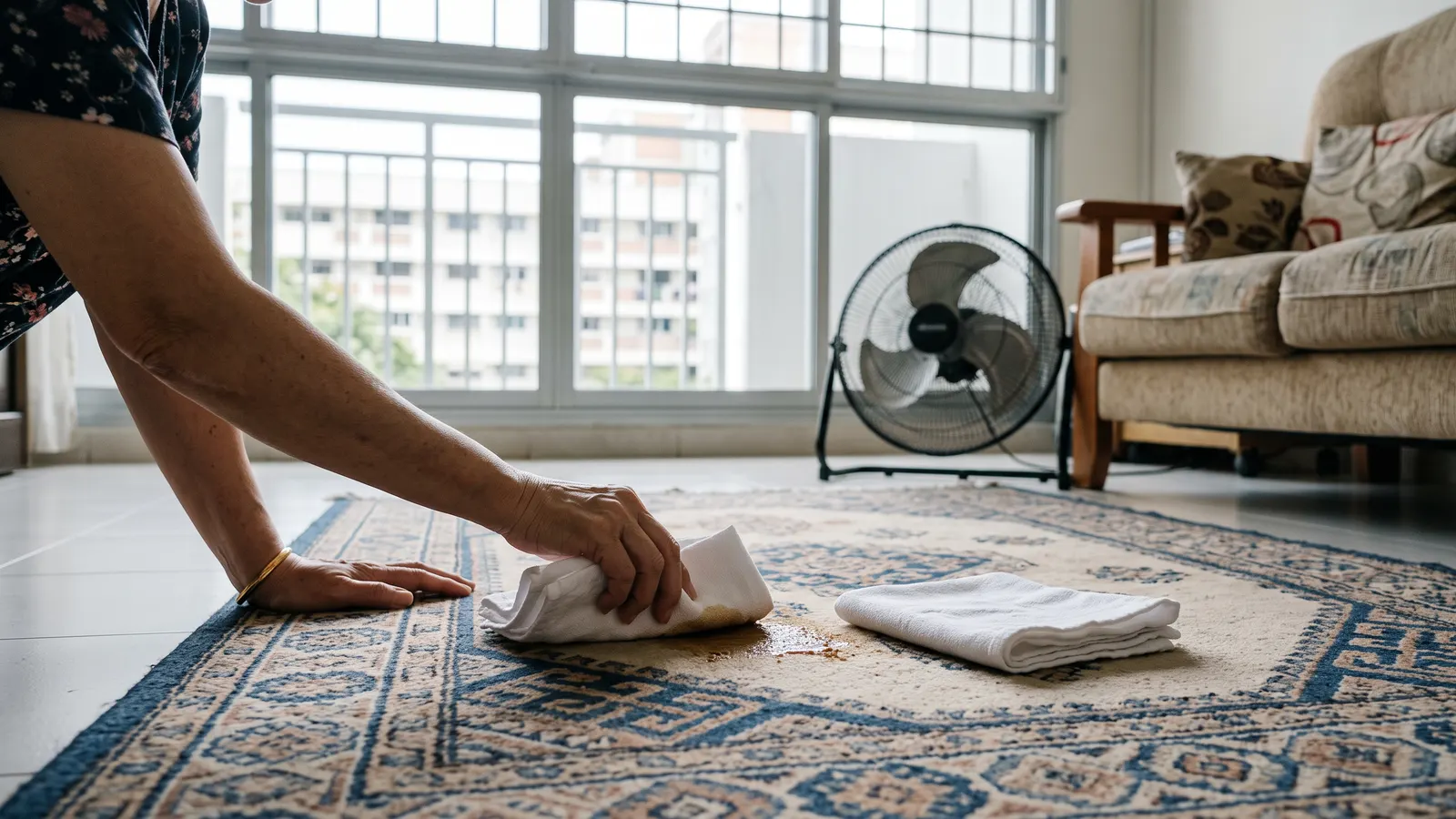
How to Clean Carpet at Home in Singapore: Step by Step
The weekly vacuum, the first five minutes after a spill, and drying it fast.
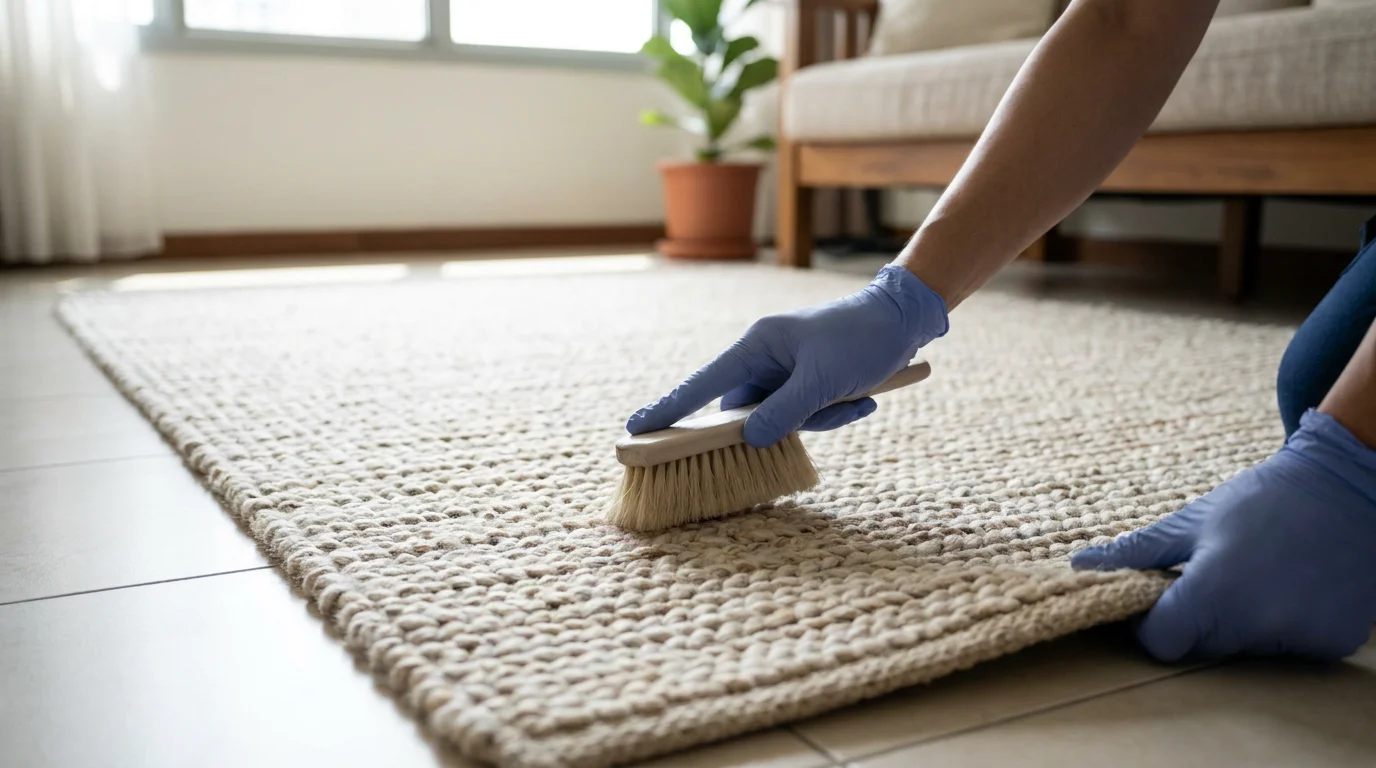
Wool & Viscose Rug Cleaning in Singapore
How to tell the two apart, and why one felts and the other watermarks.

How to Remove Stains from Your Mattress
Sweat, urine, blood and drinks, each with the right agent and order.